
Family Guide · Inherited Homes · Temecula Valley
What Do You Do With a Parent's House After They Die?
Secure it first, find the paperwork second, and don't throw out anything that might matter until the person with legal authority over the estate says so. In the first week that means changing the locks, keeping the power, water, and insurance on, emptying the fridge, and photographing every room. After that you find the will or trust, settle who's in charge, let the family choose what it's keeping, and clear the rest.
Family-owned in Temecula since 2021 · Licensed & insured · 5,000+ loads since 2021

The First Week
What Should Happen in the First Week?
Seven things, and none of them involve getting rid of anything: lock the house, keep the utilities and insurance active, empty the fridge, redirect the mail, photograph every room, gather the papers into one spot, and tell the family nothing leaves yet. That week is about keeping the house and what's in it exactly as it was.
- ✓Change or rekey the locks. Nobody knows how many keys a parent handed out over thirty years, and the person in charge of the estate is responsible for keeping the house safe.
- ✓Keep the power and water on. You'll need lights to sort, water to clean, and a working fridge until it's emptied. Shutting things off can come later.
- ✓Call the homeowners insurance company. Tell them the owner has died and ask what the policy requires while the house sits empty, because many policies change once a house is vacant.
- ✓Empty the fridge and take out the trash. Spoiled food and pests are the one cleanup that shouldn't wait for anyone's permission.
- ✓Redirect the mail to whoever is handling the estate. Statements, bills, and tax forms are how you find accounts nobody knew about, and the Post Office may ask for the executor's paperwork.
- ✓Photograph every room, every closet, the garage, and the yard before anything moves. It's your record of what was there.
- ✓Tell the family that nothing leaves the house yet, not even the one thing Mom promised someone. That conversation is easier in week one than in month three.
Who Gets to Make Decisions About the House?
The person with legal authority over the estate, and that isn't automatically the oldest child or whoever lives closest. If there's a will and the house goes through probate, it's the executor once the court issues Letters. If the house is in a living trust, it's the successor trustee. Small estates have their own shortcuts. Our guide on cleaning out a house before probate is done walks through each one, and the Riverside County Superior Court's estates, wills, and trusts page lists every procedure the court offers.
The Paperwork
What Paperwork Should You Find Before Anything Is Thrown Out?
The will or trust, the deed, vehicle titles, bank and investment statements, insurance policies, and the last few years of tax returns. Put every one of them in a single box that stays with one person. These are the papers most likely to disappear in a rushed cleanout, and the estate can't be settled without them.
Where Is the Will or the Trust?
Look in the desk, the file cabinet, the safe, and with the parent's attorney. In California the original will has to be filed with the court within 30 days after the death, so whoever finds it shouldn't sit on it. The Riverside court charges a $50 fee to deposit it.
Who Has the Deed and the Titles?
The house deed, car and boat titles, and the title to a mobile home if there is one. Mobile homes are titled through the state's housing department, not the DMV, which surprises a lot of families in the senior parks around Hemet and Lake Elsinore.
What Do the Statements Tell You?
Bank, brokerage, retirement, and credit card statements show what accounts exist and who to notify. A bank statement that shows a safe deposit box fee tells you there's a box to find, and probably a key somewhere in the house.
Are There Insurance Policies or Pensions?
Life insurance, annuities, and pensions often pass outside probate to a named beneficiary, but someone still has to find the policy and file the claim. Old policy statements tend to live in the same drawer as the tax returns.
Is the State Holding Money in Their Name?
Check. The California State Controller holds forgotten accounts and uncashed checks, and an heir, trustee, or executor can claim a deceased owner's property for free through the Controller's unclaimed property program. Don't pay a finder to do it for you.
What Does the DMV Need?
A disabled parking placard has to go back to the DMV within 60 days of the death, and the car's registration has to be kept current or put on planned non-operation while the estate is settled. The DMV's page for a deceased person's records lists the forms.
Before You Toss
What Should You Never Throw Away While Sorting?
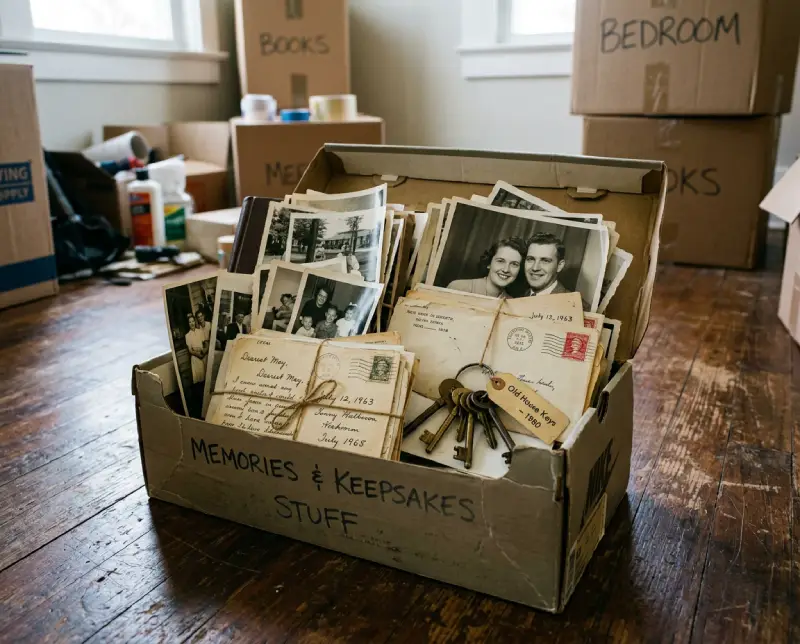
Anything with an account number, a signature, a key, a face, or a name on it, and anything you haven't looked inside. Paperwork, unlabeled keys, photos, jewelry, and the contents of books, pockets, and envelopes all get checked before a single bag goes out. Once it's on the trailer, it's gone.
- ✓Papers with account numbers, policy numbers, or signatures. Keep them until the estate closes and the final tax returns are filed, then shred them rather than bagging them with the trash.
- ✓Keys you can't identify. One might open a safe deposit box, a storage unit, or a second car.
- ✓Photos, letters, recipe cards, and old home movies. They're worth nothing to a buyer and everything to a grandchild, so the family decides on those.
- ✓Jewelry, coins, and watches, including the costume pieces, until someone who knows what they're looking at has gone through them.
- ✓The inside of things: coat pockets, books, envelopes, the freezer, the bottom of drawers, and the backs of closets. Plenty of parents kept cash and papers in places nobody would think to look.
- ✓Anything that might be valuable. Art, collectibles, tools, and furniture should be looked at before anyone decides they're junk, because that decision belongs to the estate.
Why Photograph Everything Before It Moves?
Because the estate may have to account for what was in the house. When a house goes through probate, the executor files an inventory and appraisal within four months after Letters are issued, under Probate Code section 8800, and a probate referee values most of what isn't cash. Photos taken before anyone sorts are the simplest record of what was there, and they settle a lot of "I thought Dad's watch was in that drawer" conversations later.
Dividing It Up
How Should the Family Divide What's in the House?
One person makes the calls, everyone gets a turn to walk through, picks rotate so nobody gets everything first, and it all happens by a set date. Whatever the will gives to a specific person comes off the top. Write down who took what, because the executor may have to show it later.
- One decision-maker. Usually the executor or trustee. Everyone else can ask, but one person says yes.
- A walkthrough window and a deadline. Give each family member a weekend to go through the house and a date when picks are final.
- A fair pick order. Draw names and rotate, one item per turn, so the first person in the door doesn't clear out the china cabinet.
- One keep room. Everything spoken for goes into one room with a sign on the door until it's picked up.
- A written list. Item, who took it, and the date. It takes ten minutes and protects whoever is in charge.
Should You Hold an Estate Sale?
Hold one when the house has furniture, tools, or collectibles that will actually sell and you have a few weeks before the listing. A liquidator works on commission, prices everything, runs the sale, and leaves behind what didn't sell. If most of what's left is worn upholstery and old mattresses, a sale won't cover its own cost. Skip it and donate what's usable.

Special Handling
What Has to Be Handled Separately?
Firearms, prescription medications, garage chemicals, and computers and phones with personal data. None of them go in the trash or on a junk trailer, and each one has its own legal route. Set them aside on day one so nobody bags them by mistake.
What About Firearms?
Leave them where they are, unloaded if someone qualified can do it safely, and tell the executor. In California a firearm from an estate is transferred through a licensed dealer, and the executor should get advice before anyone takes one home. We don't load firearms or ammunition.
What About Medications?
Take them to a pharmacy take-back kiosk. Don't flush them, and don't leave them in a house with a lockbox code that half the family knows.
What About Paint and Garage Chemicals?
They're household hazardous waste, and Riverside County takes them free from residents through its household hazardous waste program. Our guide to household hazardous waste in Temecula covers where each kind goes.
What About Computers and Phones?
Check them for photos, passwords, and account records before they go anywhere, then wipe or pull the drive. The hardware itself is e-waste, covered on our what is e-waste page.
The Cleanout
When Is It Time to Call a Cleanout Crew?
After three things are done: someone has authority over the estate, the family has taken what it wants, and the estate sale is over if there was one. Calling before that usually means the job gets done twice, once around the things nobody had decided about and once after.
When you're ready, the cleanout itself is the quick part. A crew clears what's left room by room, pulls what can still be donated, hauls the rest, and sweeps the floors. Most furnished houses take one to three trailer loads. Our estate cleanout page has the prices, what we take, and what changes the number.
If the parent is still living and moving to assisted living or a smaller place, that's a different job with different decisions; our senior downsizing page is written for it. And if you open the door and find hoarding conditions, call before anyone starts. Those houses go through our hoarder cleanout service.
From the Owner
Who Wrote This Guide?
Who Is Weston Molitor?
Founder · Wild West Junk Removal · Temecula, CAI started Wild West Junk Removal in Temecula in 2021. We're family-owned, licensed and insured, and we've hauled more than 5,000 loads out of 41713 Niblick Rd, a lot of them from houses families inherited.
I'm not a lawyer or a grief counselor. I'm the guy who shows up after the paperwork and the family's picks, and this is the list I'd want every family to have worked through before we pull up.
"Nothing in that house has to go this week. The things that matter most are the easiest to lose in a hurry."

FAQ
What Else Do Families Ask About a Parent's House?
It depends on the lease, because a tenancy doesn't end the day someone dies. Call the landlord early, ask when the unit has to be empty and whether rent is owed for that time, and get the answer in writing. Rented units usually move much faster than a house the family owns.
In most cases yes, from the estate, so the loan doesn't fall behind while the estate is settled. Call the lender to report the death and ask how they want payments handled, and check with the attorney before you pay estate bills out of your own pocket.
Usually the funeral home reports the death, but confirm it. Don't spend a benefit payment that lands in the account after the death, because it may have to be returned.
Start with the will or trust, since anything it gives to a specific person is settled. For the rest, the executor or trustee has the final say. If a disagreement is holding up the house, a mediator usually costs less than arguing about it for six months.
Let the family take anything they want first, then donate what's wearable. Goodwill and The Salvation Army both take clean clothing, shoes, and linens. Check every pocket before the bags go out.
Only the urgent things: spoiled food, trash, and anything unsafe. Everything else can wait until after the funeral, when people are thinking more clearly and someone has been put in charge.
The person in charge of the estate. If others need to get in, use a lockbox with a code you can change, and change it once the family's picks are done.
Ready to Clear What the Family Isn't Keeping?
Text photos of every room, the garage, and the yard to (951) 837-8072, or ask me to walk the house with you for free. You'll get a firm price before anything moves.
Wild West Junk Removal · 41713 Niblick Rd, Temecula, CA 92591 · (951) 837-8072 · Mon to Sat: 7AM-7PM · Sun: Closed
Sources & References
- riverside.courts.ca.govRiverside County Superior Court — Decedent's Estates, Wills & Trusts
- leginfo.legislature.ca.govCalifornia Probate Code § 8800 — inventory and appraisal
- sco.ca.govCalifornia State Controller — claiming unclaimed property
- dmv.ca.govCalifornia DMV — handling the DMV matters of a deceased person
- rcwaste.orgRiverside County Department of Waste Resources — household hazardous waste
- Wild WestEstate cleanouts in Temecula — prices and how it works
- Wild WestCan you clean out a parent's house before probate is done?
Written by Weston Molitor, owner of Wild West Junk Removal. Last reviewed and updated October 13, 2026.
This guide is general information from a junk removal company, not legal, tax, or financial advice. Questions about probate, trusts, or who may remove property from an estate belong with your attorney.