
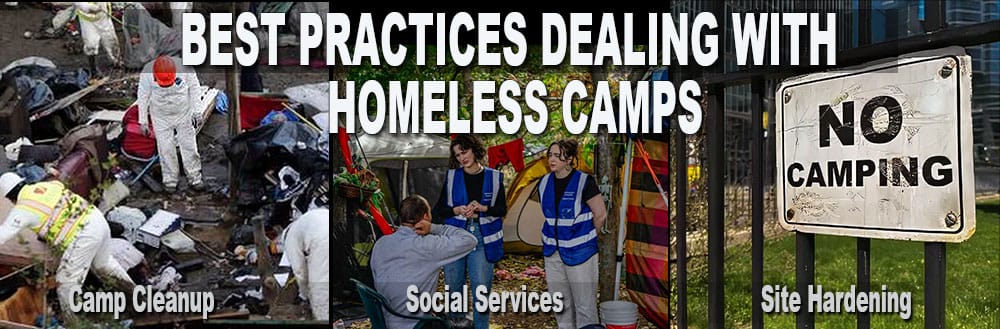
✅ Effective Strategies for Homeless Camp Cleanup Success
1. Coordinated Outreach and Advance Notice
-
- Before any cleanup or enforcement, attempt outreach to individuals in the encampment—offering shelter referrals, social services, behavioral health support, or harm-reduction resources. This approach aligns with statewide guidance under efforts like the California SAFE Task Force.
Provide advance notice when feasible. While Temecula’s code provides city authority to remove encampments on private lands, ethically and practically, a reasonable notification window—plus outreach coordination—helps reduce harm and ensures compliance.
2. Documentation & Record-Keeping
-
- Before cleanup, photograph or video the site (tents, structures, personal items, debris).
Provide individuals with a clear inventory of any personal items collected, and if items are stored, note how they may be retrieved later (if applicable).
Keep logs of outreach efforts, notices given, dates/times of cleanup, and disposal records. This documentation helps protect the city or property owner legally, aids transparency, and supports health/safety compliance.
3. Wild West Professional Homeless Encampment Cleanup Services
-
- Engage
Wild West Homeless Camp Cleanup Services
-
- , which offers insured cleanup crews familiar with hazardous waste, human waste, biohazards, sharps, waste sorting, odor removal, and environmentally compliant disposal procedures.
- We properly dispose of trash, debris, biohazardous waste, and bulky items. If materials are hazardous , ensure compliance with California environmental and health regulations.
Provide environmental remediation when needed (e.g., soil or water contamination near waterways, cleaning around storm drains, mitigating fire hazards).
4. Restore and Secure the Homeless Site (Site-Hardening)
After cleanup, take steps to prevent re-encampment:
-
- Close or block access (fencing, barriers, gates) where possible.
Improve lighting and visibility in alleys, trails, riverbeds, and other high-risk zones.
Remove debris, overgrown brush, or hiding places that invite camping or dumping.
Consider partnering with local nonprofits or social service agencies to monitor formerly cleared zones periodically.
5. Integrated Social Services & Support
Cleanup alone does not solve homeless people’s problems. For long-term success, combine cleanup of homeless encampments efforts with social-service outreach: mental health support, substance-use treatment, emergency shelter, transitional housing, job placement, and wrap-around care. This aligns with state-level initiatives calling for a blend of enforcement and support.
6. Transparent Public Communication
-
- Inform residents, businesses, and community stakeholders about cleanup schedules, outreach efforts, and support services.
Offer clear, accessible information—e.g., hotline numbers, social-service contacts, reporting tools, and complaint forms (such as via the city’s Code Enforcement portal).
Provide follow-up reports or documentation confirming cleanup completion and disposal compliance.
📋 Suggested Procedural Framework for Temecula
| Phase | Key Actions | Rationale / Outcome |
|---|---|---|
| Assessment & Outreach | Identify encampment location, outreach to individuals, offer shelter or services, and log outreach attempts | Reduces harm to homeless people; provides alternatives, and builds trust |
| Notice & Documentation | Provide notice (signs or letters) when possible; photograph/video site; record items and conditions | Legal protection; transparency, and evidence of conditions |
| Professional Cleanup & Disposal | Use licensed cleanup crews; handle waste, biohazards, debris responsibly; document disposal & sanitation | Ensures health compliance; avoids environmental damage, and prevents liability |
| Site Restoration & Security | Secure access points; clean and sanitize; install deterrent measures (lighting, barriers) | Prevents re-encampment and dumping; protects safety |
| Follow-up & Support Services | Monitor area regularly; maintain outreach contacts, and coordinate with social services and shelters | Helps reduce recurring issues and supports long-term solutions |
| Community & Public Communication | Update residents/businesses; provide contact/reporting info; share status and resources | Builds community trust; encourages cooperation |
⚠️ Key Legal & Ethical Considerations
-
- Under Temecula’s municipal code, encampments on private property are considered a public nuisance—giving the city authority to remove them and recover costs.
Governor Newsom’s Push: In 2025, Governor Newsom urged cities to adopt a model ordinance that includes these requirements, promoting consistency.
Supreme Court Ruling (2024): The SCOTUS decision allows cities to criminalize camping on public property, even without shelter, giving local governments more power to enforce bans, which some cities (like San Diego and Sacramento) have adopted, creating stricter local rules.
Every cleanup should respect human dignity. Wherever possible, offer outreach, shelter referrals, and safe storage or inventory of personal items before disposing of belongings.
Environmental and safety laws still apply: hazardous waste, biohazards, waterways, and disposal regulations must be respected.
Transparency—documentation, communication, and due process—helps the city avoid legal challenges and improves community trust.
- Notice & Shelter: Cities must give at least 48–72 hours’ notice and make “every reasonable effort” to connect individuals with shelter before clearing an area, though the definition of “adequate shelter” is debated.
Outreach: Outreach to social services and service providers is required before a cleanup.
Property Management: Personal belongings must be stored safely (clean, dry, and secure) for 30 days, with clear processes for claiming items.
Site Assessment: Officials should assess for immediate health/safety threats (exigent circumstances) that might require faster removal.
Time Restrictions: Cleanups often cannot occur between 9 p.m. and 5:30 a.m. or during severe weather.
✅ Conclusion: A Balanced, Humane, and Effective Approach
For a city such as Temecula, where concerns about encampments, public health, safety, and community welfare are on the rise, ignoring the camps is not the most effective solution. Instead, combining Wild West Professional Homeless Camp Cleanup, outreach and support, legal compliance, public communication, and site hardening offers the best chance for long-term success.
By following a structured, documented, and compassionate homeless encampment cleanup services policy—while engaging with social services to support the unhoused—Temecula can protect community health, uphold property standards, and treat vulnerable populations with dignity.
