
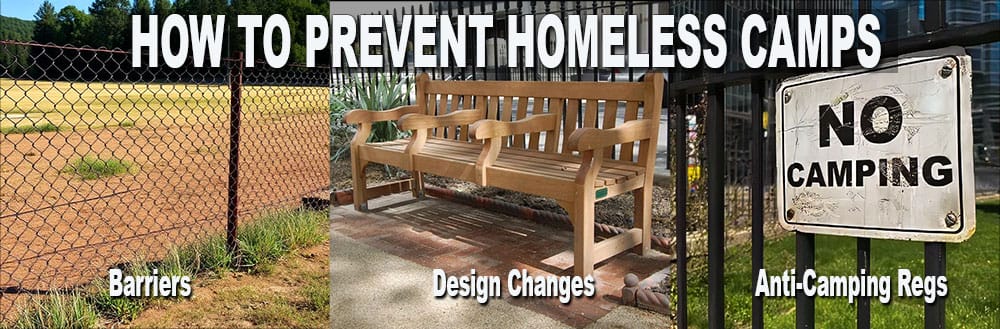
How to Prevent Homeless Encampments
How to Harden Sites Used for Homeless Camps
Introduction
Have you seen more urban homeless encampments in your neighborhood lately? You are not the only one. Many people are noticing the same thing. Homelessness is getting worse, and more cities are trying to deal with the problem of these encampments. Encampments in their area cause concern for both homeless individuals and nearby residents. Some cities are now using new methods to implement “site hardening for homeless encampments” to address the safety risks associated with homeless camps and to maintain order. We will also share how cities implement urban design to reduce unauthorized camping and prevent camps from reappearing in their community.
What Does “Hardening” Mean in the Context of Homeless Encampments?
So, what does it mean when someone says a homeless camp is “hardened”? The main goal is to stop new encampments before they start in an effective way. The plan does not address the management of the existing homeless camps by city government or support property managers in their efforts. The plan uses the layout of open spaces to guide what people do in parks, on sidewalks, and in similar places. Many people in the area push for such changes because they want to use these spaces again.
What Techniques Are Used to Harden Homeless Encampments?
To help keep the community safe, city leaders use several methods to harden areas to make them less suitable for homeless camps after a complete homeless encampment cleanup. These projects are typically called defensive architecture, hostile architecture, situational crime prevention, or environmental deterrence. The most common strategies city planners use to make environments less suitable for homeless encampments include:
1. Landscaping Design to Prevent Camping
City planners often use natural elements to make large open areas harder to occupy.
- Dense bushes or thorny shrubs in spaces where tents used to be set up
- Replacing soft dirt areas with sloped landscaping
- Filling underpasses or alcoves with decorative rocks, boulders, or gravel
- Adding planter boxes or shrubs in areas where people typically sleep
- Installing landscaped berms or uneven terrain to reduce flat surfaces
2. Structural/Architectural Changes
Barrier Installation to Prevent Encampments
These modifications physically prevent tents or makeshift shelters from being set up.
- Installing fences, gates, or railings around vulnerable public spaces
- Adding slanted or uneven ground materials (e.g., steep grades, rocks, metal structures)
- Placing large boulders or art installations under bridges or in alleyways
- Adding barriers to prevent access to recessed building entrances
- Using anti-camping posts or state agency bollards to block wide sidewalks or open lots
- Redesigning public benches to prevent lying down (center bars, sloped seats)
3. Lighting and Visibility Improvements
Encampments often form in low-visibility areas.
- Installing bright LED lighting in parks, trails, bridges, and alleyways
- Trimming trees and removing overgrown vegetation to increase visibility
- Adding security cameras or dummy camera housings
- Encouraging sightlines—reducing “hidden corners” in public infrastructure
4. Increased Foot Traffic by Design
Areas with consistent pedestrian and commercial activity discourage camping.
- Adding retail kiosks or food vendors in previously unused spaces
- Designing parks with regular programming (events, markets, recreation)
- Encouraging public art installations or plazas that invite community use
- Adding bike paths or public seating areas to create continuous activity
5. Environmental Hardening
Physical changes made specifically to prevent long-term camping.
- Clearing debris and trash regularly to prevent camp buildup
- Hardscaping dirt lots to asphalt or concrete to prevent tent staking
- Installing sprinklers or timed watering in areas prone to encampments
- Adding riverbed or wash channel reinforcements that remove flat ground
- Installing “no-stay” fencing along creeks, flood channels, and drainage areas
6. Anti-Encampment Laws and Local Regulations
More and more cities now have laws against trespassers and homeless encampments on private property. There are rules and other local laws set up to stop people from engaging in public urination or staying in public places. With these laws, it is easier for police or city workers to move people out of camps and prevent vandalism. It also helps keep these spots from being used for encampments again.
These rules can be different in every place, but most focus on things people do when they live outside, including homeless populations and issues related to illegal dumping. A city council sometimes makes a rule that says people can’t set up camps near schools or parks. Some laws say you cannot park an RV on city streets. You are not allowed to keep your possessions on the sidewalk, according to other regulations. A big court decision in 2024 said cities can issue tickets to homeless people for camping on public property.
Here is a look at some common types of rules for local areas in California set by local governments:
| Type of Regulation | Purpose/Example |
|---|---|
| Anti-Camping Ordinance | The ordinance prohibits sleeping, setting up tents, or living in vehicles in public areas such as parks, sidewalks, or beaches. |
| Sit-Lie Ordinance | Makes it illegal to sit or lie on public sidewalks in commercial districts during certain hours. |
| RV Parking Ban | The law restricts or prohibits the parking of oversized vehicles, such as RVs used for housing, on city streets overnight, which can lead to misdemeanor charges for non-compliance. |
| Obstruction Laws | Prohibits blocking public rights-of-way, such as sidewalks, with personal belongings or structures. |
(Note: Enforcement is affected by court rulings such as Martin v. Boise and Grants Pass v. Johnson, depending on jurisdiction and date.)
7. Traffic and Transportation Redesign
City planners adjust mobility infrastructure to reduce long-term camping areas.
- Re-engineering freeway underpasses to eliminate large flat land
- Narrowing or reshaping median areas to prevent tents
- Blocking vehicle access to vacant lots or dead-end streets with bollards
- Installing guardrails or landscaping along highway embankments
- Adding walking paths where unused dirt lots previously existed
8. Waterway and Flood Channel Reconfigurations
Encampments often form along waterways or drainage systems, which can lead to issues such as trespassing.
City planners can:
- Add fencing or restricted-access gates by property owners.
- Install flood-control improvements (rocks, steep slopes, riprap)
- Build retaining walls
- Clear overgrowth so that areas are too exposed for camping
- Increase stormwater drainage flow capacity (making the areas unsafe to inhabit)
9. Public Facility Design Changes
Modifications to buildings and public amenities:
- Removing alcoves or recessed doorways
- Adding roll-down gates when businesses or libraries are closed
- Replacing wide porches with sloped entrances
- Designing bus stops with standing-only structures
10. Increased Maintenance and Rapid Response Programs
City planners often coordinate with parks, public works, and police.
- More frequent trash pickup to prevent camp buildup
- Rapid cleanup teams deployed within 24–72 hours
- Outreach teams offering shelter during cleanups
- Ongoing monitoring of known hotspots to deter reformation
These methods aim to deter long-term stays. These measures can include small design changes or larger security enhancements. The city’s rules and law enforcement support many of these steps. Now, we will look at some clear examples of how these methods are used.
