How Do You Dispose of a Refrigerator With Freon? | Wild West Junk Removal

Wild West Junk Removal · Temecula & Murrieta · Appliance Disposal · EPA-Compliant Refrigerant Removal

How Do You Dispose of a Refrigerator With Freon?

Short answer: not on the curb, not in a dumpster, and not by releasing the refrigerant yourself. Here is exactly what the law requires - and how Wild West handles it right.

Refrigerant Laws  ·  EPA-Compliant Disposal  ·  Freon Removal Requirements  ·  Appliance Recycling  ·  Temecula · Murrieta · Inland Empire

📱 Text Photos for a Free Quote - (951) 837-8072

how to dispose of a fridge with freon

That old refrigerator in the garage has been there for three years. It stopped cooling, nobody uses it, and you just want it gone. So you drag it to the curb and wait for trash day. Right? Wrong - and potentially very expensive.

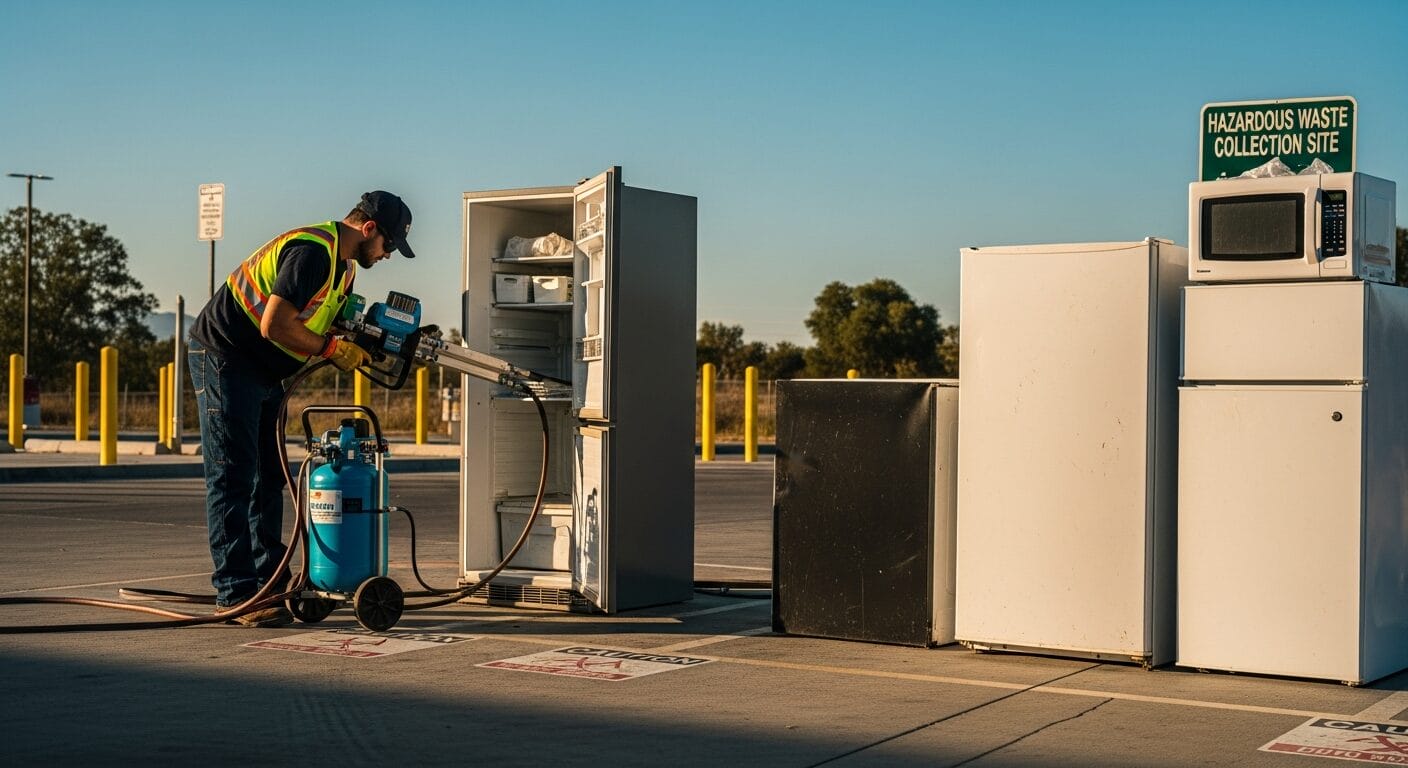
freonRefrigerators contain refrigerant (colloquially called Freon, though the specific chemical varies by era of manufacture) that is federally regulated under the Clean Air Act. Refrigerator disposal with Freon requires a certified technician to recover the refrigerant before the unit can be scrapped, recycled, or hauled. Get it wrong and you’re looking at federal fines, California penalties, and - in the best case - significant embarrassment when the trash company refuses to take it. This guide covers every compliant option, the complete legal landscape, and why letting Wild West Junk Removal handle it is the fastest and least complicated path.

The Legal Framework: What Federal and California Refrigerant Laws Actually Require

Understanding refrigerant laws is the foundation of compliant disposal. The rules come from two distinct regulatory layers - federal and state - and both apply to California residents disposing of refrigerators.

Federal Law - EPA Section 608 of the Clean Air Act

Under EPA Section 608, it is illegal to knowingly vent refrigerant into the atmosphere during the servicing, maintenance, repair, or disposal of appliances. Before any refrigerant-containing appliance can be discarded, the refrigerant must be recovered by a certified EPA Section 608 technician using approved recovery equipment. This applies to all refrigerants - old ozone-depleting CFCs and newer HFCs alike.

California State Law - CARB Refrigerant Management Program

The California Air Resources Board’s Refrigerant Management Program adds a state-level regulatory layer above federal requirements. California’s program sets stricter leak detection requirements for commercial and industrial refrigeration, requires reporting of refrigerant purchases and use, and enforces the EPA Section 608 standards through state-level inspections and penalties.

California Illegal Dumping - Penal Code §374.3

Beyond refrigerant-specific regulations, placing a refrigerator at the curb without compliant refrigerant removal also constitutes illegal dumping under California Penal Code §374.3 when it ends up on public or private property improperly. The appliance itself - not just the refrigerant - must be disposed of through appropriate channels.

EPA Responsible Appliance Disposal (RAD) Program

The EPA’s RAD Program is a voluntary framework for utilities, retailers, and recyclers that commit to best-practice appliance disposal: certified refrigerant recovery, recycling of metals, and proper management of foam insulation (which may contain ozone-depleting blowing agents in older units). Using a RAD-certified partner - which Wild West does - ensures all components of disposal compliance are met.

$44K

Maximum daily penalty per violation for intentional venting of refrigerant under the Clean Air Act - currently $44,539 per day. For illegal dumping under California Penal Code §374.3, fines reach $10,000 per offense. These are not theoretical maximums - EPA enforcement actions against homeowners and landlords for improper appliance disposal occur regularly. EPA-compliant disposal costs a fraction of the minimum fine exposure.

Types of Refrigerant in Old Refrigerators - and Why It Matters for Freon Removal Requirements

The specific refrigerant in your appliance depends on when it was manufactured. This affects how strictly the refrigerant is regulated and what the environmental stakes are if it is released. All of the following refrigerants require certified recovery - but the older ones are more acutely dangerous to the ozone layer and are subject to the strictest Freon removal requirements.

R-12 (CFC - “Original Freon”) - Pre-1995 Refrigerators

The original refrigerant - the one colloquially called “Freon.” R-12 is a chlorofluorocarbon (CFC) that directly depletes the stratospheric ozone layer. It was phased out under the Montreal Protocol and banned for new appliances in the U.S. by 1994. Pre-1994 refrigerators almost certainly contain R-12. Recovery is mandatory; release is among the most penalized refrigerant violations due to ozone destruction potential.

R-134a (HFC) - 1995-2010 Era Refrigerators

R-134a replaced R-12 and was standard in household refrigerators from approximately 1995 to 2010. It does not deplete ozone, but it is a potent greenhouse gas with a global warming potential roughly 1,430 times that of CO2 - making it a significant climate concern. EPA regulations require certified recovery, and California’s Air Resources Board maintains additional oversight due to California’s climate commitments.

R-600a (Isobutane) - Post-2010 High-Efficiency Refrigerators

Many newer high-efficiency refrigerators use R-600a (isobutane), a hydrocarbon refrigerant with very low environmental impact. It does not deplete ozone and has a global warming potential of only 3. However, it is mildly flammable - requiring appropriate care during handling and disposal. Certified recovery is still required before scrapping.

“My Fridge Doesn’t Cool” - Does It Still Have Refrigerant?

Almost certainly yes. Refrigerant system failures (leaks, compressor failure) rarely result in complete refrigerant loss - most of the refrigerant remains in the system even when the fridge no longer cools effectively. Assume any non-functioning refrigerator still contains residual refrigerant and requires certified recovery before disposal. Do not puncture or cut refrigerant lines to “check.”

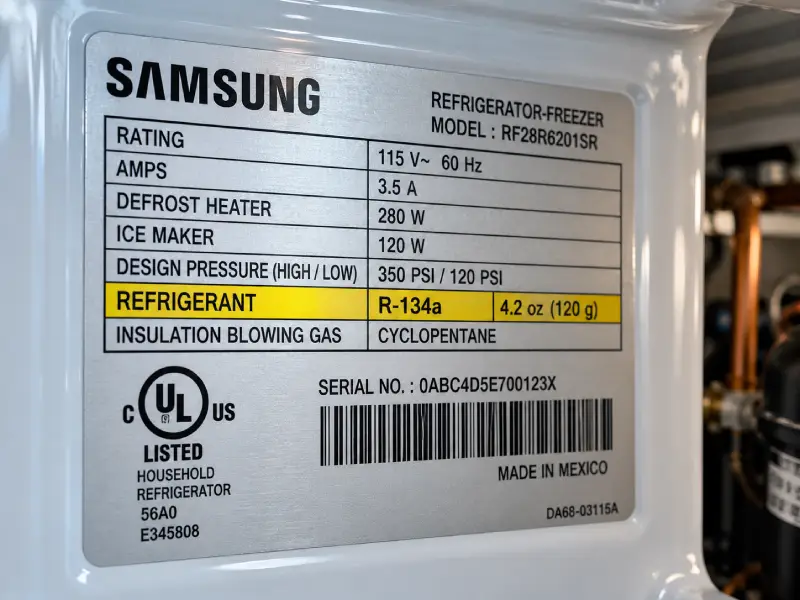
If your refrigerator was manufactured before 2010, it almost certainly contains regulated refrigerant that requires certified recovery before disposal. If it was manufactured after 2010, check the data plate inside the door for the refrigerant type. In every case, the answer to “does my fridge have refrigerant in it?” is: assume yes unless certified recovery has already been performed.

How to Dispose of a Refrigerator Legally: Every Compliant Option

There are several legitimate pathways for how to dispose of a refrigerator legally in California. The right option depends on your specific situation - unit condition, accessibility, whether you’re buying a new appliance, and how quickly you need it gone.

Utility Appliance Recycling / Buyback Program

Many California utilities - including Southern California Edison, SDG&E, and SoCalGas - offer free appliance pickup with EPA-compliant refrigerant recovery and sometimes a cash rebate ($35-$50 typically). Best option for working refrigerators that qualify by age and condition. See the utility section below for details. Contact your utility for current program terms.

Retailer Haul-Away (Best Buy, Lowe’s, Home Depot)

When purchasing a new refrigerator, most major retailers offer old appliance haul-away during delivery for a fee ($15-$50). They partner with certified recyclers for compliant refrigerant disposal. Limited to when you’re buying new - and to units that can be accessed by the delivery crew. Not available for standalone removal without a new purchase.

Municipal Bulk Item Pickup - Only If RAD-Certified

Some municipal waste haulers use EPA RAD-certified trucks with refrigerant recovery equipment. If yours does, scheduled bulk item pickup may be compliant. Call your waste hauler directly to ask - do not assume. Many standard bulk pickup services do not have certified refrigerant recovery capability, making curbside placement illegal even for scheduled pickups.

EPA-Certified Appliance Recycler or Scrap Facility

Certified appliance recyclers and scrap metal facilities that participate in the EPA RAD program accept refrigerators and perform compliant refrigerant recovery on-site. Find RAD partners at epa.gov/rad. You typically need to transport the unit to the facility yourself, which creates a separate handling challenge for heavy appliances.

Professional Junk Removal - Wild West

Fridge removal with refrigerant handled by Wild West Junk Removal is the most convenient option for most Temecula and Murrieta homeowners: same-day or next-day scheduling, no hauling or transportation required, written firm pricing on-site with fuel and disposal fees included, and delivery to a certified recycling facility. Text photos to (951) 837-8072.

Donate If Working - With Conditions

A functioning refrigerator may be accepted by Habitat for Humanity ReStore, local charities, or organizations that service and redistribute appliances. Donating a working unit means it continues its useful life - no immediate disposal required. Call ahead to confirm acceptance criteria (age, condition, type). Wild West can coordinate donation routing for qualifying units as part of their removal service.

There is no compliant DIY option for refrigerant removal. EPA Section 608 requires certified technician recovery - period. You cannot drain the refrigerant yourself, release it into the air, or cut the lines to empty the system. Each of these actions is a federal violation. Even HVAC technicians must have specific Section 608 certification for household appliance refrigerants (Type II or Universal). Do not attempt refrigerant removal without certification.

How to Dispose of a Refrigerator With Freon: 6 Steps

1

Confirm the Unit Contains Refrigerant - Assume It Does

Check the data plate inside the door frame or on the back of the unit for the refrigerant type and charge weight. Refrigerants you will see listed include R-12, R-134a, R-600a, and occasionally R-22 (in older units). If the data plate is missing or illegible, assume the refrigerant is still present and regulated. Do not open refrigerant lines to check.

Even if the refrigerator stopped cooling years ago, residual refrigerant almost certainly remains in the sealed system. The only way to confirm complete refrigerant removal is through certified recovery and documentation by an EPA Section 608-certified technician. “It doesn’t get cold anymore” is not sufficient evidence of empty refrigerant lines.

2

Check Your Utility’s Appliance Recycling Program First

Contact Southern California Edison, SDG&E, or your electricity provider to check eligibility for their appliance recycling program. These programs typically accept refrigerators and freezers that are: currently plugged in and working (or recently working), within a qualifying age range (usually manufactured within the last 15-20 years), and accessible for standard pickup. If your unit qualifies, this is the most cost-effective path - free pickup, compliant refrigerant recovery, and possible cash rebate.

If your unit is broken, very old, inaccessible (basement, upstairs, small doorway), or otherwise doesn’t qualify, proceed to the next option. Utility programs are designed for mainstream situations - they do not handle difficult removals or very old units.

3

Call Your Waste Hauler to Confirm RAD Certification

Contact your municipal waste management company and ask specifically: “Are your bulk item pickup trucks equipped for EPA RAD-certified refrigerant recovery?” If yes, schedule a bulk item pickup appointment. If no - or if they are uncertain - do not place the refrigerator at the curb for bulk pickup. Even if the truck physically picks it up, the refrigerant has not been legally recovered and you remain liable for improper disposal.

This call also allows you to confirm any specific scheduling, labeling, or access requirements for bulk appliance pickup in your municipality. Requirements vary by city - Temecula, Murrieta, and Menifee all have slightly different bulk item protocols.

4

Use Retailer Haul-Away If You’re Buying a New Appliance

If you are purchasing a replacement refrigerator from Best Buy, Lowe’s, Home Depot, or another major retailer, request haul-away of your old unit at the time of purchase. This is typically offered for a fee of $15-$50 and includes certified disposal of the old unit through the retailer’s recycling partners. Arrange this in advance - not at the time of delivery - to ensure the crew has the appropriate documentation and equipment.

Retailer haul-away programs typically require that the old unit is accessible by the delivery crew, is a standard household appliance (not commercial equipment), and is located at or near the front entrance of the property. Units in difficult locations - tight garages, upstairs, or accessed through narrow hallways - may require additional arrangements or may not qualify.

5

Schedule Wild West Junk Removal for Anything Else

For refrigerators that don’t qualify for utility programs, aren’t adjacent to a new appliance purchase, are in difficult-to-access locations, are very old, are non-functional, or are part of a larger cleanout, professional fridge removal with refrigerant handling by Wild West is the most practical solution. Text photos to (951) 837-8072 for a rough estimate.

Wild West’s process: crew arrives, provides written firm pricing before touching anything, uses appropriate equipment to move the unit safely (refrigerators weigh 150-300+ lbs), loads it onto the trailer, and delivers it to a certified recycling facility where refrigerant is professionally recovered before the unit is scrapped. Fuel and disposal fees are included. No hidden charge for refrigerant handling. See Wild West’s before and after gallery for examples of appliance and space cleanouts.

6

Confirm Certified Disposal and Retain Documentation If Needed

After disposal, confirm with your provider that environmental disposal was performed by a certified facility. For property managers and landlords disposing of multiple units, maintain disposal records documenting the certified facility and disposal date. In the event of a regulatory inquiry, documented compliant disposal is your protection.

Wild West Junk Removal routes refrigerators to facilities that comply with EPA Section 608, the California Air Resources Board’s Refrigerant Management Program, and EPA RAD program standards. Ask the crew for the facility information when they arrive - any reputable certified hauler can provide it.

Refrigerators are among the most labor-intensive appliances to move. A full-size refrigerator can weigh 200-350 lbs - more when loaded. Moving one through a tight garage, around a corner, or down stairs without the right equipment and technique risks injury to you and damage to your floors, walls, and the appliance itself. Wild West’s crew does this daily with proper hand trucks, blankets, and technique. Don’t attempt to move a large refrigerator solo or with household equipment. Text (951) 837-8072 - they handle it.

Utility Appliance Recycling Programs: Getting Paid to Dispose of Your Old Fridge

California utilities offer some of the most comprehensive appliance recycling programs in the country - combining appliance recycling near me convenience with EPA-compliant refrigerant handling and, in many cases, a cash payment for your old unit. According to CalRecycle, California’s appliance recycling infrastructure diverts hundreds of thousands of refrigerators annually from landfills through these programs.

Southern California Edison - Appliance Recycling Program

SCE’s Appliance Recycling Program offers free pickup of qualifying refrigerators and freezers and a rebate (typically $35-$50 per unit) for SCE residential customers. Units must be working, plugged in, within qualifying age and size ranges, and accessible for standard pickup. Schedule at sce.com or by calling SCE’s recycling line.

SDG&E and SoCalGas Programs

SDG&E and SoCalGas offer similar appliance recycling programs for their residential customers. Program terms, rebate amounts, and qualifying criteria vary and change periodically. Check current program details at sdge.com or socalgas.com, or call customer service to confirm eligibility for your specific unit before scheduling.

What Qualifies - and What Doesn’t

Most utility programs require: the unit must be plugged in and running (not just stored); it must be within qualifying size range (typically 10-32 cubic feet); it must be a standard household refrigerator or freezer (not mini-fridges, wine coolers, or commercial units); and it must be accessible to the pickup crew from the street or a standard entrance. Broken units, very old units (>20 years typically), or units in inaccessible locations often don’t qualify.

When Utility Programs Don’t Work - Call Wild West

If your refrigerator doesn’t qualify for a utility program - it’s broken, too old, inaccessible, or you just can’t wait for a scheduled pickup window - Wild West’s refrigerator removal fills every gap. Same-day service. Written firm pricing. No qualification criteria. Text photos to (951) 837-8072 for a same-day estimate.

What Else Makes Refrigerators Hazardous: A Complete Hazmat Guide

Refrigerant is the highest-profile hazardous component of an old refrigerator, but it is not the only one. Modern environmental disposal of a refrigerator handles all of the following material categories - not just the refrigerant. Using a certified facility ensures each of these is managed compliantly.

R-12 CFC Refrigerant (Pre-1995 Units)

The most ozone-damaging refrigerant. R-12 has an ozone depletion potential of 1.0 (the reference standard) and a global warming potential of 10,900. Strictest recovery requirements; highest fine exposure for illegal venting. Must be recovered by EPA 608-certified technician; cannot be re-used in new systems; must be reclaimed or destroyed.

R-134a HFC Refrigerant (1995-2010 Units)

Zero ozone depletion potential but a powerful greenhouse gas (GWP: 1,430). Federally regulated under Section 608 and California climate regulations. Must be recovered before disposal. California Air Resources Board maintains additional oversight of HFC management under climate commitments.

Polyurethane Foam Insulation (Pre-2005 Units)

Foam insulation in refrigerators manufactured before approximately 2005 was blown using HCFCs - ozone-depleting chemicals that are also potent greenhouse gases. Proper foam disposal under the EPA RAD program captures these blowing agents rather than allowing them to off-gas from landfills. Most landfill disposal does not capture foam blowing agents.

Compressor Oil

The refrigeration compressor contains lubricating oil that becomes contaminated with refrigerant and other degradation products over years of use. This oil is classified as hazardous waste and cannot be disposed of in standard trash or drains. Certified recycling facilities drain and properly dispose of compressor oil as part of the appliance processing protocol.

PCBs in Older Capacitors (Pre-1979 Units)

Compressor capacitors in refrigerators manufactured before 1979 may contain polychlorinated biphenyls (PCBs) - a toxic industrial chemical with serious health and environmental effects. If you have a working refrigerator from the late 1970s or earlier, disclose its age to Wild West and any recycling facility - PCB-containing components require specific hazardous waste handling.

Mercury Switches (Some Pre-2000 Models)

Some older refrigerators used mercury-containing switches for their interior light or control systems. Mercury is a potent neurotoxin and requires specific disposal handling. Certified appliance recyclers identify and properly handle mercury components as part of the standard processing protocol.

Electronic Components and Circuit Boards

Modern refrigerators contain circuit boards, displays, and electronic control modules that qualify as e-waste under California law (AB 2284). These cannot be disposed of in standard trash. Certified appliance recyclers separate and route electronic components through appropriate e-waste recycling streams.

Recyclable Materials - What the Fridge IS Worth

On the positive side, a refrigerator contains significant quantities of recyclable materials: steel (the largest component by weight), aluminum (in many internal components), copper (in the compressor and coils), and various plastics. A certified recycling facility recovers all of these - partially offsetting processing costs through material value.

The Legality of Curb Disposal and Other Illegal Options Explained

The question “can I just put it on the curb?” comes up constantly - and the answer requires more nuance than a simple yes or no. Here is the complete picture of what is and is not compliant for Freon refrigerator disposal.

Curb Disposal - Legal Only Under Specific Conditions

Placing a refrigerator at the curb is legal ONLY if your municipal waste hauler uses EPA RAD-certified equipment for refrigerant recovery. Most do not. Call your waste hauler and ask specifically. If they do not have certified recovery capability, curbside placement of a refrigerant-containing appliance is a federal Clean Air Act violation - regardless of whether they physically pick it up.

Dumpster Disposal - Illegal

Placing a refrigerant-containing refrigerator in a standard dumpster or roll-off container is illegal. Standard dumpsters are not equipped for refrigerant recovery and the unit will ultimately end up at a landfill where the refrigerant off-gasses without recovery. Dumpster rental companies typically prohibit refrigerant-containing appliances in their terms of service - and the liability for improper disposal falls on the person who placed it there.

Selling to a Scrap Yard - Depends on the Yard

A certified scrap metal facility that participates in the EPA RAD program can legally accept refrigerators and will perform refrigerant recovery before scrapping. An uncertified scrap yard that accepts refrigerators and crushes them without recovery is violating federal law - and you may be sharing liability for facilitating that disposal. Ask specifically about Section 608 certification before dropping off at a scrap yard.

Releasing Refrigerant Yourself - Federal Crime

Puncturing the refrigerant lines, opening the system, or intentionally venting refrigerant is a federal crime under the Clean Air Act - regardless of the refrigerant type, the quantity, or your intent. The penalty is up to $44,539 per day per violation. There is no de minimis exception for household appliances. Do not attempt this under any circumstances.

The most common illegal disposal scenario: homeowner drags old fridge illegal dumpingrefrigerator to the curb for bulk trash pickup. The waste hauler - not certified for refrigerant recovery - picks it up anyway. The refrigerant is released during compaction or at the transfer station. The homeowner, the hauler, and potentially the facility operator each have some degree of liability under the Clean Air Act. The homeowner’s defense - “I didn’t know they weren’t certified” - provides limited legal protection. Confirm certification before placing any refrigerant appliance at the curb.

For Landlords and Property Managers: Handling Multiple Refrigerators and Tenant Left-Behinds

Landlords and property managers in the Temecula and Murrieta area regularly encounter the refrigerator disposal problem at scale: a tenant moves out and leaves behind an old refrigerator, or a rental property renovation requires replacing multiple appliances. The legal requirements apply equally whether you are disposing of one unit or twenty.

Tenant Left-Behind Appliances

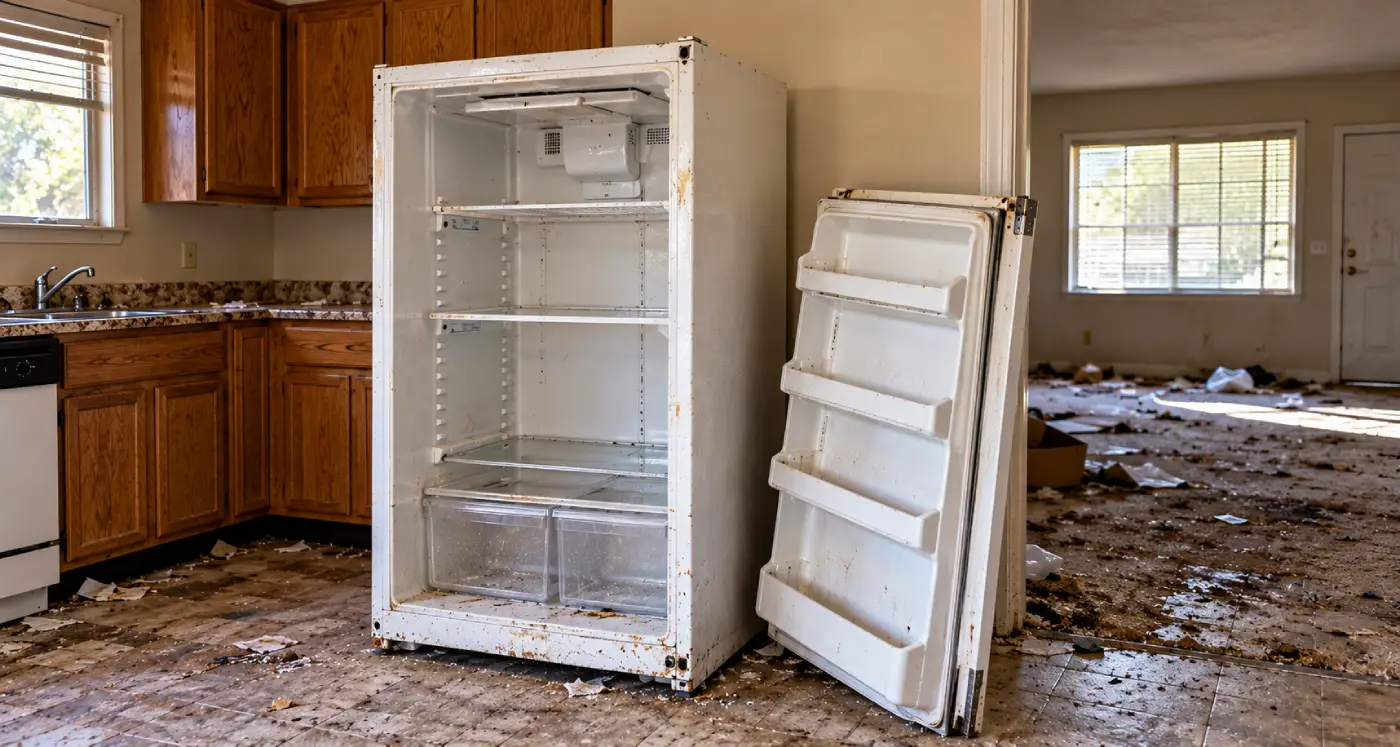
When a tenant leaves a refrigerator in a rental unit, the landlord assumes responsibility for its proper disposal as part of the property cleanup process. The refrigerant laws apply regardless of who originally placed the appliance - the current property owner or manager is responsible for compliant disposal. See Wild West’s hoarding and property cleanout services for complete rental turnover solutions that include appliance disposal.

Multiple Units - Volume Disposal

For renovation projects or property clearances involving multiple refrigerators, Wild West can coordinate scheduled multi-unit pickup with volume pricing. Text photos of all units to (951) 837-8072 - the estimate accounts for volume and number of units. Multiple refrigerators in the same property are scheduled as a single job, saving time and coordination overhead.

Documentation for Property Records

Property managers disposing of appliances from income properties should maintain disposal documentation in property records. In the event of an environmental inquiry or regulatory audit, documented compliant disposal - including facility name, date, and certification status - protects both the property owner and the management company. Ask Wild West for disposal facility information when scheduling.

Rental Turnover Speed - Wild West Delivers

Every day a rental unit sits vacant during turnover is a day of lost rent. Wild West’s same-day and next-day service availability means appliance disposal does not become a bottleneck in the turnover timeline. On a $2,200/month Murrieta rental, Wild West’s same-day service can recover days of rental income by keeping the turnover moving. See rental turnover before and afters for examples.

If you are managing multiple rental properties and regularly deal with appliance disposal, contact Wild West about setting up a regular-service arrangement. Rather than calling for each individual unit, a pre-arranged relationship means faster scheduling, consistent pricing, and a reliable partner who knows your properties and access situations. Text (951) 837-8072 to discuss.

Refrigerator Disposal Compliance Checklist

Before disposing of any refrigerator containing refrigerant, work through this checklist. Every unchecked item is a potential compliance gap or legal exposure.

Identify Refrigerant Type from Data PlateCheck inside door frame - R-12, R-134a, R-600a, or other; document the type
Do NOT Puncture Refrigerant LinesIntentional refrigerant venting is a federal crime - $44,539/day penalty; no exceptions
Check Utility Appliance Recycling EligibilityCall SCE, SDG&E, or your provider; confirm current program terms before scheduling
Confirm Municipal Hauler RAD Certification Before Curbside PlacementVerbally confirmed - not assumed - that your hauler uses certified refrigerant recovery equipment
If Buying New - Request Retailer Haul-AwayAsk Best Buy, Lowe’s, or Home Depot about haul-away service at time of new appliance purchase
For All Other Situations - Contact Wild WestText photos to (951) 837-8072 for same-day or next-day estimate and pickup scheduling
Do NOT Place in a Standard DumpsterStandard roll-off dumpsters and skip bins are not equipped for compliant refrigerant recovery
Disclose Pre-1979 Units for PCB AssessmentCapacitors in pre-1979 refrigerators may contain PCBs - disclose unit age upfront to any disposal provider
Confirm Disposal Facility Is EPA RAD-Certified or Section 608-CertifiedAsk provider directly; document facility name for property records if managing rental properties
Clear Access Path for Removal CrewMove vehicles, unlock gates, clear narrow hallways - crew needs a clear path from fridge location to trailer

Wild West Junk Removal: EPA-Compliant Fridge Disposal in Temecula and Murrieta

Wild West Junk Removal routes all refrigerators to EPA-certified recycling facilities that performEPA certified recycling center compliant Freon recovery, properly handle foam insulation, recycle metals, and meet all California Air Resources Board requirements. Same-day and next-day service. Written firm pricing on-site. Fuel and disposal fees included. No surprise charges for refrigerant. Family-owned, fully licensed and insured, 5-star rated.

(951) 837-8072

Mon-Sat 7 AM-10 PM  ·  Sun 8 AM-8 PM  ·  Text Photos for Same-Day Quote

Refrigerator Removal Service  ·
All Junk Removal Services  ·
Contact & Request a Quote

Refrigerator Freon Disposal: Your Questions Answered

The most common questions homeowners, landlords, and property managers ask about legally disposing of refrigerators with Freon in California.

  • Is it illegal to put a refrigerator on the curb?

    Yes - putting a refrigerator containing refrigerant on the curb for regular trash pickup is illegal under federal and California law. Under EPA Section 608 of the Clean Air Act, refrigerant must be properly recovered by a certified technician before an appliance can be discarded. California Penal Code §374.3 also prohibits illegal dumping of appliances.

    Violators face fines up to $10,000 per offense under California’s illegal dumping law, and up to $44,539 per day per violation for Clean Air Act violations. The only exception is if your municipality’s bulk trash pickup uses EPA RAD-certified trucks with recovery equipment - call your waste hauler to confirm before placing any refrigerant appliance at the curb. See Wild West’s refrigerator removal service for a compliant alternative.

  • Does my old refrigerator still have Freon in it?

    Almost certainly yes. If the refrigerator was manufactured before 2010 and ever got cold, it contains refrigerant. Pre-1995 models likely contain R-12 (CFC Freon), the most strictly regulated type. 1995-2010 models typically contain R-134a. Even refrigerators that no longer cool properly typically retain residual refrigerant - the system rarely empties on its own from normal failures.

    Assume any refrigerator over 5 years old contains refrigerant and handle accordingly. Check the data plate inside the door for the specific refrigerant type. Wild West’s fridge removal service handles all refrigerant types.

  • Who is certified to remove Freon from refrigerators?

    Under EPA Section 608, refrigerant recovery must be performed by a technician certified under Section 608 Type II or Universal certification. These technicians use specialized recovery equipment to capture refrigerant before the appliance is scrapped or hauled.

    Wild West Junk Removal works with EPA-certified recycling centers that handle refrigerant recovery in compliance with all applicable regulations - so you don’t need to locate a certified technician separately. For all Freon refrigerator disposal in Temecula and Murrieta, text photos to (951) 837-8072.

  • Can I pay the utility company to take my old refrigerator?

    Yes - and you may get paid. Southern California Edison’s Appliance Recycling Program offers free pickup and a cash rebate (typically $35-$50) for qualifying units. SDG&E and SoCalGas offer similar programs. These are among the most cost-effective options for appliance recycling near me in Southern California.

    Check SCE’s current program details for eligibility. Units that are broken, very old, or inaccessible often don’t qualify - for those, Wild West is the practical alternative.

  • What is the EPA RAD program?

    The EPA Responsible Appliance Disposal (RAD) program is a voluntary framework where utilities, retailers, manufacturers, and recyclers commit to best-practice appliance disposal: certified refrigerant recovery, metal recycling, and proper foam insulation management. According to CalRecycle, California’s RAD partners divert hundreds of thousands of appliances annually.

    Wild West routes refrigerators to facilities that meet RAD program standards - ensuring all components including refrigerant, foam, compressor oil, and electronics are handled compliantly as part of every EPA-compliant disposal job.

  • What refrigerants are in old refrigerators?

    Refrigerants changed over time due to environmental regulations: R-12 (CFC) - pre-1995 units, the original “Freon,” most strictly regulated due to ozone depletion potential. R-134a (HFC) - 1995-2010, no ozone depletion but a potent greenhouse gas (GWP: 1,430). R-600a (isobutane) - newer high-efficiency units, very low environmental impact but mildly flammable.

    All three require certified recovery before disposal. The California Air Resources Board’s Refrigerant Management Program provides additional oversight of all these refrigerants in California beyond federal requirements.

  • How much does refrigerator disposal with Freon removal cost?

    Cost by option: Utility buyback: free + possible $35-$50 rebate for qualifying working units. Retailer haul-away: $15-$50 when purchasing a new appliance. Wild West Junk Removal: priced by volume with no hidden fees for refrigerant - fuel and disposal included, written firm estimate on-site before work begins.

    For a specific estimate on your refrigerator disposal with Freon, text a photo to Wild West at (951) 837-8072. They beat all written competitor estimates.

  • Can I remove the Freon myself before putting a refrigerator in the trash?

    No - this is a federal crime. Refrigerant removal must be performed by an EPA Section 608-certified technician using approved recovery equipment. Attempting to release or vent refrigerant by any means - including puncturing refrigerant lines - is illegal under the Clean Air Act, regardless of refrigerant type or quantity.

    The penalty for intentional venting is up to $44,539 per day per violation. There are no exceptions for homeowners or household appliances. For legal fridge removal with refrigerant handling, contact Wild West at (951) 837-8072.

  • Does Home Depot or Best Buy take old refrigerators with Freon?

    Yes, with conditions. Best Buy’s Haul Away service removes old appliances for a fee ($29.99-$49.99) when delivering a new appliance - they partner with certified recyclers for environmental disposal. Home Depot and Lowe’s offer similar programs for $20-$30 with new appliance delivery.

    These programs require a new appliance purchase and accessible unit location. For standalone removal without a new purchase, Wild West or a utility buyback program are typically the most convenient options for how to dispose of a refrigerator legally.

  • How does Wild West Junk Removal handle refrigerators with Freon?

    Wild West works with EPA-certified recycling centers that handle Freon removal requirements in compliance with all applicable EPA Section 608, California Air Resources Board, and EPA RAD program standards. The process: text photos to (951) 837-8072 for a rough estimate → crew arrives → written firm pricing on-site before any work → unit loaded using proper equipment → delivered to certified recycling facility where refrigerant is professionally recovered.

    Fuel and disposal fees are included. No hidden charges for refrigerant handling. Serves Temecula, Murrieta, Menifee, Hemet, Fallbrook, Lake Elsinore, and surrounding communities. View all Wild West services.