
Demolition Cleanup Temecula:
When the Dust Settles, We Handle the Rest
What makes demo cleanup different from standard junk removal, how asbestos and lead paint rules affect pre-1980 structures, how material sorting reduces your disposal cost, and how Wild West prices and schedules post-demo hauling in Riverside County.
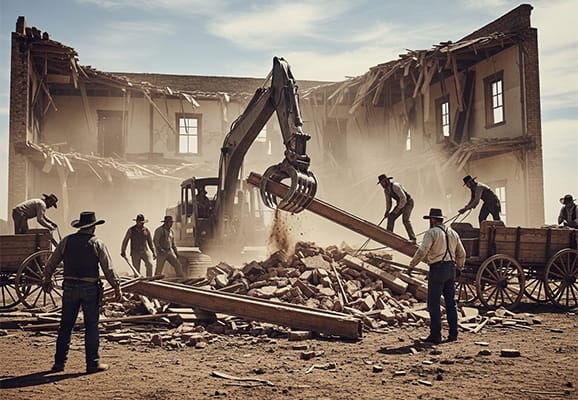
Demolition produces a specific category of debris that behaves differently from every other waste stream in residential and commercial construction. When a structure is knocked down - a shed, a garage, a load-bearing interior wall, a commercial tenant improvement, or an entire outbuilding - the resulting pile is dense, mixed, and frequently contains regulated materials that require segregation before any hauling truck can legally load it. The combination of heavy concrete, mixed wood framing, roofing material, plumbing and electrical components, and the possibility of asbestos or lead paint in older structures makes demolition cleanup one of the more technically specific jobs in the debris removal business.
Wild West handles post-demolition cleanup as a distinct service - not as a standard junk removal call with heavier material. The crew arrives with two-ton trailers rated for the weight profile of concrete and masonry, and the estimator confirms material weight as well as volume before any price is quoted. According to the EPA’s construction and demolition debris data, demolition activity accounts for a significant share of total C&D material nationally - and that material has specific diversion requirements under CalRecycle’s Construction and Demolition program that Wild West follows when routing loads to licensed processors.
The five points below cover the most important distinctions: what separates demo cleanup from standard construction debris removal, which California regulations apply to pre-1980 structures before any cleanup can begin, how on-site material sorting reduces the cost of disposal, what permits are required before the demo work that creates the debris happens, and how combining demolition cleanup with junk removal in a single Wild West visit saves time and scheduling complexity for the property owner or general contractor. Wild West’s construction debris removal service page covers the general renovation debris context alongside the demo-specific information here.
Demo Cleanup vs. Construction Debris - Why the Distinction Matters for Pricing and Compliance
Construction debris and demolition debris come from the same general category of activity, but the material profiles are substantially different. Construction debris from an active remodel - offcuts of new drywall, packaging, lumber scrap, tile cut-offs - is light, predictable in composition, and rarely triggers regulated substance concerns unless the existing structure being modified is old. Demolition debris, by contrast, is the material that was in the structure before anyone touched it. It has aged, it may contain legacy materials, and it is almost always heavier per cubic yard because it includes the full density of the original construction materials rather than the waste fraction of new materials.
Concrete is the defining weight challenge. A cubic yard of broken concrete rubble weighs approximately 2,400 pounds - equivalent to most of a standard truck’s weight rating in a single cubic yard of material. A pile of broken concrete that looks like a half-load by volume can easily exceed the weight capacity of a standard junk removal truck rated for household furniture. Wild West’s two-ton trailers are sized for this material profile, and the estimator accounts for the material composition of the pile - primarily concrete and masonry, primarily wood, or mixed - before the load price is confirmed. The difference matters on the invoice and at the landfill weigh-in.

Trailer Capacity - Rated for the Weight Profile of Demolition Debris
Wild West’s two-ton trailers handle the concrete, masonry, and mixed-material loads that exceed standard junk truck weight ratings. Material weight is assessed during the free on-site estimate before any price is confirmed - so what the invoice shows before loading is what the final bill reflects. No overweight surprises at the landfill weigh-in. Full pricing by volume here.
Asbestos, Lead Paint, and the Regulated Materials That Must Be Handled Before Any Hauling Begins
Pre-1978 Structures - Asbestos & Lead Testing Required First
The single most important rule for demolition cleanup in pre-1980 Temecula structures is this: no debris hauling begins until asbestos and lead paint status has been confirmed. California Code of Regulations Title 8 Section 1529 and the EPA’s National Emission Standards for Hazardous Air Pollutants (NESHAP) require asbestos surveys before any renovation or demolition that would disturb suspect materials in buildings constructed before 1981. Wild West does not haul asbestos-containing materials under any circumstances - and the consequence of mixing asbestos debris with a standard haul is a serious federal and state violation that falls on the property owner and contractor, not just the hauler.
The practical sequence is straightforward: hire a Certified Asbestos Consultant to survey the structure before demolition begins. If asbestos is found, a California-licensed asbestos abatement contractor removes and disposes of the affected materials under NESHAP compliance. For lead paint, the EPA’s lead paint rules govern disturbance and disclosure, particularly for residences and child-occupied facilities. Once abatement is certified complete by the appropriate parties, Wild West schedules the debris haul. The abatement step is not Wild West’s scope - but the cleanup after abatement absolutely is.
Common in roofing shingles, pipe insulation, floor tiles, joint compound, and textured ceilings. Must be surveyed and abated by licensed contractors before any demolition debris hauling begins. Wild West does not haul ACMs.
Lead paint on walls, trim, and window frames. Dust generated by demolition is regulated under EPA RRP rules. California requires licensed contractors for renovation/demo in pre-1978 residences and child-occupied facilities.
Commercial demolitions routinely produce fluorescent tube and CFL fixtures containing mercury. These are covered e-waste and cannot go in a standard demolition debris haul. Stage separately for certified disposal.
Old adhesives, mastic, roofing tar, and solvents from demolition cannot go in standard haul loads. California classifies them as hazardous waste. Stage for Riverside County HHW or licensed hazardous waste pickup.
Commercial demolitions produce backup power systems, emergency lighting batteries, and UPS units. All lithium-ion and lead-acid batteries require certified handling - not standard disposal.
Monitors, servers, network equipment, and commercial electronics in demolished spaces are covered e-waste under California law. Wild West routes these to CalRecycle-approved processors - not the general debris haul.
Per-Day DTSC Penalty - Improper Handling of Hazardous Demolition Waste
The California Department of Toxic Substances Control can impose penalties up to $37,500 per day per violation for improper handling of hazardous materials from demolition sites. These apply to the contractor and property owner - not only the hauler. Asbestos demolition violations under EPA NESHAP carry separate federal penalty exposure. Wild West identifies regulated materials at the site and stages them separately before loading begins, protecting both contractor and property owner from accidental violations.
California Code of Regulations Title 8 Section 1529 and EPA NESHAP (40 CFR Part 61 Subpart M) both require asbestos notification and abatement before demolition that would disturb asbestos-containing materials. For commercial structures and residential structures with more than four dwelling units, notification to the South Coast Air Quality Management District (SCAQMD) or the local air quality management district is required before demolition begins. Violating these requirements exposes the building owner, contractor, and hauler to federal and state criminal and civil penalties. Wild West will not load or transport debris from a site where asbestos abatement has not been confirmed complete. Provide abatement documentation when scheduling demolition cleanup if the structure predates 1981.
Material Sorting - How Separating Debris Streams Reduces Your Disposal Cost
A fully mixed demolition debris pile - concrete, wood, drywall, metal, and miscellaneous materials all together - is priced and disposed of at the general C&D disposal rate, which is set by weight at licensed facilities. A pile where concrete has been separated from wood, and metals have been pulled for recycling, has a lower total disposal cost because each stream can go to a facility that accepts that material type at a more favorable rate than the general mixed-load tipping fee.
Wild West’s crew performs basic material separation on every demolition cleanup job as part of the standard process. Metals - steel framing, copper pipe, aluminum components - are pulled for certified recyclers before the load reaches the disposal facility. Concrete rubble may be routed to aggregate processors that accept clean concrete for crushing into road base, diverting material from the landfill entirely. Clean dimensional wood may be diverted to wood recyclers when quantities are sufficient. This sorting approach follows the diversion goals of CalRecycle’s C&D program and reduces the total disposal cost on material-heavy jobs. Describe the approximate material mix when calling for the estimate so the sorting plan is confirmed before the crew arrives.
Material Sorting - Metals, Concrete & Wood Separated Before Disposal
| Unsorted Mixed Demo Load | Wild West Sorted Demo Cleanup |
|---|---|
| All materials mixed - priced at general C&D tipping rate, which is higher than sorted-stream rates at specialized facilities | Metals pulled for recyclers, concrete routed to aggregate processors, clean wood diverted - lower disposal cost on heavy material jobs |
| Regulated materials (fluorescent lighting, batteries, electronics) risk being mixed in with general debris - compliance exposure for contractor | Wild West crew identifies regulated materials at the site and stages them separately before loading begins |
| Standard junk truck weight limits exceeded by a small concrete pile - multiple trips or overweight charges | Two-ton trailers rated for concrete and masonry weight profile - material weight confirmed in estimate before loading |
| Everything to landfill - no recycling or aggregate diversion regardless of material type | CalRecycle C&D diversion practices applied - landfill is the last resort, not the default for recyclable materials |
Demolition Permits and the Sequence That Has to Happen Before Wild West Arrives
Permit and Compliance Sequence - Demo Before Cleanup
Wild West handles post-demolition cleanup - the work that happens after the permitted demolition activity is complete. The demolition itself, and the permits required to legally perform it, are outside Wild West’s scope. Understanding the permit sequence that precedes the debris cleanup call is important because it determines when the site is legally ready for hauling.
The City of Temecula Community Development Department requires demolition permits for most structures above a certain size threshold. For residential properties, this typically covers any outbuilding, garage, or structural wall removal. For commercial properties, permits are required for any tenant improvement that involves structural demolition, interior gut-outs above a specified scope, or full structure removal. Demolition permits are separate from building permits for new construction, and both may be required when a structure is being replaced rather than simply removed. The City of Temecula Community Development Department is the correct first call before any structural demolition work begins on a city-jurisdiction property. Riverside County properties in unincorporated areas go through the county’s building and safety department. Once permits are pulled, demolition is complete, and regulated materials have been abated, Wild West schedules the cleanup.
- Demolition permit required for most structures - City of Temecula requires demolition permits for outbuildings, garages, commercial interiors, and structural wall removal above the permit threshold. Confirm requirements before scheduling demolition work.
- AQMD notification for commercial demolitions - commercial structures and multi-unit residential demolitions may require notification to the South Coast Air Quality Management District before demolition begins, particularly when asbestos survey results are pending or positive.
- Asbestos and lead abatement before debris hauling - certified abatement complete and documented before Wild West schedules any cleanup on pre-1980 structures. Abatement documentation is requested when scheduling on affected properties.
- OSHA site safety requirements - active demolition sites are subject to OSHA 29 CFR 1926 Subpart T demolition safety standards. Wild West cleanup crews operate under the same OSHA construction safety framework on active sites. Confirm site safety status before the cleanup crew arrives.
- Stormwater management during and after demolition - demolition sites near drainage features may require stormwater controls before and during debris removal. Describe site proximity to storm drains or waterways when calling for the estimate.
Combining Demolition Cleanup with Junk Removal - One Visit, One Price, One Call
The structure being demolished rarely exists in isolation. A garage teardown involves not just the concrete slab and wood framing - it also involves decades of contents: old furniture, appliances, equipment, automotive parts, and general storage that accumulated while the structure was standing. A commercial tenant improvement demolition leaves behind the demo debris plus the furniture, fixtures, and equipment of the former occupant. An interior gut-out of an older home produces structural demolition debris alongside the personal property and household items that were still inside.
Wild West handles the demolition debris and the associated junk removal in a single visit, with a single price that accounts for both the heavy structural material and the household or commercial contents. This eliminates the scheduling complexity of coordinating two separate service providers - a demolition debris hauler and a junk removal company - with different equipment, different pricing models, and different availability windows. Describe the full scope of the job when calling: the demo debris type and approximate volume, and any furniture, appliances, electronics, or other junk going in the same visit. The estimate accounts for everything before the crew loads a single item.
Combined Service - Demo Debris + Junk Removal in One Visit
Every Demolition Cleanup Type Wild West Handles in Temecula
Post-demo cleanup after permitted demolition is complete. Full acceptance list here.
Shed & Outbuilding Teardown
The most common residential demo cleanup call. Wood framing, roofing, concrete floor slab or footing, and associated hardware. Single-visit cleanup after permitted teardown.
Garage Demolition Cleanup
Attached and detached garage teardown debris - drywall, framing, concrete, roofing. Often combined with contents removal from decades of accumulated garage storage in the same visit.
Interior Gut-Out Debris
Kitchen and bathroom remodel tearout - tile, drywall, cabinetry, fixtures, flooring, and mixed interior demolition materials. Heavy tile and concrete board loads confirmed for weight capacity in the estimate.
Commercial TI Demolition
Tenant improvement demolition for office, retail, and restaurant spaces. Commercial service details here. Scheduled around contractor phasing to keep the site clear and safe.
Deck & Patio Demolition
Wood deck framing, composite decking, patio covers, pergolas, and associated concrete footings. Combined yard debris and demo cleanup in the same visit when applicable.
Concrete & Masonry Demolition
Concrete pad, retaining wall, and masonry demolition debris. Dense, heavy material - weight confirmed in the on-site estimate before pricing. Concrete may be routed to aggregate processors for road base diversion.
Site Clearing Cleanup
Land clearing debris - fencing, landscape structures, hardscape demolition, and outdoor structures. Often combined with yard waste removal in the same visit.
Demo + Junk Removal Combined
Demolition debris plus the contents of the demolished structure - furniture, appliances, electronics - handled in a single visit. One price, one crew, one call. Describe the full scope when calling.
Demolition Cleanup Site Preparation Checklist
Complete this before calling or before haul day. Most items take under five minutes each and prevent delays on cleanup day.
Demolition permit confirmed: City of Temecula or Riverside County demolition permit pulled and work completed before cleanup is scheduled. Permit documentation available if requested.
Asbestos status confirmed: For any structure built before 1981, asbestos survey completed by a Certified Asbestos Consultant and any required abatement completed and documented before Wild West is called.
Lead paint status noted: For pre-1978 structures, lead paint survey completed and any required remediation under EPA RRP rules addressed before cleanup crew arrives.
Regulated materials staged separately: Fluorescent lighting, batteries, electronics, paint, solvents, and adhesives pulled from the demo pile and staged separately for certified disposal before the crew arrives.
Material mix described: Approximate composition of the debris pile - primarily concrete, primarily wood, mixed, or heavy with metals - described when calling so the weight-based estimate is accurate before the crew arrives.
Site access confirmed: Clear path for the two-ton trailer from the street or driveway to the debris pile. Any soft soil, low clearance, or tight turns described before the appointment so the crew plans appropriately.
Utility confirmation: All utilities - gas, electric, water - confirmed disconnected from demolished structures before cleanup crew arrives. Live utility connections in or near a demolition site are a serious safety concern.
Combined junk scope noted: Any furniture, appliances, or junk removal items going in the same visit as the demo debris described when calling so the truck capacity accounts for the full scope of the job.
Stormwater management in place: Any required silt fencing or stormwater controls for the site during cleanup confirmed and in place before the crew begins loading.
Photos taken and texted: Wide-angle photos of the full debris pile and site access path texted to (951) 837-8072 before calling give the estimator the most accurate basis for load size, weight assessment, and crew planning.
How to Book a Wild West Demolition Cleanup
Confirm permit and abatement status, then call with site details
Call or text (951) 837-8072 after confirming that the demolition permit is complete and - for any pre-1981 structure - asbestos and lead paint abatement has been certified complete. Describe the project type (shed, garage, commercial TI, interior gut-out), debris material mix, approximate volume, and access situation. Text photos of the site for the fastest and most accurate estimate. For large commercial demolition cleanup projects, an on-site walk-through is scheduled before the haul date is confirmed.
Weight-based estimate confirmed before loading begins
Wild West’s estimator confirms the debris material mix, weight assessment, and written price before any item is loaded. For concrete-heavy loads, the weight calculation is confirmed separately from the volume - preventing the overweight surprise at the landfill weigh-in that catches contractors off guard when using volume-only pricing. For jobs combining demo debris with junk removal, both components are included in the single written price confirmed before work begins.
Regulated materials staged, crew loads and sorts
Before loading begins, the crew confirms that regulated materials - fluorescent lighting, batteries, electronics, paint, solvents - are staged separately from the general debris pile. Wild West will not load these items into the standard haul; they require separate disposal streams. After confirmation, the crew loads all demo debris, separating metals for recycling and identifying concrete for potential aggregate diversion. All remaining material goes to licensed C&D disposal facilities.
Site swept, documentation provided, ready for next phase
Wild West sweeps the site after the last load is removed. The cleared pad or footprint is ready for inspection, new construction, or sale. Documentation of waste volumes and disposal routing available on request for contractor records, city inspection files, or lender documentation. Same-day and next-day scheduling available across Temecula and Riverside County - see current availability here.
When Temecula Contractors and Property Owners Call Wild West for Demo Cleanup
Shed or garage demolition is complete - debris pile needs to clear. A permitted teardown is done and the debris pile is the last obstacle before the property can be used, listed, or handed to the next contractor. Wild West dispatches same-day or next-day.
Kitchen or bathroom gut-out generates heavy tile and drywall. Renovation debris from a full kitchen or bath remodel - tile, concrete board, cabinetry, drywall - fills a trailer quickly with heavy mixed material. Weight confirmed in the estimate before loading. Construction debris details here.
Commercial tenant improvement demolition. An office, restaurant, or retail space being gutted for a new tenant or concept. Demo debris plus commercial fixtures and equipment handled in a single Wild West commercial service visit.
Pre-listing property clearance - demo and junk combined. A property being prepared for sale that requires both a structure removal and a cleanout of the remaining contents. Wild West clears everything in a single coordinated visit. Pre-listing service details here.
Concrete pad, retaining wall, or masonry demolition. Heavy material that exceeds standard junk truck weight ratings and requires two-ton trailer capacity. Weight estimated before loading so the invoice is accurate before work begins.
Post-abatement cleanup on a pre-1978 property. Asbestos and lead abatement is certified complete and the property is cleared for debris hauling. Wild West handles all non-regulated demolition debris after abatement documentation is confirmed. Demo cleanup tips here.
Demo Is Done - Let’s Clear the Site.
Wild West handles post-demolition cleanup for residential and commercial projects across Temecula and Riverside County. Two-ton trailers, material sorting, same-day availability. Free estimate before anything moves.
Get a Free Quote
Or call / text (951) 837-8072
Demolition Cleanup FAQ
Questions Temecula contractors and property owners ask most often before scheduling post-demo hauling.
Demolition cleanup is the hauling of debris generated when a structure or structural element is knocked down, as opposed to construction cleanup which involves scrap from new build activity. Demo cleanup typically produces larger volumes of heavy, mixed materials - concrete, masonry, steel - and is more likely to involve regulated substances like asbestos and lead paint in pre-1980 structures. Wild West handles both demo cleanup and general construction debris removal, with two-ton trailers rated for heavy demolition material profiles.
Wild West prices by truck volume: a quarter load (3 cubic yards) is $195, a half load $350, a three-quarter load $495, and a full 12-cubic-yard load $595. Heavy demolition debris - primarily concrete, masonry, or steel - compresses the volume math significantly; the estimator accounts for material weight during the on-site assessment before any price is confirmed. Large commercial demolition cleanup projects are quoted on-site before work begins.
Yes. Wild West’s two-ton trailers are specifically rated for the weight profile of concrete, brick, block, and masonry demolition debris. Material weight is assessed during the on-site estimate before the price is confirmed - preventing the overweight surprise at the landfill weigh-in that contractors encounter when using volume-only pricing from standard junk trucks. Concrete may also be routed to aggregate processors as part of Wild West’s CalRecycle diversion practices.
No. Wild West does not haul asbestos-containing materials under any circumstances. If asbestos is present in a pre-1981 structure, a California-licensed asbestos abatement contractor must remove and document the disposal of affected materials before Wild West schedules any cleanup. After abatement is confirmed complete and documented, Wild West handles all non-asbestos demolition debris. Provide abatement documentation when scheduling on pre-1981 structures.
Yes. Same-day and next-day demo cleanup service is available across Temecula, Murrieta, Menifee, and Riverside County. Call (951) 837-8072 early in the day for the best same-day availability window. For large commercial or multi-material demolition sites, next-day scheduling ensures the right crew size and trailer capacity arrive on the first trip. Permit and abatement confirmation must be complete before the crew is dispatched.
Yes. Demo debris and associated household or commercial contents - furniture, appliances, electronics, or general junk from the demolished structure or property - are handled in a single Wild West visit with one price confirming both components. Describe the full scope when calling so the truck and crew size are appropriate for the combined load.
In most cases, yes. The City of Temecula Community Development Department requires demolition permits for structures above a certain size threshold, and Riverside County has similar requirements for unincorporated areas. Confirm permit requirements with the relevant building and safety department before any demolition work begins. Wild West handles the debris after your permitted demolition is complete - the permit is the contractor’s responsibility, not Wild West’s.
Wild West separates recyclable materials on every demolition cleanup load. Metals - steel, copper, aluminum - go to certified recyclers. Concrete rubble may be routed to aggregate processors for road base diversion. Clean dimensional wood may be diverted for recycling or repurpose when quantities are sufficient. Non-recyclable materials go to licensed C&D disposal facilities. Wild West follows CalRecycle’s C&D diversion practices - landfill is the last resort, not the default.
Yes. Interior demolition - kitchen gut-outs, bathroom remodels, flooring removal, drywall tearout, cabinetry removal, and fixture removal - is handled in the same way as exterior demolition cleanup. Tile and concrete board from interior demolition are among the heaviest per-cubic-yard materials in residential cleanup jobs; weight is confirmed in the estimate before pricing. Describe the project type and material mix when calling.
Yes. Wild West serves commercial and residential demolition cleanup throughout Temecula, Murrieta, Menifee, Hemet, Fallbrook, Lake Elsinore, Winchester, and unincorporated Riverside County. Large commercial demolition projects are quoted on-site before work begins. Call (951) 837-8072 to confirm availability for your specific project address and timeline. Full service area details here.
