
Home › Temecula Junk Removal › Construction Debris Removal
Construction & Demolition Debris · Temecula, CA
Construction Debris Removal in Temecula: Drywall, Concrete, Roofing and Demo Waste Gone the Same Visit
Licensed and insured job-site hauling for contractors and homeowners across Temecula, Murrieta and Southwest Riverside County. We load it, haul it, pull the recyclables out, and sweep up behind the crew.
Licensed & Insured · Family-Owned Since 2021 · Written Price Before We Lift · Same-Day Slots Most Days

Wild West Junk Removal · 41713 Niblick Rd, Temecula, CA 92591 · (951) 837-8072
Mon to Sat: 7AM-7PM · Sunday: Closed · Family-owned, licensed and insured · Serving Temecula, Murrieta, Menifee and southwest Riverside County
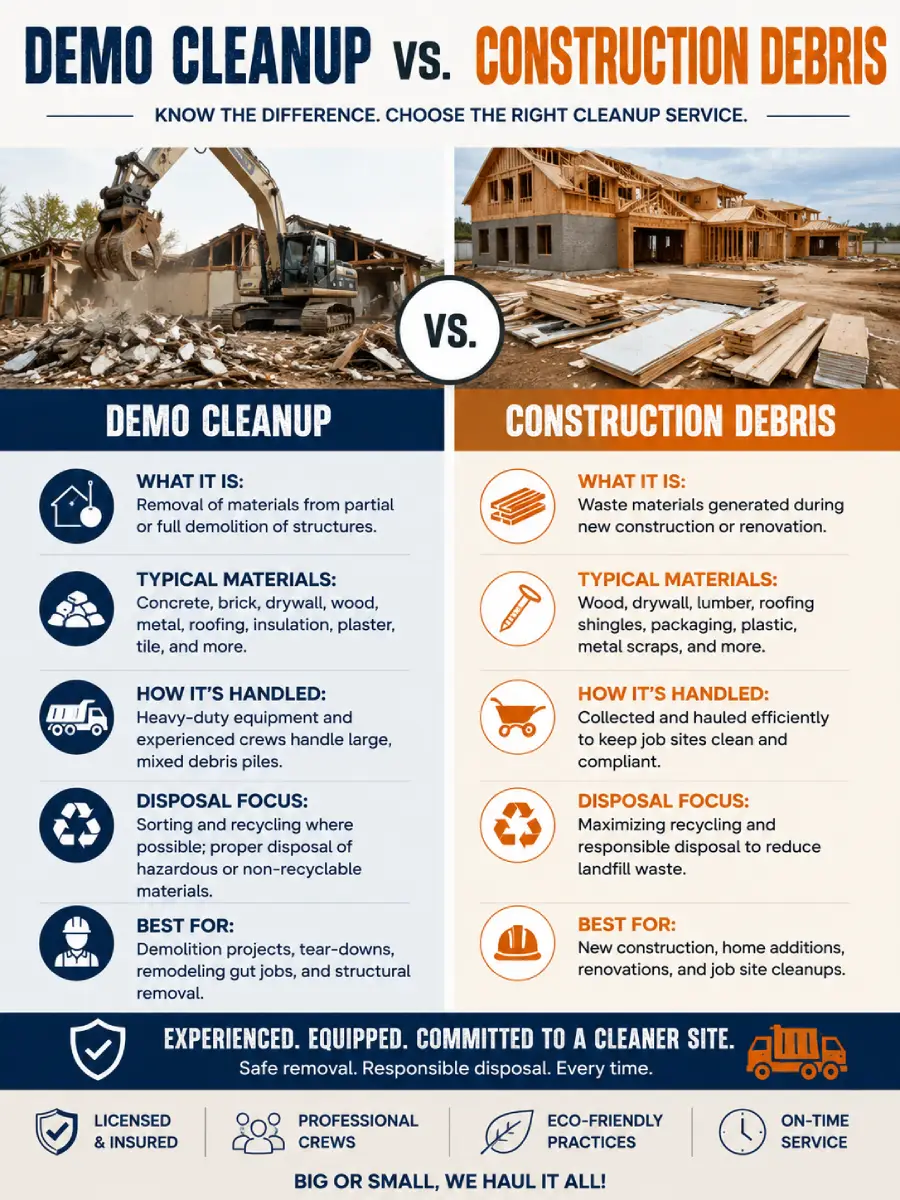
Run any kind of build in this valley and the pile starts before the walls do. Drywall offcuts. Busted footing concrete. Roofing tear-off. Bent studs and snapped 2x4s. It collects at the edge of the slab and inside a week your crew is walking around it instead of through the job. The U.S. Environmental Protection Agency puts construction and demolition debris at roughly 600 million tons a year nationwide, more than double everything American households throw out combined. Riverside County has its own rules about where that material can legally go, and those rules catch more contractors off guard than you would think.
We have been doing construction debris removal in Temecula since 2021. The debris is never the job, but it is almost always what ends up costing the job. Crew hours burned on landfill runs. A container in the driveway waiting on a swap-out. An inspector walking a slab with nails in the dirt. We have cleared ground-up builds off Rancho California Road, kitchens stripped to the studs in Wolf Creek, re-roofs in Redhawk, and tenant improvements near Temecula Parkway. We show up when your schedule says to, load everything, and get out so your trades can stay on their trades.
General contractor mid-build, homeowner finishing a remodel, property manager staring at a gutted suite. Same process either way. One call, a free written estimate, and a crew that does the lifting. If you want the wider picture of what we cover, the Temecula junk removal page lays out the full service area.
Who You're Hiring
A Local Crew That Knows How a Job Site Runs
Wild West is not a franchise routing your call to a dispatcher three states away. We are a Temecula Valley company that has been clearing job sites, garages and properties here since 2021, and that shows up in small ways on a build. We know which De Luz driveways a loaded trailer can actually turn around in. We know the access problems downtown in Old Town. We know where Riverside County wants concrete, metal and clean wood to go, so a load leaves your property legally and stays legal on the diversion paperwork.
Every job is licensed, insured and quoted in writing before anything moves. No surprise invoice after the trailer is loaded. Clean concrete goes for crushing into road-base aggregate. Metal goes to scrap. Only the material nobody can use heads to the landfill. If the framers will not haul it and the roll-off will not hold it, it goes on our trailer. The full list of what we take leaves nothing in question.
Weston Molitor
Owner & Founder"I started Wild West in 2021 with one dump trailer and a lot of Saturdays. Construction work found us fast. Contractors around here all had the same complaint: the debris piled up quicker than anybody had time to deal with it, and the guys who would deal with it did not understand how a job site runs. So we show up on the day your schedule says. We give a firm price before we touch the pile. And we do not just take the debris, we clean the floor underneath it, because the next trade has to work on that floor."

Five years of job-site cleanups, demolition hauls and tear-off removals across Temecula, Murrieta, Menifee and the rest of the county. That is why a pile that looks like a two-day problem to you is a routine morning for the crew. We read the volume right on the first walkthrough, so the correct trailer and the correct number of people show up the first time instead of the second.
Materials
What Construction Debris We Haul
We take the full range of material that comes off residential remodels, commercial build-outs, new construction and demolition. Drywall is the everyday one, full sheets and crumbled scrap still stuck to joint compound and tape. Concrete comes off in broken footings, sidewalk sections, patio slabs and retaining-wall block. Framing lumber and wood scrap land on nearly every job.
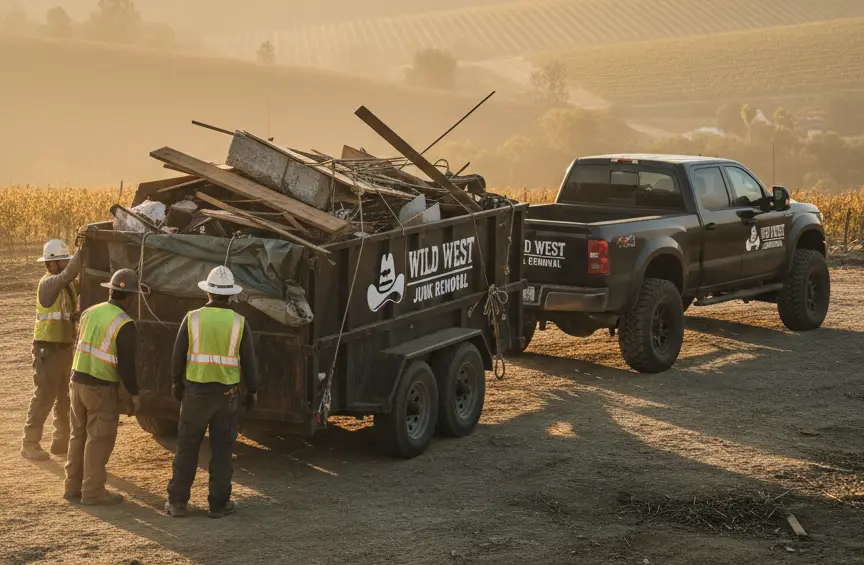
What wrecks a build schedule is the heavy stuff, the awkward stuff, and the stuff with no obvious disposal path. Footing concrete nobody wants to load by hand. A roofing tear-off that has to clear before underlayment goes down. The mixed pile at the edge of the slab that grows every trade day. Our volume pricing covers all of it in one set of numbers you get before the work starts, and the pricing and volume guide shows exactly what each bracket includes.
The one hard exclusion is regulated hazardous material. Confirmed asbestos and lead-painted components need a licensed abatement contractor first. We flag anything in that category at the walkthrough instead of at the landfill scale, and we come back for the rest once abatement is finished.
Drywall & Plaster
Full sheets, offcuts, mud-caked scrap, and torn-out lath and plaster from the older Old Town remodels.
Concrete & Masonry
Broken footings, patio slabs, sidewalk sections, brick, cinder block, stone and retaining wall material. Clean concrete gets routed for crushing into road-base aggregate.
Framing Lumber
2x4 and 2x6 offcuts, plywood, OSB, splintered framing from teardowns, and pallets left over from material deliveries.
Roofing Tear-Off
Asphalt shingles, underlayment, flashing, tile and rotted decking. Heavy awkward bundles our crew moves without wrecking their backs.
Flooring Debris
Ripped carpet and pad, cracked tile, stripped hardwood, vinyl and demolished subfloor.
Metal & Wiring
Steel studs, metal framing, copper pipe, aluminum flashing, conduit and stripped wiring. Pulled aside for scrap instead of landfilled.
Cabinets & Fixtures
Kitchen and bath tear-outs, vanities, countertops, plumbing fixtures and ceiling grid out of tenant improvements. Broken down on site to keep loads tight.
Site Packaging
Shrink wrap, cardboard, foam, strapping, and the window and fixture packaging that piles up on any active site.
Trade Accounts
Recurring Site Cleanup Built for Working Crews
A clean site is not about looks. It is crew safety, it is whether you pass inspection, and it is how fast the job actually moves. The Occupational Safety and Health Administration requires construction sites to stay clear of debris that creates trip, puncture or falling-object hazards. Our construction site cleanup in Temecula keeps your project compliant without pulling your own people off their trade to chase scrap.
We work with general contractors on ground-up builds in Sommers Bend and Roripaugh Ranch, remodelers doing kitchens and baths around Murrieta and Menifee, roofers finishing tear-and-replace on De Portola Road, and flooring crews pulling tile and carpet out of commercial suites off Winchester Road. Demolition companies bring us the heaviest loads, concrete and rebar and framing and plumbing all mixed together, and our trailers are built for that weight. When your demo crew finishes tearing out a bathroom by noon, that debris should not still be in the driveway Thursday. That is what a commercial junk removal outfit that understands job sites is for.
Daily Pickup
Multi-unit framing, commercial interior demo, and any site making volume faster than it can be staged. We come every working day and keep the lanes clear.
Weekly Cleanup
Steady-pace remodels, roofing jobs and custom builds. One scheduled visit a week keeps the site workable without a standing daily cost.
Final Project Sweep
The end-of-build clean-down. Everything hauled, floors swept, nails picked, site handed over inspection-ready.
Demolition Cleanup
Full teardowns, interior gut-outs, kitchen and bath demos, garage removals. Sorted on site so metal, clean concrete and clean wood stay out of the landfill.
New Construction
Lumber offcuts, packaging and delivery pallets. Cleaner material than a remodel, but the volume stacks up fast on tract and custom builds.
Tenant Improvements
Partition walls, ceiling grid, commercial carpet and light fixtures out of Jefferson Avenue build-outs and the turnovers that become gut jobs halfway through.
If your project mixes concrete, wood and drywall, say so at the walkthrough. We can stage separate sorting piles so the recyclables come off clean, which helps you hit California's 65% construction-waste diversion target and usually shaves the disposal fee. Commercial accounts get priority scheduling and one invoice across every site.
Risk
Why Construction Debris Should Be Cleared Fast
Leaving construction waste on site an extra few days creates problems that cost more to fix than the removal would have. Housekeeping is one of the most commonly cited issues on site inspections, and the U.S. Department of Labor adjusts OSHA penalty amounts every January. Set the fines aside and you still have a debris-choked site that slows productivity, hurts your standing with clients and inspectors, and puts real injury risk on everybody working the property.
Trip Hazards
Scattered lumber, drywall scrap and loose aggregate create constant trip-and-fall risk. Falls are still the leading cause of construction fatalities, and ground-level debris drives a big share of the non-fatal injuries too.
Nails & Sharp Objects
Protruding nails, broken tile edges, jagged flashing and shattered glass hide in every pile. One nail through a boot can sideline a worker for weeks.
OSHA Compliance
The housekeeping standard at 29 CFR 1926.25 requires sites be kept clear of debris during and after work. Serious violations carry substantial per-citation penalties, and willful or repeat findings run far higher.
Lost Productivity
Crews working around debris move slower and lose staging space for materials and tools. A clean site runs faster and is far more likely to finish on schedule and on budget.
Site Appearance
On a remodel the homeowner and the neighbors see the mess every day. On a commercial job clutter reads as disorganization to clients and inspectors. A clean site protects your name.
Pest & Environmental Risk
Standing wood, cardboard and insulation draw rodents and termites, and exposed material can leach into soil when it rains. That is a real liability under California rules.
Never on the trailer: asbestos and lead paint
Structures built before 1978 may contain asbestos in floor tile, pipe insulation, roofing and textured coatings, plus lead-based paint on walls and trim. California law requires these to be tested and handled by licensed abatement contractors before demolition or renovation. Wild West does not handle confirmed asbestos or lead abatement, but we clear all non-hazardous debris once abatement is finished. If you suspect pre-1978 materials, review the EPA's asbestos guidance or call a licensed California abatement contractor before you schedule demolition.
The EPA puts construction and demolition waste at more than double all municipal solid waste combined, with demolition alone accounting for over 90% of the total. Sorting on site is the only practical way to keep your share of it out of the landfill and your diversion paperwork clean.
Pricing
What Construction Debris Removal Costs in Temecula
We price by volume, meaning how much of the trailer your debris fills. Not by the hour and not by the item. That matters on a job site, because an hourly crew has a reason to work slowly and you have every reason for them not to.
Concrete and masonry are heavy enough to move the quote on weight, which is exactly why we walk the site instead of guessing over the phone.
Quarter Load
About 3 cubic yards
$195
Minimum pickup
Half Load
About 6 cubic yards
$350
Loaded & hauled
Three-Quarter
About 9 cubic yards
$495
Loaded & hauled
Full Truck
12 cubic yards
$595
Most common on demo phasesEvery bracket includes labor, loading, fuel, licensed disposal and on-site sorting for recycling. The on-site estimate is free and confirmed in writing before anything is touched.
What can change the price
- Stairs
- $150 on loads up to one-half truck load, $300 on loads over one-half truck load, for carrying items up or down stairs. Tell us the floor level when you call and the figure goes in your written estimate.
- Appliances
- $30 each. Covers refrigerant handling and the separate disposal stream refrigerators, freezers and AC units legally require.
- Mattresses
- $15 each, any size.
- Extra loading time
- A full load includes one hour of loading. Beyond that hour, $75 per hour per crew member.
- What a full load means
- 12 cubic yards in a 12ft x 8ft x 4ft dump trailer, loaded by a two-person crew.
Confirmed asbestos, lead paint, solvents and other regulated waste cannot be accepted at any price. See the advisory above for what falls in that category.
A single-room tear-out or a small roofing tear-off usually lands in the quarter-to-half range. A gutted kitchen, a full re-roof, or a framing-stage cleanup on a custom build is normally three-quarter to full, sometimes two loads. Text a few wide photos when you call and we can bracket it before we arrive. The full breakdown lives on the junk removal pricing page. Contractors running several active sites can set up a recurring account with priority scheduling and one invoice across all of them.
DIY vs. Full-Service
Dumpster Rental vs. a Wild West Job-Site Clear
The DIY math looks cheap right up until the first landfill trip on the busiest day of your build. Rent the container, load it by hand, drive the round trip to a licensed C&D facility, pay the gate fees, and burn the hours your crew should be building. County transfer stations charge by the ton with a minimum, and a load of concrete or roofing tear-off hits that minimum fast. Add the street-placement permit some Temecula jobs require and the crew hours you lose, and full service usually wins on cost before you even count the liability of untrained people handling sharp, heavy material.
With us there is no container to rent, no landfill trip to schedule, no crew downtime, and no overage charge from a box you accidentally packed too heavy. You do not pre-sort. You point at the pile. The table below is the same trade-off contractors in this valley weigh every week.
| DIY / Dumpster Rental | Wild West Construction Debris Removal |
|---|---|
| You load it yourself, pulling crew off billable work | Our crew loads everything so your trades stay on their trades |
| Container sits on site for days and may need a street-placement permit | Same-visit removal, nothing left behind and no permit to pull |
| Overage fees when you go over the weight limit on heavy material | Written quote up front with any add-on figures listed before we start |
| You drive to the landfill, pay the gate fee and wait in line | We handle transport, disposal and recycling |
| Scheduling locked to the dumpster company's swap-out windows | Daily, weekly or on-demand around your build schedule, Monday through Saturday |
| No sorting or diversion support, and no paperwork for the inspector | Materials sorted on site, disposal documentation available on request |
If you are on a long renovation and want to load at your own pace over several weeks, a container makes sense. A Wild West dumpster rental fits that job. For a demo phase, a tear-off, or any deadline that ends in an inspection, full-service removal is almost always faster and cheaper.
Why Us
Why Temecula Contractors Keep Our Number
Contractors do not have time to babysit a debris hauler. They need a crew that shows up on schedule, loads fast, protects the site and gets out of the way. Everybody on our team has job-site experience and works to active-site protocol: hard hats, closed-toe boots, hazard awareness, and respect for the trades working alongside us. We operate as a permitted hauler, not a guy with a pickup and a marketplace ad, and that matters the moment an inspector asks for waste-diversion documentation or an estate cleanout turns into a full demolition job.
- ✓Same-day slots most days — call early in the day and there is a good chance a crew is out before the afternoon, Monday through Saturday.
- ✓Firm written estimate first — volume pricing confirmed before any lifting, including stair and add-on figures, so the number does not move after the trailer is loaded.
- ✓Flexible cadence — daily, weekly or on-demand pickups matched to the phase your build is in.
- ✓Commercial accounts — priority scheduling and one invoice across multiple active sites.
- ✓Two-ton trailers — dense material moves in fewer trips and less time parked on your site.
- ✓Licensed and insured — full commercial liability coverage that protects your license and your client.
- ✓Recycling-focused sorting — concrete, metal, clean lumber and cardboard routed to licensed Riverside County facilities.
- ✓Disposal documentation — available on request for permit compliance and diversion paperwork.
- ✓Tight-access experience — upstairs tear-outs, narrow tract side yards, Old Town frontage, and hillside builds where a truck only gets so close.
- ✓Broom-clean finish — we sweep the area and pick the stray nails so the site is ready for the next phase or the inspector.
How It Works
How to Book Construction Debris Removal in Temecula
-
Call or text with your site details
Reach us at (951) 837-8072 with the address, the material types, your phase dates, and any access notes: floor level, gate code, lockbox, site hours. Text photos if you have them. We can usually get out to look the same day and the estimate is always free.
-
Free on-site assessment, in writing
We walk the site with you or your foreman to gauge volume, material mix and access, then give you a written price. Load bracket plus any stair or add-on figures, before a single item moves. Labor, loading, hauling, disposal and recycling fees are all in it.
-
We load, sort and haul
The crew arrives on schedule, loads the debris into our two-ton trailers, and pulls recyclables aside on site. We protect finished surfaces, landscaping and neighboring property the whole time. Concrete, metal, clean lumber and cardboard go to licensed Riverside County recycling facilities.
-
Final sweep and sign-off
We do not just haul the pile. We sweep the area, pick up the stray nails and scraps, and leave the site broom-clean for the next phase or final inspection. Disposal documentation is available on request for your permit file.
Ready to Clear Your Temecula Job Site?
One call. Free on-site assessment and an upfront written quote. We load the debris, sort the recyclables and sweep the site, with same-day slots most days across Temecula and the surrounding county. Monday through Saturday, 7am to 7pm.
Customer Reviews
What Temecula Valley Clients Say About Wild West
Verbatim five-star reviews from our Google Business Profile. Same crew and the same standard whether it is a single-room tear-out or a framing-stage cleanup.
These guys hit a home run with the services they provided us. Very professional, personable, and hard-working. They arrived when they said they would, quickly removed the junk, and cleaned up the mess. Kudos to Weston, Tex, and Mac! I will use them again.
Great local company. Crew came out on time, extremely friendly, and gave a fair quote, hundreds of dollars lower than another Temecula Valley junk shop. The cleanup was fast and they left the area broom clean.
Weston and his team are on it. I run a commercial operation and sometimes we need to bring in some professionals to get rid of some insane types of junk. They respond as fast as any company I have seen, and get the job done 100% of the way with no shortcuts. Good people over at Wild West, recommend highly without any reservation.
Called them this morning and Weston returned the call immediately. Explained my situation and he came out within an hour. Cleaned my side yard perfectly. I was so impressed.
Coverage
Construction Debris Removal Service Areas
Our crews are based in Temecula and cover the full Southwest Riverside County corridor. We know the streets, the landfill routes, the recycling facilities and the building-department quirks in every community we serve. Custom home above De Luz, strip-mall renovation near the Promenade Mall, tract build east of the I-15, one of our trucks is usually already close. Every load is sorted against the Riverside County construction and demolition diversion program requirements.
For contractors running several active sites we hold priority slots, so you are not competing for an opening every week. If your project sits outside these core areas but still inside Riverside County, call us. Depending on the day we reach Hemet, Fallbrook and Rainbow.
Frequently Asked Questions
Construction Debris Removal FAQ
What Temecula contractors, remodelers and homeowners ask before booking a job-site clear.
Wild West Junk Removal takes almost every kind of non-hazardous construction and demolition debris off Temecula job sites: drywall, concrete, brick, block, lumber, plywood, roofing tear-off, flooring, metal framing, steel studs, copper pipe, cabinets, insulation, packaging and general demo rubble. Our crew loads it by hand, hauls it out on our own trailers, pulls the recyclables aside on site, and sweeps the area before we leave. Asbestos and lead-painted material are the exception. A licensed abatement contractor has to clear those first, and we come back for everything else once abatement is done. Call or text (951) 837-8072.
Wild West Junk Removal prices construction debris by load size, not by the hour. A quarter load of about 3 cubic yards is $195 and that is our minimum pickup. A half load of about 6 cubic yards is $350. A three-quarter load of about 9 cubic yards is $495. A full load of about 12 cubic yards is $595. Concrete and masonry are heavy enough that weight can move the number, which is why we walk the site before we quote and put the price in writing. Stairs, appliances, mattresses and loading time past the first hour have set add-on figures and those go on the written estimate too. Call or text (951) 837-8072 and we can usually get out to look the same day.
Wild West Junk Removal runs Monday through Saturday, 7am to 7pm, and we are closed Sunday. Those early and late windows exist because job sites do not run bankers hours. We can be on a Temecula site before the framers start or after the last trade clears out. Call or text (951) 837-8072 to lock in a window.
Yes. Saturday is a regular working day for Wild West Junk Removal, 7am to 7pm, same as the rest of the week. A lot of Temecula remodelers and roofers schedule us Saturday because the site is quiet and we can get a trailer right up to the pile. Sunday is the only day we are closed.
Yes. Broken concrete, brick, cinder block and stone are some of the most common loads Wild West Junk Removal pulls off Temecula construction sites. Our trailers are rated to two tons a trip, so dense material moves without stacking up extra runs. Clean concrete is worth recycling, so we route it to a facility that crushes it into aggregate for road base and new pours instead of burying it.
Yes. Wild West Junk Removal runs daily, weekly and end-of-project cleanup for active sites in Temecula, Murrieta and Menifee. That covers hauling the debris, sweeping, sorting recyclables on site, and getting the property inspection-ready. Contractors set a cadence once and the cleanup just happens on schedule without a phone call every week.
Yes. Wild West Junk Removal works with general contractors, roofers, flooring crews, remodelers and demolition teams on standing schedules: weekly through a long build, every other week on a renovation, or daily on a fast-turn commercial job. Commercial accounts get priority scheduling and one invoice covering every active site instead of a separate bill per address. Call (951) 837-8072 to set one up.
With a dumpster rental you pay for the container, load it with your own labor, wait on a pickup window, and sometimes pull a street-placement permit. With construction debris removal from Wild West Junk Removal, our crew shows up on your schedule, loads everything, and hauls it away on the same visit. Nothing sits in the driveway, there is no permit, and there is no waiting on a swap-out. For most Temecula contractors the crew hours saved are worth more than the difference in price.
Yes. Demolition debris is core work for Wild West Junk Removal. We clear full teardowns, interior gut-outs, kitchen and bath demos, and garage removals across Temecula and Southwest Riverside County. We sort the load on site and route metal, clean concrete and clean wood to Riverside County recycling facilities, so only the material that truly cannot be reused goes to the landfill.
Yes. Wild West Junk Removal sorts every load it can and diverts concrete, metal, clean lumber, cardboard and certain plastics to licensed Riverside County facilities. California's CALGreen standard asks for at least 65% of construction waste to be diverted from landfill. Our on-site sorting helps Temecula contractors hit that number and keeps the diversion paperwork straight for the building department.
Wild West Junk Removal has same-day slots most days across the Temecula Valley, and next-day is almost always open. Call early in the day and there is a good chance we get you in before the afternoon. For deadline work, like a final clean before inspection or a demo phase that has to clear now, we hold priority slots. Reach us at (951) 837-8072.
Yes. Wild West Junk Removal handles upstairs tear-outs, narrow tract-home side yards, Old Town frontage where there is nowhere to park, and hillside builds up around De Luz where a truck only gets so close. The crew carries material out by hand when it has to, lays protection on finished stairs and floors, and stages the load so nothing gets dragged back across work you already paid for. Stair carries run $150 on loads up to one-half truck load and $300 on loads over one-half truck load. Tell us the floor level when you call and that figure goes on the written estimate.
Wild West Junk Removal does not take regulated hazardous material. Confirmed asbestos, lead paint, wet paint and solvents, pesticides, batteries and fluorescent bulbs all need a licensed abatement or hazmat contractor. Anything built before 1978 can hide asbestos in floor tile, pipe wrap, roofing and textured coatings, so that has to be tested and abated before demolition. Once the hazardous material is gone we come in and clear all the remaining non-hazardous debris.
Wild West Junk Removal serves Temecula, Murrieta, Menifee, Wildomar, Winchester, French Valley, Lake Elsinore, Canyon Lake and the surrounding Southwest Riverside County communities. Our crews are based in Temecula, so we know the roads, the landfill routes and the recycling facilities without looking them up. Depending on the day we also reach Hemet, Fallbrook and Rainbow. Call (951) 837-8072 to confirm your address.
Sources & Related Services
- epa.gov EPA — Sustainable Management of C&D Materials Federal data on construction and demolition debris volumes and recovery.
- osha.gov OSHA — Construction Standards Federal housekeeping and site-safety requirements for active job sites.
- rcwaste.org Riverside County C&D Diversion Program County requirements for diverting construction and demolition material.
- calrecycle.ca.gov CalRecycle — CALGreen Diversion State guidance behind California's 65% construction-waste diversion target.
Junk removal pricing and availability are subject to change without notice. Load prices cover labor, loading, fuel and licensed disposal; stair carry, appliance and mattress charges, and loading time beyond the hour included with a full load are quoted separately on the written estimate. Heavy material such as concrete and masonry is quoted after an on-site walkthrough because weight affects the load. Confirmed asbestos, lead-based paint, wet paint and solvents, pesticides, batteries, fluorescent bulbs and other regulated hazardous waste cannot be placed in standard junk removal loads or rental dumpsters under California law and must be handled by a licensed abatement or hazmat contractor. Structures built before 1978 should be tested for asbestos and lead prior to demolition or renovation. Disposal documentation is available on request. Wild West Junk Removal operates Monday through Saturday, 7am to 7pm, and is closed Sunday.
Reviewed and updated August 11, 2026 by Weston Molitor, owner, Wild West Junk Removal.