
Horse Manure Removal & Stable Cleanout · Temecula, CA
Horse Manure Removal in Temecula: We Load It, Haul It, and Keep Coming Back
One horse puts out about 50 pounds a day. Three horses on shavings will bury a corner of your property by spring. We bring a 12-yard dump trailer, load it ourselves, and set a pickup day you never have to call about again.
Family-owned in Temecula since 2021 · Licensed & insured · Loads from $195 · Fuel & disposal included

Wild West Junk Removal · 41713 Niblick Rd, Temecula, CA 92591 · (951) 837-8072
Mon to Sat: 7AM-7PM · Sunday: Closed · Family-owned, licensed and insured · Serving Temecula, Murrieta, Menifee and southwest Riverside County
The short version
What This Page Actually Covers
A single horse produces somewhere around 50 pounds of manure a day. Call it nine tons a year, before you add the urine-soaked shavings that come out with every stall cleaning. On a two or three horse property in Temecula that math turns into a pile faster than most owners expect, and a pile that looked fine in January is a fly problem by the second week of April.
We are a junk hauling company in Temecula, not a manure broker and not a compost consultant. What we do is show up with a dump trailer, load your pile, take it to a licensed facility, and then come back on whatever cadence your barn actually needs. Most of our equine customers start with a one-time backlog clear and end up on an every-other-week route.
Below you will find the pricing brackets in plain numbers, what Riverside County's watershed guidance actually asks horse owners to do (it is not what most competitor pages claim), what an unmanaged pile does to your horses, when composting beats hauling, and how the booking works. If you would rather just get a number, call or text (951) 837-8072 with a photo of the pile.
Cost
What Manure Hauling in Temecula Costs
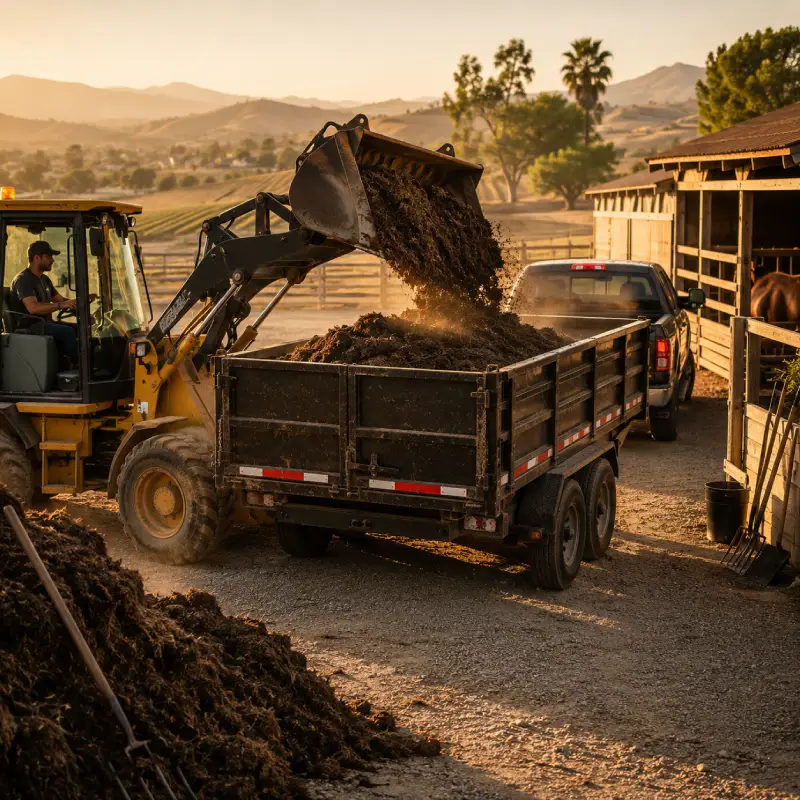
We price by trailer volume. Not by the hour, not by the ton at the scale, and not by how far up the hill you are. The trailer for manure work has a box 12 feet long by 8 feet wide by 4 feet tall, which is about 14.2 cubic yards to the top rail, and it needs a gravel driveway or other firm ground to stage on. We bill a full load at 12 cubic yards because that is what fits level, without heaping material above the rail where it can blow or spill on the road. Grass in February is not firm ground, and we would rather sort that out on the phone than leave ruts in your arena approach.
Fuel and landfill disposal are already inside the number. A full load also includes the first hour of loading by a two-person crew. If you have a tractor or a skid steer that can push material to the trailer, that hour goes a long way. If it is all forks and a wheelbarrow up a slope, it goes less far, and we will tell you that before we start rather than after.
Quarter Load
3 cubic yards
$195
Minimum pickup
Half Load
6 cubic yards
$350
Fuel & disposal included
Three-Quarter Load
9 cubic yards
$495
Fuel & disposal included
Full Load
12 cubic yards
$595
1 hr loading, 2-person crew
Most stable cleanoutsEvery load includes fuel and landfill disposal fees. $195 is our minimum pickup. Full rate card on the junk removal pricing page.
What can change the price
- Extra loading time
- A full load includes one hour of loading. Past that hour it is $75 per hour per crew member, agreed before we keep going.
- Stairs
- $150 on loads up to one-half truck load, $300 on loads over one-half truck load, for carrying items up or down stairs. Rare on manure jobs, common when a tack room or hay loft is part of the cleanout.
- Appliances
- $30 each. Covers refrigerant handling and the separate disposal stream refrigerators, freezers, and AC units legally require.
- Mattresses
- $15 each, any size.
- Weight vs. volume
- Straight wet manure with no bedding is dense. On a soaked pile we can reach the trailer's weight rating before the box is full, which may mean two trips. We work that out with you on the phone, not on the invoice.
Roughly a month of accumulation off a two or three horse property, bedding included, fits a single full load. The box holds about 14.2 cubic yards to the rail and we bill the 12 that loads level. No per-ton scale surcharge, no fuel line item, no trip fee. The number we confirm before loading is the number on your invoice.
| Doing it yourself | Wild West on a schedule |
|---|---|
| Pile grows until you have a free Saturday, and fly pressure compounds every warm day in between | Fixed pickup day keeps the storage container inside what Riverside County guidance asks for |
| Manure sitting near a drainage or storm-drain inlet through winter rain | Material leaves the property, so there is no stored pile to worry about when a storm rolls through |
| Hours of forking and wheelbarrow trips for you or your barn help | Our crew loads it. A full load includes the first hour of two-person loading |
| Repeat runs in a pickup and trailer, plus per-ton tipping at the scale | One trip, one written price with fuel and disposal already in it |
| Composting needs space, turning, and moisture control most small lots do not have | Haul-off for properties without the land base, or overflow service for the ones that do compost |
Local rules
What Riverside County Actually Asks Horse Owners To Do

You have probably read somewhere that California requires horse manure to be removed within 48 hours. We used to repeat that line ourselves. It came off this page because we could not find the statute behind it, and pointing you at something you can actually open beats a number that only sounds official. Here is what does exist.
Riverside County's watershed protection guidance for horse owners asks you to pull soiled bedding and manure out of stalls, pens, and corrals at least once daily, store it in a sturdy, insect-resistant, seepage-free container, tarp it during rain, and then either arrange weekly manure pickup or compost it. Daily on your end, weekly on ours. That is the whole model.
On top of that, the Santa Ana Regional Water Quality Control Board runs a Confined Animal Facilities unit that specifically regulates horse facilities in Riverside, San Bernardino, and Orange counties, and is currently drafting a new general order for them. Spreading manure on land is a separate question handled through Riverside County's land application rules, which set acreage minimums, well setbacks, and incorporation depth.
The practical takeaway for a Temecula barn
Muck daily into a covered, seepage-free container. Tarp it before a storm. Then either compost it properly or get it picked up weekly. Properties close to Murrieta Creek, an ag ditch, a seasonal drainage, or a storm-drain inlet are the ones where an uncovered pile draws the most attention, and winter rain is when it matters most. Haul-off removes the storage question entirely.
Within 50 ft of water
A pile beside a creek, seasonal stream, ag ditch, or storm-drain inlet is the highest-exposure setup on any horse property. Flag it when you call so we plan the pickup cadence around it.
Rain contact
Runoff that touches manure and reaches a waterway is a discharge question under California's Porter-Cologne Water Quality Control Act. A tarp is cheap. An uncovered pile in January is not.
Spreading on your own land
Land application is regulated separately by the county, with acreage minimums and setbacks from wells. Do not assume your back acre qualifies. Check before you spread.
Why it matters
What a Standing Pile Does to Your Horses
Manure is not just an eyesore sitting out there. House flies lay in fresh manure within about a day and finish a full life cycle in roughly a week in our summer heat, which means a pile that has been sitting since last Tuesday is already producing the next generation. Those flies move straight from the pile to the eyes, mouth, and sheath of every horse in the pen. That is how pinkeye, summer sores, and a fair amount of the parasite load get passed around.
Ammonia is the quieter one. As manure and wet bedding break down in a closed barn, ammonia builds in the aisle at nose height, and the University of Minnesota Extension's horse manure management guidance is worth reading on storage and composting if you want the technical side. If you can smell it standing in the aisle, your horses have been breathing it all night.

Fly breeding
House flies complete a cycle in seven to ten days in warm manure. Four or five days into a Temecula summer, a pile is an active nursery and the population starts compounding.
Internal parasites
Strongyle and cyathostomin larvae survive in manure and reinfect horses grazing the same ground. Every day it sits on paddock surfaces adds to the larval load.
Ammonia in the barn
Breakdown throws off ammonia, hydrogen sulfide, and methane. Chronic low-level ammonia irritates equine airways and costs lung capacity over months, not days.
Weed seed
Undigested seed passes through a horse intact and germinates in the pile. Moving raw manure around the property is how invasive weed spreads paddock to paddock.
Rodents
A big pile near feed storage is warmth and cover. Once a rat population establishes around it, nothing works until the source leaves.
Resale
A visible manure backlog reads as deferred maintenance to buyers and inspectors. Clearing it before listing photos is one of the cheapest fixes on an equine property.
Recurring service
Why Most Barns End Up on a Schedule

A one-time haul clears the backlog. It does not stop the next one. For a property with two or more horses, a monthly interval usually means you spend three weeks out of four managing an accumulation, and the oldest material in that container has been sitting a long time by the end.
Weekly or every-other-week is where most of our equine customers land, which lines up with what the county's guidance suggests anyway. We do not guess at the cadence up front. We haul once, look at what the container refilled to, and then recommend a frequency based on horse count, bedding type, and how much covered storage you have. Three horses on wood shavings almost always need at least biweekly. One horse mucked daily with light bedding can hold monthly.
Per-visit pricing stays consistent at the same load size across the schedule, so it budgets like farrier work rather than like an emergency. To confirm we run your address, check the Temecula service area page or the Murrieta page.
Composting
Compost It or Haul It: How To Decide
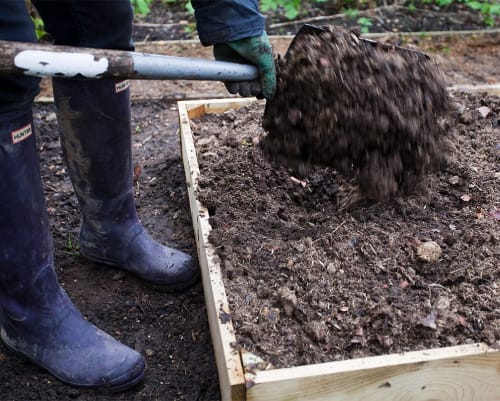
Properly composted horse manure is worth something. Held above 130 degrees Fahrenheit, which a well-turned pile hits within days, weed seed and most pathogens die off and what is left is a nitrogen-rich amendment that local gardeners and nurseries will come pick up for free. If you have room for a real three-bin system, roughly nine by nine feet per bin, composting is a legitimate alternative to calling us.
The failure mode is the half-built version. A bin nobody turns never gets hot, so it stays raw manure with the same fly and runoff problems it had in the corral, just relocated. And even a well-run system eventually produces more than the property can use. CalRecycle's organics guidance covers the state side. We take the overflow when the bins fill, or the whole volume where composting is not realistic.
Composting works when
You have space for three bins, someone turns it at least twice a week, moisture stays around 50 to 60 percent, and the setup sits well back from any drainage or waterway.
Composting fails when
The lot is small, nobody turns it, the horse count outruns the bin volume, or the only flat spot available is the one closest to the creek.
Overflow service
An active system plus scheduled pickup for what the bins cannot take beats letting overflow pile up raw beside the bins and undo the whole point.
Finished compost has takers
Gardeners, nurseries, and landscapers around Temecula want it. Posting it on a local group is usually enough to get it hauled off for nothing.
Raw manure stays out of gardens
Uncomposted manure can carry E. coli and Salmonella. Give it 90 to 120 days of active composting before it goes anywhere near a vegetable bed.
Shavings slow it down
Wood shavings are carbon-heavy. A high-shavings mix needs more nitrogen and more turning, and that is the usual reason a bin stalls out cold.
Who shows up
Weston Molitor and the Wild West Crew
Weston Molitor
Founder · Wild West Junk Removal · Temecula, CAI started Wild West in Temecula in 2021 and I still run loads. The same crew that does the general junk hauling does the manure work. There is no subcontractor, no broker taking your call in another state, and nobody on a dispatch screen deciding what your job costs.
That matters more on horse properties than people expect. Gate widths, where a loaded trailer can turn around, which approaches turn to soup after rain, which De Luz and Wine Country driveways I should not take a full trailer down at all. You learn that by driving it, not off a map.
"If I can't get the trailer to your pile, I'd rather tell you on the phone than show up and charge you a trip fee. That's the whole business."

How it works
Booking a Stable Cleanout, Start To Finish
-
Text a photo with the pile size and the access
Call or text (951) 837-8072. Tell us roughly how many cubic yards, whether it is straight manure or mixed with bedding and what kind, and what the trailer will be backing onto. A wide photo of the pile and one of the driveway gets you a number faster than any form.
-
We confirm the load bracket and the price in writing
Before we roll out, you have the load size and the price, with fuel and landfill disposal already in it. Anything that could move that number, loading past the included hour, stairs into a tack room, appliances or mattresses riding along, gets agreed first. Nothing appears afterward.
-
Crew loads, hauls, and cleans the pile area
We do the loading. If you have a tractor or loader on site, say so and the included hour covers more ground. The pile area gets cleaned up after the trailer is full, and the material goes to a licensed composting or disposal facility. It does not get dropped on public land or a neighbor's back acre.
-
We set the recurring day before we leave
Once we have seen what your property actually produces, we recommend weekly, every-other-week, or monthly and lock the day in. No phone tag before each visit. Our scheduling team can also set it up ahead of the first haul if you already know your volume.
What we take
Everything That Rides in a Manure Load
Manure, bedding, old hay, and the farm junk stacked next to it all go in the same trailer. Full acceptance list is on the what we take page.
Horse manure, any volume
Straight manure or mixed with wood shavings, straw, sawdust, pellets, or hemp. Single-stall cleanouts through full-barn backlogs, one-time or on a route.
Soiled bedding
Manure-saturated shavings, straw, and sawdust out of stall cleaning. Lighter per cubic yard than straight manure, which changes how the load packs.
Old hay and spoiled feed
Moldy bales, rained-on hay, and feed waste ride in the same load and get out of reach of anything that might try to eat them.
Other livestock waste
Goat, pig, chicken, cattle, sheep, and alpaca manure. Poultry litter is denser and higher nitrogen, so mention the animal when you call.
Stable debris and farm junk
Broken fence posts, dead equipment, worn tack, old feeders. If there is trailer room after the manure, it goes with us.
Yard and perimeter debris
Brush, dead vegetation, and fence-line growth can join the load. Bigger clearing jobs are covered on our yard waste removal and weed abatement pages.
- ✓Trailer can reach the pile. Gravel or firm ground, not soft dirt or wet grass. Narrow lanes and tight turnarounds get flagged before we schedule, not on arrival.
- ✓Photo sent. One wide shot of the pile and one of the driveway approach texted to (951) 837-8072 gets you a real number instead of a range.
- ✓Bedding type named. Shavings, straw, sawdust, pellets, or none. It changes both how the load packs and how heavy it runs.
- ✓Other debris counted in. Old hay, tack, fencing, or yard waste going in the same trip so we size the load for the whole scope.
- ✓Waterway proximity noted. If the pile sits near a creek, ag ditch, seasonal drainage, or storm-drain inlet, tell us. It affects how tight the cadence should be.
- ✓Equipment mentioned. A tractor, skid steer, or loader that can push material to the trailer stretches the included loading hour considerably.
- ✓Gate code ready. Combination or call-box code shared ahead of time so the crew is not sitting at a locked gate burning your window.
- ✓Recurring cadence discussed. Say up front if you want a standing pickup day and we will recommend a frequency after the first visit.
Service area
The Horse Country We Actually Drive
Southwest Riverside County has real horse property, and the access is not uniform. What works on a flat French Valley lot does not work on a De Luz grade with a hairpin at the bottom.
Temecula & Wine Country
Calle Contento, De Portola, and the Glenoaks corridor. Mostly good gravel approaches, occasionally a gate narrower than the trailer likes. Temecula junk hauling.
De Luz & Sandia Creek
Steep, narrow, and beautiful. We stage lower and shuttle on some of these properties rather than take a loaded trailer down a grade we cannot get back up.
La Cresta & Santa Rosa Plateau
Five-acre minimums and a lot of horses. Long driveways mean we confirm turnaround space before we commit to a full trailer.
Murrieta & Wildomar
Older equine lots off Clinton Keith and along the creek corridor. Waterway proximity comes up here more than anywhere else. Murrieta junk removal.
Winchester & French Valley
Flat, open, easy staging. These are the properties where a full 12-yard load and a loader knock out a month of accumulation in one stop.
Menifee, Hemet, Fallbrook & Rainbow
Outer edge of our regular routes, still covered. Call for the day we are already running your direction. Menifee service area.
Customer reviews
What Local Customers Say
Verbatim five-star reviews from our Google Business Profile. Same crew and the same standard whether it is a stall backlog or an office cleanout.
Weston and his team are on it. I run a commercial operation and sometimes we need to bring in some professionals to get rid of some insane types of junk. They respond as fast as any company I have seen, and get the job done 100% of the way with no shortcuts. Good people over at Wild West, recommend highly without any reservation.
Wild West Junk Removal is the real deal! They showed up on time, worked fast, and were super professional. The crew was friendly, respectful, and went above and beyond to make sure everything was cleaned up perfectly. I couldn't believe how quickly they got the job done. Fair prices, great service — I highly recommend them to anyone needing junk gone fast.
Nick and the crew were on time and very professional. They removed reclining couches, entertainment center, coffee table, end tables from our upstairs loft. They were very careful and cleaned the area afterwards. Great price!! I would definitely recommend Wild West junk removal.
Wild West Junk Removal Service was great. Nick and Jake were friendly, fast, and really efficient. They gave me a fair price and were quick in and out, making the whole process hassle-free. I definitely recommend them.
This company is amazing! I was in need of junk removal… I called, they came, it was done! They are so professional in every way! Courteous and friendly. I will use this company forever!
Frequently asked questions
Horse Manure Removal FAQ
The questions Temecula horse owners ask us most, starting with service and pricing and then moving into manure management, composting, and the local rules.
We price by trailer volume, not by the hour or by the ton. A quarter load is 3 cubic yards at $195, which is our minimum pickup. A half load is 6 cubic yards at $350, a three-quarter load is 9 cubic yards at $495, and a full load is 12 cubic yards at $595. Fuel and landfill disposal are already inside every one of those numbers. A full load also covers the first hour of loading by a two-person crew; past that hour it is $75 per hour per crew member. Stairs, appliances, and mattresses have their own set figures, and every one of them goes in your written estimate before we touch a fork.
Riverside County's watershed protection guidance for horse owners asks you to pull soiled bedding and manure out of stalls, pens, and corrals at least once a day, hold it in a covered container that will not seep, and then either compost it or set up weekly manure pickup. Daily mucking is on you. The second half is where we come in. Two or three horses on shavings usually need us weekly or every other week to keep the storage pile from outgrowing the container. One horse with light bedding can often go monthly. After the first haul we tell you what your property actually produces and pick a cadence off that number rather than a guess.
Both, and most equine properties end up on a schedule after the first visit. We run weekly, every-other-week, and monthly routes for barns across Temecula, Murrieta, Wine Country, De Luz, and French Valley. Once the cadence is set you stop calling us; the crew just shows up on the agreed day. Per-visit pricing holds steady at the same load size across the whole schedule, so you can budget it like any other barn expense.
Yes, and honestly that is most of what we load. Wood shavings, straw, sawdust, hemp, pellet bedding, it all goes in the same trailer as the manure. The mix matters for the estimate though. Bedding-heavy material is lighter per cubic yard but eats more trailer space, while straight wet manure is dense enough to hit the trailer's weight rating before the box looks full. Tell us which one you have when you call and the load size we quote will actually hold.
A full load bills at 12 cubic yards. The dump trailer box itself measures 12 feet long by 8 feet wide by 4 feet tall, which works out to roughly 14.2 cubic yards to the top rail, and it needs a gravel driveway or other firm ground to stage on. We bill the 12 that loads level rather than the 14.2 the box would hold heaped, because anything mounded above the rail can spill on the road. For a two or three horse property that is roughly a month of accumulation with bedding included. If your pile is soaked from a storm or is straight manure with no shavings, we may hit weight before we hit volume, and we will tell you on the phone whether that is one trip or two before anybody starts loading.
They can, and proximity to water is what decides it. The Santa Ana Regional Water Quality Control Board runs a Confined Animal Facilities unit that covers horse facilities in Riverside County, and land application of manure is separately regulated by Riverside County through the Agricultural Commissioner's office. If your pile sits within about 50 feet of Murrieta Creek, a seasonal drainage, an ag ditch, or a storm-drain inlet, that is the situation that draws attention, especially once winter rain starts moving through it. Hauling the material off the property removes the storage question entirely. If you plan to compost or spread instead, check that plan with the Regional Board before you build it.
Yes, if you have the room and you are willing to work it. A real three-bin system, turned a couple of times a week, held around 50 to 60 percent moisture, will run above 130 degrees Fahrenheit and cook out weed seeds and most pathogens. What comes out the far end is a soil amendment local gardeners will drive over and pick up for free. The trap is the half-built version. A pile nobody turns never gets hot, so it stays raw manure with the same fly and runoff problems, just in a nicer box. Plan on 90 to 120 days before finished compost goes anywhere near a vegetable bed. We haul the overflow for barns that compost and the whole volume for the ones that cannot.
Yes. Goats, pigs, chickens, cattle, sheep, alpacas, we take all of it, along with the mixed farm waste that piles up next to it, old hay, spoiled feed, busted fence posts, worn tack. Poultry litter is the one to flag when you call because it is denser and higher in nitrogen than horse manure, so the volume estimate works out differently. Tell us the animal and the bedding and we will size the load right.
Daily mucking does more than anything else you can buy, because house flies lay in fresh manure within about 24 hours and finish a full cycle in roughly a week, so pulling it every day breaks that cycle before anything hatches. After that, keep the storage pile covered and downwind of the barn aisle rather than beside it. Weekly releases of parasitic wasps like Spalangia and Muscidifurax knock down emergence without spraying anything, and baited traps around the perimeter catch what gets through. None of it holds up if the storage pile keeps growing, which is the argument for tightening the pickup cadence through the summer.
We cover the equine properties across Temecula, Murrieta, Menifee, Wildomar, Lake Elsinore, Canyon Lake, Winchester, French Valley, Hemet, Fallbrook, Rainbow, and De Luz, plus the Wine Country and Santa Rosa Plateau properties in between. Weston Molitor and the crew live and work here, so we already know which lanes off Sandia Creek and Calle Contento a loaded trailer can actually get back out of. Call or text (951) 837-8072 with your address and we will confirm access before we book anything.
We run Monday through Saturday, 7am to 7pm, and we are closed Sunday. There are same-day slots most days, especially if you are flexible on the window. Call early in the day for the best shot at getting on the board, because once the trailer is committed to a route we are usually running it out to the end of the day. Recurring customers get their day locked in and do not have to chase a slot at all.
Weston Molitor started Wild West Junk Removal in Temecula in 2021 and still runs loads himself. We are family-owned, licensed, and insured, and the same crew that handles the general junk hauling handles the manure work. There is no broker in the middle taking your call and selling the job to somebody else. Everything we pick up goes to a licensed composting or disposal facility. It never gets dropped on public ground or on a neighbor's back acre.
The load bracket and the price are settled before we roll up, and that number already has fuel and landfill disposal in it. If your job needs loading time past the included hour, or involves stairs, appliances, or mattresses, we tell you those figures up front and you agree to them before anybody starts working. Nothing gets added to the invoice after the trailer leaves. The price you approve is the price you pay.
Manure Management, Composting, and Local Rules
Left in a corner of the property with nobody touching it, a manure pile takes many months and often more than a year to break down, and it stays a fly and runoff problem the entire time. Actively managed is a different story. A pile built with enough carbon, held around 50 to 60 percent moisture, and turned a couple of times a week runs hot enough to get through the active decomposition phase in weeks rather than seasons. Give it 90 to 120 days total, including curing, before the finished material goes near a vegetable bed. If nobody on the property has time to turn a pile on that schedule, hauling it off is the faster answer.
Mix it with carbon. Straw, sawdust, dry leaves, or the wood shavings already in your stall waste all work, and getting the carbon and nitrogen roughly in balance is what lets a pile heat up instead of sitting there souring. After that it is moisture and air. Keep it damp like a wrung-out sponge rather than soaked, and turn it often enough that oxygen reaches the middle. A pile that gets turned heats up, breaks down evenly, and does not smell. A pile that only gets stacked stays cold, wet, and anaerobic, and that is where the odor and the flies come from.
A fork, a rake, and a wheelbarrow will do it, and on a single-horse lot that may be all you need, but it is slow and hard on your back. Most owners with real acreage tow a dump cart or a manure spreader behind a small tractor, an ATV, or even a golf cart, which turns a two-hour job into a twenty-minute one. Larger operations use a paddock vacuum or a pasture sweeper. Whatever you collect still has to go somewhere, and that is the part we handle. Drag it to a staging pile the trailer can actually reach and we take it from there.
The risk to people from horse manure is low compared with manure from other livestock, and ordinary barn hygiene covers most of it. Wash your hands, keep raw manure out of vegetable beds, and let compost finish before you use it. The bigger disease question is horse to horse rather than horse to human. Strongyle and cyathostomin larvae survive in manure and reinfect the animals grazing the same ground, which is why daily mucking and prompt haul-off matter more for your herd's parasite load than for your own health.
Fresh manure is the problem, not composted manure. Acid-loving plants such as blueberries, rhododendrons, and azaleas react badly to the alkalinity in raw manure. Drought-tolerant natives and Mediterranean plantings like lavender, poppies, and bulbs prefer lean soil and get overwhelmed by the nitrogen and salt. Root crops such as carrots, parsnips, and potatoes tend to fork or throw everything into leaf growth, and tomatoes and peppers do the same, producing foliage instead of fruit. Well-finished compost avoids nearly all of that. One more thing worth knowing: manure from horses fed hay treated with persistent broadleaf herbicides can carry that residue through composting and damage a garden anyway, so ask where the hay came from before you spread it.
Everything we load goes to a licensed composting or disposal facility. It does not get dropped on public land, on a vacant lot, or on a neighbor's back acre. Where the material can be composted instead of landfilled, that is where it goes. If you would rather handle it yourself, the realistic options are composting on site for use as a soil amendment, hauling it to a compost or landscaping facility that accepts it, or land-applying it on your own ground. That last one is regulated separately by Riverside County and carries acreage minimums and well setbacks you need to check before you start.
Fresh manure is high in ammonia and soluble salts, which burn roots and scorch foliage on contact, and it smells while it does it. It also carries weed seed that passed through the horse intact, so you end up planting a weed crop alongside your tomatoes. Composting fixes all three. The heat kills most of the seed, the ammonia converts to stable nitrogen, and what is left is a mild slow-release amendment. Let it finish and cure for 90 to 120 days before it touches an edible bed.
It splits about three ways. Operations with cropland or pasture to spread on compost it and use it as fertilizer, which is the cheapest route when you have the acreage and the equipment for it. Places with no use for the material either give away finished compost, haul it to a facility themselves, or put the property on a scheduled pickup. Around Temecula most of the barns we work with have the horses but not the land base or the labor to run a real composting operation, so a recurring pickup ends up being the practical answer.
Time and disposal, mostly. Forking a month of accumulation into a pickup bed and making repeat runs to a facility that charges by the ton adds up in fuel, tipping fees, and Saturdays. We show up with a trailer that holds the whole thing, load it ourselves, and the price you approved already has fuel and disposal inside it. The other half is consistency. A pile only turns into a fly and runoff problem when it sits, and a standing pickup day takes the job off the list of things that depend on you having a free weekend.
No. Manure is not a listed hazardous waste under federal RCRA rules and does not exhibit hazardous characteristics, and California handles it as agricultural or solid waste rather than hazardous waste. That does not make it unregulated. The rules that actually reach a horse property are water-quality rules: keeping manure out of creeks, ditches, and storm-drain inlets, storing it covered so rain cannot move it, and following county requirements if you land-apply it. Separately, we do not haul medical, veterinary, or hazardous waste, and manure is not in that category.
The simplest answer is to call us and put the property on a pickup schedule. If you want to haul it yourself, the options are a landfill or transfer station that accepts manure, a topsoil or compost facility, or a local farm, nursery, or tree grower willing to take finished compost off your hands. Call ahead in every case, because acceptance and tipping rates vary and some facilities will not take manure mixed with wood shavings. If what you have is finished compost rather than raw manure, posting it on a local gardening group is usually enough to get it picked up for free.
For a private horse owner managing manure on their own property or using a hauling service, we have not run into a Temecula permit requirement specific to manure. What does apply is the general side: nuisance, odor, and runoff rules, plus water-quality requirements that come into play near a creek, a seasonal drainage, or a storm-drain inlet, and Riverside County's separate rules if you plan to spread manure on land. Commercial boarding operations and larger confined-animal facilities are a different question and can fall under the Santa Ana Regional Water Quality Control Board. If you are building permanent storage or planning to spread, confirm it with the City and the Regional Board before you start rather than after.
Yes, once it is composted. Finished horse compost is a solid general-purpose soil amendment, moderate in nitrogen, good for soil structure, and gentle enough to work into beds without burning anything. The condition is that it actually finished: hot enough for long enough to kill weed seed and pathogens, then cured. Raw manure straight out of the stall is not fertilizer, it is a liability. If you are composting for garden use, plan on 90 to 120 days and keep it out of edible beds until then.
We bring the dump trailer, load the manure and soiled bedding ourselves, clean up the pile area, haul the material to a licensed facility, and set your next pickup day before we leave. Old hay, spoiled feed, broken fencing, worn tack, and other stable debris ride in the same load when there is room. The price covers fuel and landfill disposal, and a full load includes the first hour of loading by a two-person crew. What we do not do is muck your stalls day to day. That part stays with you. We handle the storage pile.
We are a local Temecula hauler, not a lead broker. The company you call is the company that pulls into your driveway, and Weston Molitor still runs loads himself. The price is settled in writing before we start and already includes fuel and disposal, so nothing gets added to the invoice afterward. And because we run general junk removal alongside the manure work, the old hay, fencing, and worn-out tack cluttering up the barn can go in the same trip instead of needing a second call to somebody else.
Ready To Clear the Pile and Set a Day?
We haul horse manure off Temecula and Murrieta equine properties Monday through Saturday, 7am to 7pm, with fuel and disposal in the price and a written number before we start. Text a photo and we will size the load and set your recurring day on the same call.
Sources
References and Related Services
Horse manure removal pricing is subject to change without notice; the written price is confirmed before any work begins. A full load bills at 12 cubic yards. The dump trailer box measures 12ft x 8ft x 4ft, approximately 14.2 cubic yards to the top rail; loads are filled level to the rail and are not heaped above it. Loading is by a two-person crew, staged on flat gravel or other firm ground. Soft soil, steep grades, and narrow access may affect placement or require a second trip. A full load includes one hour of loading; beyond that hour, $75 per hour per crew member. Stairs are $150 on loads up to one-half truck load and $300 on loads over one-half truck load; appliances are $30 each; mattresses are $15 each. Riverside County watershed guidance asks horse owners to remove manure from stalls, pens, and corrals at least once daily, store it covered and seepage-free, and arrange weekly pickup or composting. Properties near regulated waterways may be subject to additional requirements through the Santa Ana Regional Water Quality Control Board, and land application of manure is separately regulated by Riverside County. Confirm any composting or spreading plan with the appropriate agency before starting it. Wild West Junk Removal does not haul medical, veterinary, or hazardous waste. Hours are Monday through Saturday, 7am to 7pm; closed Sunday.