
Home › Temecula Junk Removal › Weed Abatement Temecula
Weed Abatement & Fire Hazard Clearing
Weed Abatement Temecula: Notice to Abate, Defensible Space & Brush Cleared and Hauled in One Visit
What the notice actually requires, how the city's enforcement calendar runs, what a missed deadline costs on your tax bill, and how our Temecula crew clears brush to fire code and hauls every bit of it off the same day.
Family owned since 2021 · Licensed and insured · Same-day slots most days · All debris hauled off
Wild West Junk Removal · 41713 Niblick Rd, Temecula, CA 92591 · (951) 837-8072
Mon to Sat: 7AM-7PM · Sunday: Closed · Family-owned, licensed and insured · Serving Temecula, Murrieta, Menifee and southwest Riverside County
Start here
A Notice to Abate is not a warning — it is a clock
If one showed up in your mailbox this week, the only thing on it that matters right now is the compliance date. The city already sent somebody out, already looked at your parcel, and already decided the vegetation on it is a fire hazard. What you have left is the window before their contractors show up and do the work at your expense.
I have been clearing these lots since 2021 and the difference between the owners who call the week the letter arrives and the ones who sit on it is not subtle. The first group pays for a clearing. The second group pays for a clearing plus administrative fees, on a bill they cannot negotiate, that ends up on the county tax roll.
Temecula sits up against brush country on its eastern and northern edges, and CAL FIRE has a good share of the surrounding Riverside County mapped as Very High Fire Hazard Severity Zone. Anybody who has watched the annual grass cure out along Nicolas Road in June knows what that map is describing. The city's program runs under Temecula Municipal Code Section 8.16.020, and it asks owners to keep their land fire-safe all year rather than once each spring.
Everything below is what I end up explaining on the phone anyway: what the notice requires, when the city inspects, what the fines look like, what defensible space means on a real lot, and why one clearing in April does not hold a property through September. If you already have a date in hand, skip it and call (951) 837-8072.
The notice
What a Temecula Notice to Abate actually requires you to do
Every notice names the violation, the parcel, and the compliance deadline. The citation we see most is hazardous vegetation within 100 feet of a structure: dry grass, overgrown brush, dead trees, piled combustible material. On vacant lots the notice usually covers the whole parcel surface instead of a ring around a building, which catches out-of-town owners flat every year.
Section 8.16.020 lists the methods that count — mowing, disking, scraping, grubbing, clearing to bare ground. Burning is its own animal, requiring a separate permit and running into Riverside County Air Quality Management District restrictions through most of fire season, which is why we do not offer it.
The part that trips people is the debris. Cut vegetation left in a windrow at the fence line is still fuel, and it dries faster than what was standing. Leaving it there does not satisfy the notice. We load it, which is the whole difference between a lot that got mowed and a lot that passes.
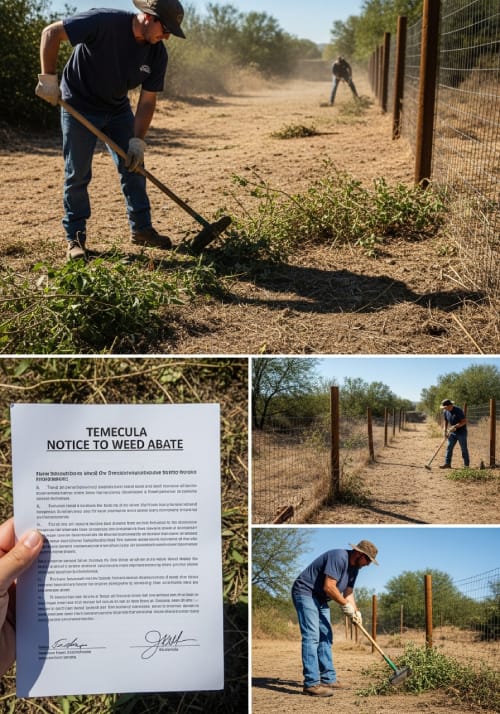
100 feet from every structure. The zone runs outward from each structure on the parcel. It stops at your property line, but inside that line it needs to cover the full radius.
Every vegetation type, not just grass. Weeds, dry annual grass, overgrown brush, dead trees and branches, Russian thistle, and piled combustible material all count against you.
Cut material has to leave the lot. Dried clippings and stacked brush ignite as easily as standing fuel. Compliance means the material is gone, not mounded at the edge.
Easements inside your line are yours. Utility, drainage and right-of-way strips within the parcel boundary belong to the abatement obligation. The city's FAQ is explicit that they are not the utility's job.
Escrow changes nothing. The owner of record at inspection is responsible regardless of a pending sale, and the deadline keeps running through closing.
City timeline
The enforcement calendar — when inspections happen and what follows
Temecula's abatement cycle is predictable enough to plan around. Staff inspect for hazardous vegetation in late winter and early spring, generally January through March, while last season's growth is cured and the new flush is coming on. Flagged parcels get certified-mail notices in early spring carrying a voluntary compliance deadline.
Past that date the city moves to mandatory abatement. Their contractors clear the lot, the owner gets billed for the full cost plus administrative fees, and per the City of Temecula's weed abatement page, unpaid bills go onto the property tax roll as special assessments. That is not a fine you argue down. It is cost recovery for money the city already spent on your dirt, and it accrues interest and follows the parcel until it is paid.
The useful thing about a calendar that repeats is that you can get in front of it. Clearing in late fall or early winter, before the rains push the spring growth, is the cheapest version of this whole problem.
In 2024, Riverside County's Board of Supervisors approved attaching fire mitigation charges to the tax bills of roughly 450 Temecula-area owners whose parcels were not cleared by the deadline. Individual charges ran from $423 to $2,348. Every one of those bills was for work the owner could have hired out sooner, cheaper, and on their own schedule.
Fines & liens
What a missed deadline costs — fines, liens and tax roll assessments
It moves in three stages. First the city's contractor clears the parcel at the contracted rate, which folds in administrative fees for processing the enforcement action rather than just the labor and the dump run. The city's own FAQ states outright that this costs more than hiring a private contractor voluntarily.
Second, you get billed. If the invoice goes unpaid, the balance is added to the Riverside County tax roll as a special assessment under the city's cost-recovery authority. An assessment on the tax roll accrues interest and is difficult to remove — it has to clear before the property sells with clean title, so it tends to surface at the worst possible moment in a transaction.
Third, a lot that never actually gets brought into compliance draws fresh enforcement in the next inspection cycle. That is how a parcel nobody is watching turns into a stack of assessments over three or four years.
Non-compliance follows the sale
An unresolved Notice to Abate does not evaporate at closing. Once city abatement costs are assessed and placed on the tax roll, they transfer with the property as a lien against title. Buyers who find an undisclosed abatement lien after closing have grounds for dispute, and sellers are better off resolving the violation before the listing goes live. If the parcel recently changed hands, contact Temecula Code Enforcement to update ownership so notices reach the right address. We work with Temecula listing agents on pre-listing property clearance that includes abatement compliance.
What it costs
What actually drives the price of a weed abatement job
Weed abatement does not price off a menu the way a couch pickup does. Two half-acre lots on the same street can quote very differently depending on what is standing on them and how close a truck can get. Every parcel is scoped on its own and the number goes in writing before anybody starts cutting, and that number covers the clearing and hauling the debris off — no separate disposal charge showing up after.
These are the six things the crew looks at:
Parcel size
A standard residential lot and five rural acres are different jobs. Acreage sets the baseline crew size and the hours.
Vegetation type and density
Annual grass mows fast. Mature chaparral, woody brush, thistle and dead tree material cut slower and generate several times the debris volume.
Terrain and slope
Flat ground takes equipment. Hillside and canyon-edge lots often mean hand crews on foot, which is slower per square foot and always will be.
Equipment access
Gate width, locked entrances, and whether the trailer can get near the work. A lot that has to be carried out to the street costs more than one we back into.
Debris volume
How much material actually leaves. Our pricing and volume guide shows what a load looks like if you want a reference point.
Structures and obstacles
Irrigation lines, landscape lighting, fencing, planted ornamentals and outbuildings all get worked around instead of cleared through.
How to get an accurate number fast
Text photos to (951) 837-8072 — two wide shots from opposite corners of the lot plus a close-up of the heaviest growth. Most standard residential parcels get quoted the same day off photos alone. Larger rural, hillside and agricultural parcels get an on-site look before the estimate is confirmed, and when a deadline is tight we can usually get out a day ahead of the clearing crew.
Defensible space
Defensible space clearing in Temecula — California's fire buffer standard
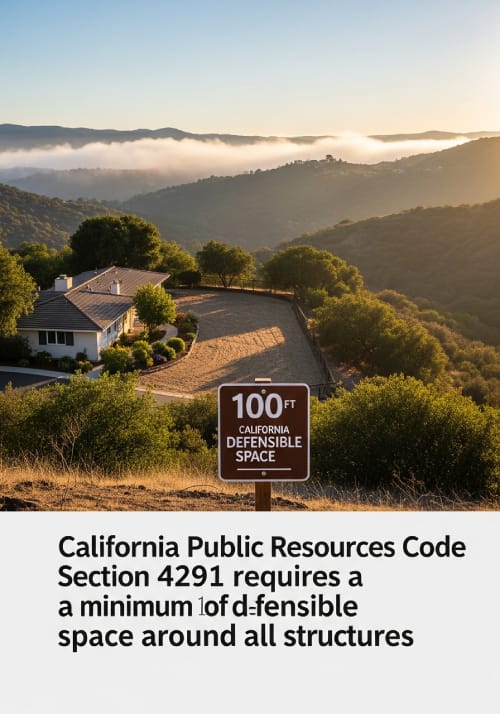
California Public Resources Code Section 4291 requires at least 100 feet of defensible space around structures in State Responsibility Areas and on land mapped High or Very High Fire Hazard Severity Zone. Temecula's ordinance mirrors it under Section 8.16.020. On the properties along the city's developed edge — the hillside lots out toward the Santa Rosa Plateau, the acreage in Los Ranchitos and Glenoak Hills, the Wine Country parcels off De Portola — both the city and CAL FIRE take that seriously enough that the job is real fuel reduction, not a trim.
The Ready for Wildfire defensible space guide splits the buffer in two. Zone 1 is the first 30 feet, managed to the tightest standard. Zone 2 runs 30 to 100 feet, thinned and spaced so a fire slows down instead of running straight at the house. We clear both, and on rural and hillside parcels that is a substantial amount of ground, which is why the assessment covers the whole perimeter before we put a price on it.
Dry grass & annual weeds
The most common violation trigger. Annual grasses are fully cured by June around here and carry ground fire faster than a person can move. Cleared to bare ground or mowed to three inches or less.
Overgrown shrubs & brush
Mature chaparral — ceanothus, manzanita, sage, sumac — blankets the hillside lots and burns hot. Inside 100 feet of a structure it comes out or gets heavily thinned.
Russian thistle
Tumbleweeds pile against fences, walls and hillside lots. One in contact with a building during a fire is enough to take the structure. Common on vacant parcels valley-wide.
Dead trees & branches
Dead material inside the defensible-space zone has to go. Dead branches over the roof line are their own hazard, since embers landing in a dead crown reach the roof fast.
Leaf & organic debris
Leaf litter, pine needles and palm fronds piled against fences and walls are the ember catchers that start most California structure losses.
Unmaintained landscaping
Overgrown ornamentals, dead palm skirts and untrimmed hedges inside the zone. Planted vegetation is held to the same standard as native growth.
Who clears it
Meet Weston Molitor, the owner on the lot
Weston Molitor
Owner and founder · Wild West Junk Removal, TemeculaI started Wild West here in Temecula in 2021 and it has been family-run since. Abatement season is one of the busiest stretches of our year, and it is the one where people are most likely to be dealing with a government letter and a date.
Most of the calls I get on this start with somebody reading the notice to me over the phone like it is a summons. It is not. It is a deadline and a scope, and once you know what the scope actually is, it is a Tuesday.
My crew and I run these jobs ourselves. We walk the lot, clear both zones to the ordinance standard, load everything, and photograph the finished parcel so you have something to hand Code Enforcement if they come back out.

Year-round rule
Why one spring clearing is never enough
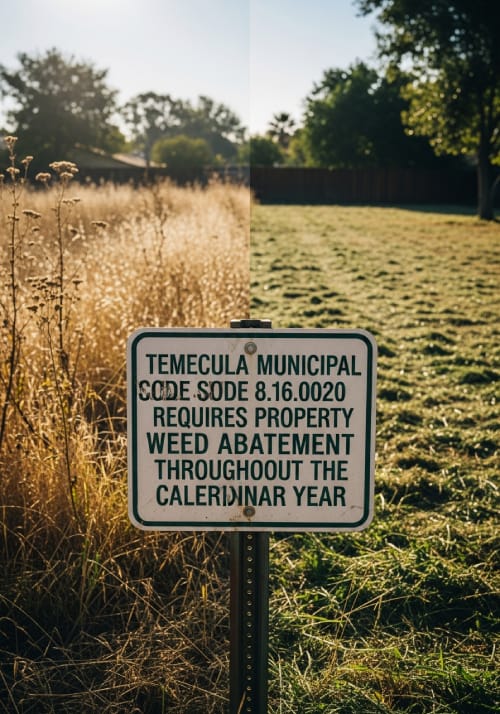
Section 8.16.020 asks for abatement across the whole calendar year, not as a reply to the spring inspection. That is the line most owners never read. A lot cleared in April to pass inspection can be back over the threshold by September if a late rain pushed a second flush or a summer of wind piled dry material against the fences.
Vegetation management works better when it is not tied to the city's calendar at all. Clear after the spring green-up, keep it down through the dry months when the risk actually peaks, and the parcel never reaches the state that triggers a notice. We set that up as quarterly or twice-yearly visits timed to the valley's growth seasons, which covers most residential and rural properties without the owner tracking any of it.
| Reactive, notice driven | Proactive, Wild West maintenance |
|---|---|
| Wait for the certified letter, then scramble before the deadline, often with rushed or partial work | Scheduled visits clear the lot before growth crosses the violation threshold, so no notice ever gets mailed |
| City contractors abate at contracted rates plus administrative fees once the deadline passes | Private clearing is almost always cheaper than city abatement, and it happens on your schedule |
| Cleared once in spring, back to violation condition by late summer | Quarterly or seasonal visits timed to the Temecula Valley growth cycle hold the parcel year-round |
| Cut vegetation piled on site is a second fire hazard and does not achieve compliance | All cleared material hauled off every visit, so the parcel is clean rather than mowed |
| Abatement costs on the tax roll complicate a sale and accrue interest until paid | No liens, no assessments, no title surprises when the property goes on the market |
Murrieta
Weed abatement in Murrieta — a separate program with different deadlines
We clear about as many lots in Murrieta as in Temecula, and owners get caught out regularly by the fact that these are two entirely separate programs. If your parcel is in Murrieta, the Temecula calendar and the 8.16.020 standard above do not apply to it.
Murrieta's program runs through Murrieta Fire & Rescue under Murrieta Municipal Code Chapter 8.32 together with Section 604 of the 2025 California Wildland-Urban Interface Code, which the city has adopted. Vegetation inspections are limited to parcels inside the State Fire Marshal's High and Very High Fire Hazard Severity Zones plus vacant parcels citywide, with hazards outside those zones routed to Code Enforcement instead. Per the city's weed and brush management page, field inspections begin in mid-April and run through high fire season, and for the 2026 season the city has said inspectors are starting earlier in April than in past years.
The enforcement clock is shorter too. An owner found in violation is notified by mail, and if no visible cleanup attempt shows within fifteen days, the city can abate the lot and bill for it. Fifteen days is not much runway on an overgrown parcel, so a Murrieta letter is worth acting on the day it lands.
| Property type | What the city requires |
|---|---|
| Five acres or less | All weeds abated. Discing, mowing or weed whacking accepted, with remaining vegetation left under four inches in height. |
| Over five acres | Minimum 100-foot firebreak along the perimeter and through the parcel, so no single portion exceeds 2.5 acres. |
| Hillside residential | Structures and improvements need 100 feet of clearance from flammable or combustible material, dry weeds and vegetation. |
| Agricultural | Minimum 25-foot firebreak along the property perimeter and from the road edge, plus a 100-foot firebreak from improved property. |
| All properties | Dead, dying and diseased trees and shrubs removed, including all dead and diseased vegetation within 100 feet of the home. |
Past the ground-level clearing, Murrieta calls out tree branches trimmed back at least ten feet from chimneys, twenty feet of clearance around propane tanks, firewood stacked at least thirty feet from any structure, and combustible mulch or wood chips kept at least twelve inches off exterior walls. These are the quick items that get flagged on re-inspection more often than you would expect, and we handle the vegetation side of them on the same visit.
What we clear
Every vegetation type we remove from Temecula properties
Residential lots, rural parcels, orchards and commercial property across Temecula and Riverside County. Describe the scope when you call. Our yard waste removal page covers routine green waste, and cleared structures and debris go on the construction debris removal page.
Grass & weed clearing
Annual and perennial grasses, weeds and ground cover taken to bare ground or the ordinance standard. A typical residential lot is one visit.
Brush & chaparral removal
Dense brush and overgrown native vegetation inside the 100-foot zone. Rural and hillside lots get an on-site look for crew and equipment first.
Tumbleweed & thistle removal
Russian thistle and piled tumbleweeds on vacant lots, fence lines and rural acreage, common on the drier eastern and northern parcels.
Dead tree & branch removal
Dead trees, dead crowns and dead branch material inside the defensible-space zone, with everything felled hauled off rather than stacked.
Palm skirt & canopy clearing
Unmaintained palm skirts are a documented fire hazard and a frequent code item. Dead frond removal happens on the same visit as the ground work.
Vacant lot & acreage clearing
Unimproved parcels, rural acreage and land held for development. Describe the acreage and terrain when calling so the equipment matches the job.
Orchard & vineyard clearing
Understory clearing, row maintenance and deadwood removal in the wine country corridor. Active and inactive agricultural parcels both.
Debris & yard waste hauling
All cleared material leaves on every job, because material left on the lot is not compliance. Yard waste details
How it works
How to book a weed abatement clearance
Call or text with the notice details
Reach us at (951) 837-8072 with the property address, the compliance deadline off the notice, the parcel size and what is growing. Say the deadline out loud so scheduling can prioritize it. For rural or hillside parcels bigger than a standard lot, describe the acreage and terrain so the right equipment is confirmed before we roll out.
On-site look and written estimate
We walk the property, confirm what the ordinance standard actually takes on that parcel, and put the number in writing before anything starts. Standard residential notices can usually be quoted off photos. The written price covers the clearing and the hauling, with no haul fee added afterward.
Crew clears it and hauls it off
All cutting, mowing and removal is ours, and everything cleared leaves on the trailer instead of getting piled at the perimeter. We photograph the finished condition so you have documentation for a city re-inspection. We run Monday through Saturday, 7am to 7pm, with same-day slots most days when you call early in the day.
Set a cadence going forward
After the first clearing we recommend an interval based on how fast that lot grows and where the city's inspection window falls. Quarterly covers most Temecula properties through both the spring peak and the dry summer accumulation, and it takes the next notice off the table entirely.
If you have a deadline printed on a letter, call today rather than next week. Most Temecula violations clear in a single visit for well under what Riverside County charged owners in 2024 for city-mandated abatement, which ran $423 to $2,348 per parcel. If you do not have a notice but the lot has growth that would obviously fail an inspection, calling before the winter cycle saves the letter, the deadline and any chance of city contractors scheduling work on your land.
Before the crew arrives
Notice to Abate response checklist
Work through this the day the notice arrives. Most items take under five minutes and each one heads off a delay on clearing day.
Deadline written down. The compliance date off the notice, somewhere you will see it. Everything else on this list keys off that date.
Violation area photographed. Wide shots of the cited area before any clearing starts, kept for re-inspection documentation.
Parcel size and access described. Acreage, terrain and how a truck gets in, given to us on the call so the crew plan is right the first time.
Gate codes passed along. Any combination or code sent ahead so the crew is not stuck at a locked entrance with the clock running.
Easements included in scope. Utility or drainage easements inside the parcel boundary added to the clearing, since the ordinance puts them on you.
Irrigation and plantings flagged. Drip lines, landscape lighting and anything planted you want left alone, identified before we start cutting.
Completion photos arranged. Finished-condition photos confirmed for submission to Code Enforcement if a re-inspection is required.
Maintenance cadence discussed. Whether quarterly or seasonal upkeep makes sense, settled while we are scheduling the first visit.
Ownership records current. If the parcel is in escrow or recently sold, Temecula Code Enforcement contacted so future notices reach the right person.
Buffer built into the date. Clearing scheduled two or three days ahead of the deadline so an access issue or added scope does not blow the date.
Who calls us
The situations that prompt weed abatement calls
Notice to Abate received
The most urgent call we get. Scheduling works around the deadline and most lots clear in one visit. City of Temecula weed abatement page
Preparing a property for sale
Overgrowth is a curb-appeal problem and a compliance liability at the same time. We clear before photography. Pre-listing cleanout details
Vacant or inherited property
Unoccupied parcels grow over fast and are among the most common violation sites in the city. We handle vacant-lot clearing and recurring visits for out-of-area owners.
Rural or hillside brush
Lots on the eastern edge and through the wine country sit in or beside Very High Fire Hazard Severity Zone ground and need ongoing defensible space, not one clearing.
Property management portfolios
Managers holding several Temecula parcels set one standing schedule across all of them instead of a separate call per lot.
Orchard, vineyard & ag clearance
Active and inactive ag parcels need fire-code compliance and vegetation management that protects the planted rows. We clear around existing crops.
Reviews
What Temecula customers say about Wild West
Verbatim five-star reviews from our Google Business Profile. Same crew and the same standard whether it is a hillside acre of chaparral or a garage cleanout.
Weston and his team are on it. I run a commercial operation and sometimes we need to bring in some professionals to get rid of some insane types of junk. They respond as fast as any company I have seen, and get the job done 100% of the way with no shortcuts. Good people over at Wild West, recommend highly without any reservation.
Wild West Junk Removal is the real deal! They showed up on time, worked fast, and were super professional. The crew was friendly, respectful, and went above and beyond to make sure everything was cleaned up perfectly. I couldn't believe how quickly they got the job done. Fair prices, great service — I highly recommend them to anyone needing junk gone fast.
Nick and the crew were on time and very professional. They removed reclining couches, entertainment center, coffee table, end tables from our upstairs loft. They were very careful and cleaned the area afterwards. Great price!! I would definitely recommend Wild West junk removal.
Wild West Junk Removal Service was great. Nick and Jake were friendly, fast, and really efficient. They gave me a fair price and were quick in and out, making the whole process hassle-free. I definitely recommend them.
This company is amazing! I was in need of junk removal… I called, they came, it was done! They are so professional in every way! Courteous and friendly. I will use this company forever!
Frequently asked questions
Temecula weed abatement FAQ
The questions Temecula owners ask most when a Notice to Abate shows up, or when they want to stay ahead of the inspection cycle entirely.
A Notice to Abate is a written order from the City of Temecula Fire Chief or designee, or from the Riverside County Fire Department out in the unincorporated areas, telling a property owner to clear hazardous vegetation, brush, or combustible material by a compliance date printed on the notice. It is not a warning and there is no grace period after that date. Once it passes, city contractors can clear the parcel and bill you for it. Wild West Junk Removal clears these lots in Temecula ahead of the deadline at (951) 837-8072.
Wild West Junk Removal runs Monday through Saturday, 7am to 7pm, and is closed Sunday. We are not a 24/7 operation and do not claim to be. We hold same-day slots most days for weed abatement across Temecula, Murrieta, Menifee and the rest of southwest Riverside County, so call early in the day at (951) 837-8072 and give us the deadline date so we can put your parcel ahead of the flexible work. Larger rural and hillside jobs go smoother with a day or two of notice.
Weed abatement is quoted parcel by parcel rather than off a fixed list, because two half-acre lots on the same Temecula street can take wildly different amounts of time depending on vegetation density, slope and whether a trailer can get near the work. Wild West Junk Removal gives you the number in writing before anyone starts cutting, and that price covers the clearing and hauling the debris off the property. Text photos to (951) 837-8072 and most standard residential lots get quoted the same day.
More than hiring it out, and the City of Temecula says so in its own program FAQ. City abatement is done at a contracted rate with administrative fees stacked on top for processing the enforcement action. In 2024, fire mitigation charges on individual Temecula-area parcels in Riverside County ran from 423 to 2,348 dollars and were placed on the property tax roll. Booking Wild West Junk Removal before the deadline is almost always cheaper than the city's rate for the same scope.
Temecula Municipal Code Section 8.16.020 requires owners to clear hazardous vegetation, combustible material and fuels for fire protection all year, not only in spring. Clearing runs 100 feet out from any structure without crossing the property line. Mowing, disking, scraping, grubbing and other clearing to bare ground are all accepted methods. Easements that sit inside your parcel boundary are your responsibility, not the utility company's. Wild West Junk Removal clears Temecula parcels to that standard and hauls the material off in the same visit.
City staff inspect for hazardous vegetation in late winter and early spring, typically January through March, when last year's growth is cured and the new flush is starting. Flagged parcels get certified-mail notices in early spring with a voluntary compliance deadline, and after that date the city moves to mandatory abatement at the owner's expense. Because the calendar repeats every year, the cheapest move in Temecula is clearing before the notice ever gets mailed. Wild West Junk Removal schedules pre-season clearing at (951) 837-8072.
We haul it. This is the part owners get wrong most often. A lot that gets mowed with the cut material left lying on it is not compliant, because dried clippings and stacked brush burn as readily as anything standing. On every weed abatement job in Temecula, the Wild West Junk Removal crew loads all the cut grass, brush and woody debris and takes it off the property, so what the re-inspection sees is a clean parcel rather than a mowed one with piles at the fence line.
Defensible space is the cleared buffer between your structures and the vegetation around them. California Public Resources Code Section 4291 requires 100 feet around structures in designated fire hazard severity zones, and Temecula's ordinance mirrors that with its own 100-foot standard. Zone 1 covers the first 30 feet at the strictest standard, and Zone 2 runs from 30 to 100 feet where fuel gets thinned and spaced. Wild West Junk Removal clears both zones on Temecula properties to meet the city and state standard.
Yes. Wild West Junk Removal clears residential lots, vacant parcels, rural acreage, hillside properties, orchards, vineyards and agricultural land throughout Temecula and Riverside County. Anything bigger than a standard residential lot gets an equipment and crew assessment before we confirm the estimate, because acreage and slope change what the job actually takes. Describe the acreage, the terrain and how a truck gets in when you call (951) 837-8072 so the right plan is set before the crew rolls out.
Usually not. If the parcel is accessible and the written price is already agreed, the Wild West Junk Removal crew can clear it while you are at work and send finished photos when we pull out. Somebody does need to be reachable by phone in case something on the lot changes the scope. For gated Temecula communities and locked rural gates, pass along the code or call the gate ahead so the trailer is not sitting at a callbox burning daylight against your deadline.
Yes. Wild West Junk Removal clears Temecula parcels for buyers, sellers, agents and estate managers no matter where the sale stands. The owner of record at inspection is responsible for compliance, and escrow does not pause the compliance deadline. If the parcel recently changed hands, contact Temecula Code Enforcement to update ownership so future notices reach the right address. An unpaid city abatement charge that has been assessed rides with the title until it is cleared, so it is worth settling before closing.
Yes, and the ordinance is written for exactly that. Temecula requires year-round abatement, not one spring clearing, and a lot cleared in April can be back in violation by September. Wild West Junk Removal sets quarterly or seasonal visits timed to the Temecula Valley's growth cycle so parcels stay clear between the city's inspection windows. Customers on a schedule never get the certified letter and never have city contractors scheduling work on their land. Ask about a cadence when you book the first clearing.
Yes. Hillside lots and the Wine Country corridor along Rancho California and De Portola are a big share of the brush clearing Wild West Junk Removal does, because those parcels sit in or next to Very High Fire Hazard Severity Zone ground. Mature chaparral, dead crowns and years of accumulated fuel need real fuel reduction rather than a mower pass, and hand crews on foot are often the only option on grade. We walk the full 100-foot perimeter before quoting a price.
Yes, and Murrieta runs a separate program with its own deadlines. Murrieta Fire and Rescue enforces Municipal Code Chapter 8.32, with vegetation inspections limited to the State Fire Marshal's High and Very High Fire Hazard Severity Zones plus vacant parcels citywide. Field inspections start in mid-April, and the city can abate a lot and bill the owner if no visible cleanup attempt shows within fifteen days of a mailed notice. Mowing standards differ too, at under four inches. Wild West Junk Removal clears to whichever city's standard applies.
Wild West Junk Removal does not burn cleared vegetation. Burning needs a separate permit and is restricted by the Riverside County Air Quality Management District through most of fire season, so everything we cut in Temecula leaves on the trailer instead. We do not apply herbicides or agricultural chemicals, we do not take hazardous materials like paint, motor oil or pool chemicals in a green-waste load, and we do not give legal or code-enforcement advice. Confirm anything about your notice with Temecula Code Enforcement directly.
Weston Molitor founded Wild West Junk Removal here in Temecula in 2021 and still owns and runs it as a family business out of 41713 Niblick Rd. We are local, licensed and insured, and we run the clearing ourselves instead of subcontracting it to whoever is cheap that week. The person who quotes your weed abatement is on the lot pulling brush and loading the trailer, which is the reason the parcel gets left the way we would want our own left.
Notice in hand? Call before the deadline.
We clear Temecula weed abatement violations in a single visit, haul all the vegetation off the property, and photograph the finished job for Code Enforcement.
Wild West Junk Removal · 41713 Niblick Rd, Temecula, CA 92591 · Mon to Sat: 7AM-7PM · Sunday: Closed
Sources & related
Where this information comes from
- temeculaca.govCity of Temecula — Weed Abatement ProgramNotice procedures, the inspection cycle, deadlines, and city abatement cost recovery.
- ecode360.comTemecula Municipal Code Chapter 8.16 — Hazardous VegetationOrdinance text behind the 100-foot standard, permitted methods, and the year-round obligation.
- osfm.fire.ca.govCAL FIRE — Fire Hazard Severity ZonesStatewide hazard-zone mapping that designates much of the Temecula area Very High.
- readyforwildfire.orgReady for Wildfire — Defensible SpaceZone 1 and Zone 2 clearing standards under Public Resources Code Section 4291.
- murrietaca.govMurrieta Fire & Rescue — Weed and Brush ManagementMurrieta inspection season, the 15-day window, and clearing standards by property type.
- codelibrary.amlegal.comMurrieta Municipal Code Chapter 8.32 — WeedsNotice contents, service, compliance window, appeal process, and cost assessment.
- patch.comPatch — 2024 Temecula Fire Mitigation Tax ChargesReporting on roughly 450 area parcels assessed $423 to $2,348 on the 2024 tax roll.
- wildwestjunkremoval.comYard Waste RemovalGreen-waste hauling for clippings, branches and landscape debris between abatement visits.
- wildwestjunkremoval.comPre-Sale Property CleanoutClearing and hauling for listings, including abatement compliance before photography.
- wildwestjunkremoval.comPricing & Volume GuideLoad-size rates and what is included on standard junk removal and hauling jobs.
Weed abatement pricing is quoted per parcel and subject to change; a written estimate is confirmed before work begins. Temecula Municipal Code Section 8.16.020 and the City of Temecula's weed abatement program govern compliance, and all notice procedures, deadlines and city abatement costs should be confirmed directly with the City of Temecula Code Enforcement Division. Wild West Junk Removal does not provide legal or code-enforcement advice. Parcels in unincorporated Riverside County fall under Riverside County Fire Department and CAL FIRE requirements that may differ from the city program. Burning cleared vegetation requires a separate permit and is subject to Riverside County Air Quality Management District regulations; Wild West Junk Removal does not perform burning, herbicide application, or hazardous materials handling.
Reviewed and updated August 11, 2026 by Weston Molitor, owner, Wild West Junk Removal.