
TV Removal · Temecula & Murrieta
TV Removal in Temecula — Any Screen, Any Size, Hauled Off the Legal Way
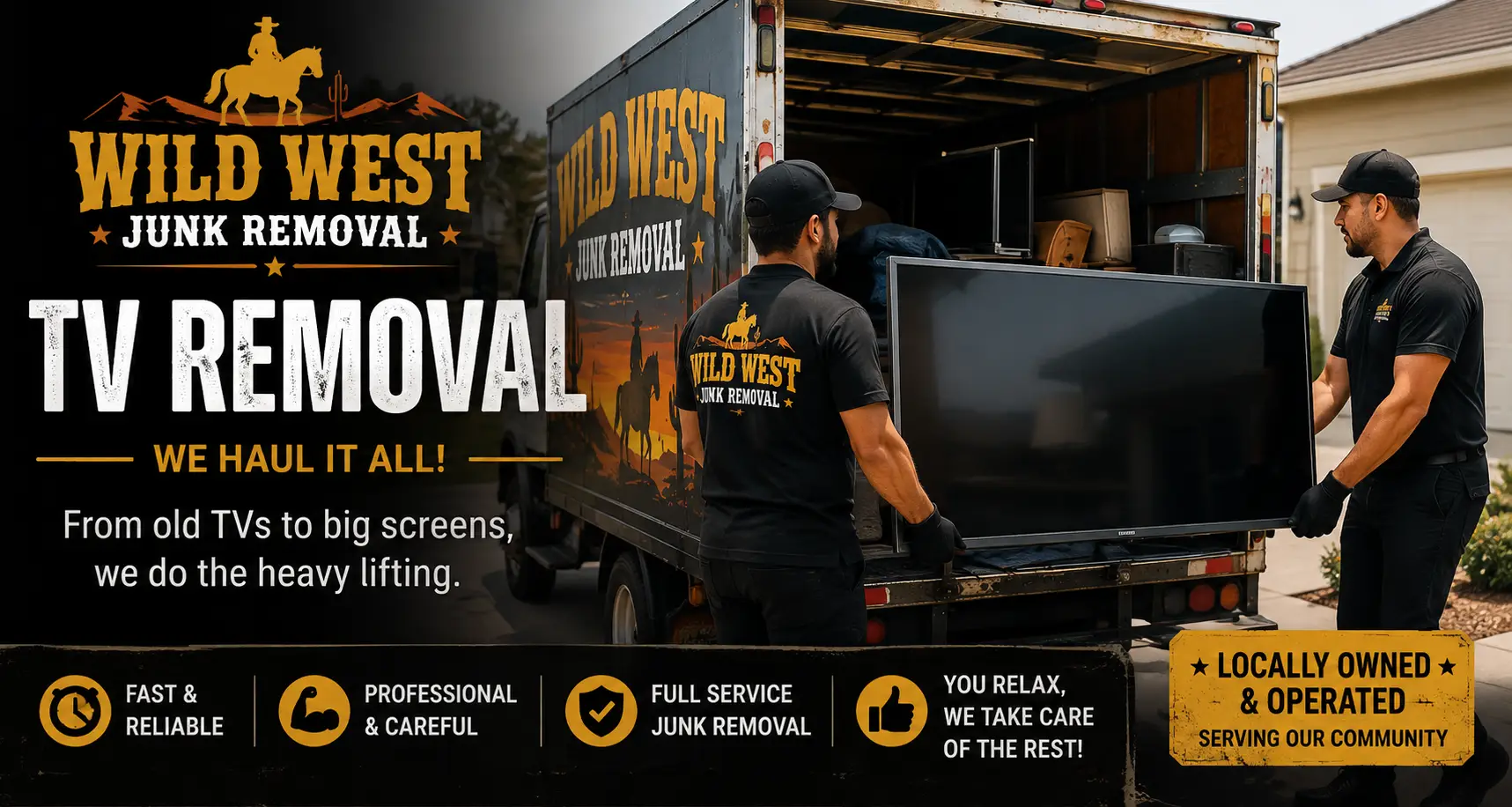
Same-day old TV pickup across Temecula, Murrieta, and southwest Riverside County. Flat screen, plasma, CRT, or rear-projection — we carry it out, and it goes to a CalRecycle-approved e-waste processor, never a landfill.
Call or Text (951) 837-8072Get a Free On-Site Quote
Family-owned in Temecula since 2021 · Licensed & insured · Written price before we lift anything · Mon–Sat, 7AM–7PM
California Law
The Trash Bin Isn’t an Option — That’s State Law, Not Our Rule
It lands the same way in almost every house I walk into. The new television is already on the wall, and the one it replaced is leaning against the couch with nowhere to go. The city won’t take it curbside. The regular hauler says “we don’t do electronics.” So it gets pushed into a corner of the garage, and from Wolf Creek to Redhawk to Harveston, that’s where it sits for the next eight months.
California’s Electronic Waste Recycling Act was signed in 2003 and the statewide collection program went live in 2005. The rule is broad: any video display device with a screen larger than four inches on the diagonal is a covered electronic device, and once you discard it the state handles it as hazardous waste. That sweeps in every residential television sold in the last three decades — tube sets, plasma, LCD, LED, and OLED. Being newer and thinner buys you nothing.
So a TV can’t ride in a household bin, a commercial dumpster, or a junk load from a company that isn’t routing e-waste correctly. That single rule is why TV disposal Temecula homeowners assume is a five-minute errand turns into an eight-month garage problem. The state does guarantee free drop-off options; the catch is logistics, not legality. You still need a vehicle that fits a 200-pound console, a free weekday morning, and the back for it. For a 65-inch panel that just came off a bracket, or three sets out of a media room, that math falls apart fast. When we take a set it goes to a processor on CalRecycle’s approved list and the paperwork follows the load. We also handle full e-waste pickups across the Temecula Valley, not just the television.
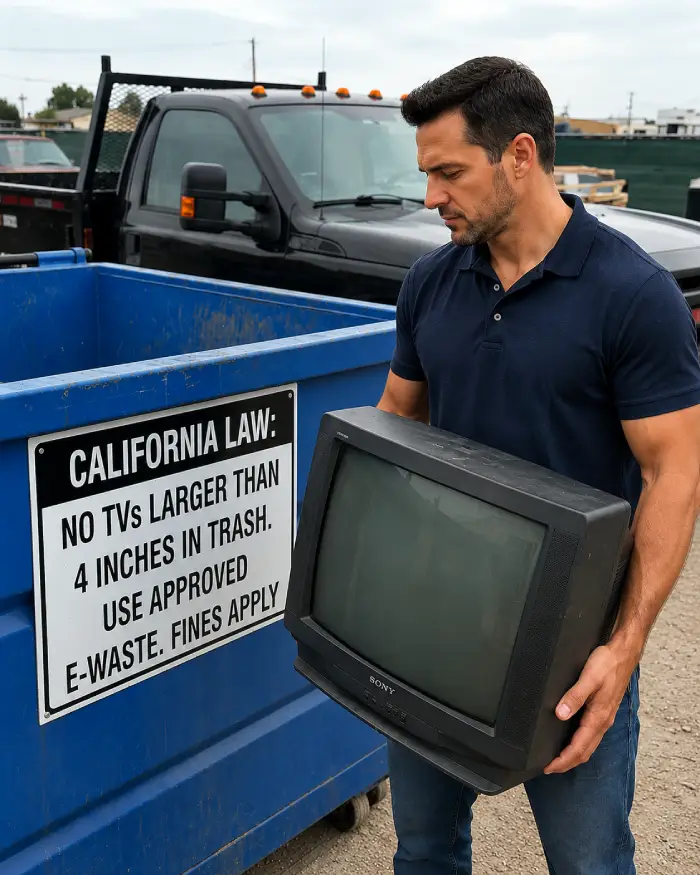
Any screen bigger than four inches measured diagonally is a covered electronic device — which means essentially every TV in your house qualifies. CRT, plasma, LCD, LED, and OLED are all in. The only thing that changes by type is which regulated parts sit inside and how a certified processor separates them.
What’s Inside
What’s Actually in That Set — and Why It Can’t Be Buried
The contents shift by type and era, but every category holds something regulated. Once you know what’s in there, the recycling requirement stops reading like red tape and starts looking like basic chemistry.
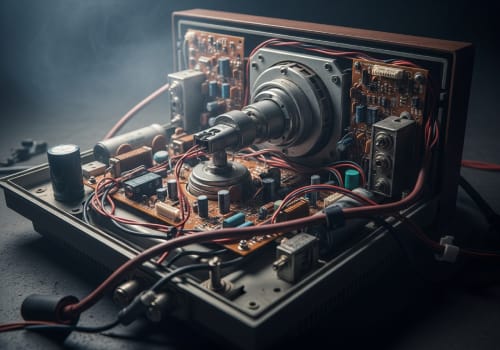
A CRT — the heavy boxy kind that anchored living rooms before flat screens — carries several pounds of lead in the funnel glass alone. That lead was engineered in on purpose, to shield viewers from the tube’s X-ray emissions. Once a CRT lands in a dump and the glass breaks, the lead has nowhere to go but into soil and groundwater. The EPA and California’s Department of Toxic Substances Control both treat broken CRT glass as hazardous in most disposal settings.
Flat screens bring a different problem. Older LCD panels use CCFL backlights that contain mercury — the same mercury that makes a fluorescent tube a controlled item. OLED panels skip the mercury but pack organic compounds and recoverable precious metals that need certified recovery, not burial. Every type needs a processor who knows which parts to pull and where each one belongs.
CRT Lead Glass
Several pounds of lead per tube set, built in to block the X-rays the tube generated. Regulated as hazardous the moment the glass cracks in a landfill.
Mercury Backlights
Older LCD panels use CCFL backlights containing mercury — handled like fluorescent tubes, with certified separation required.
Flame Retardants
Brominated flame retardants in the boards and housings turn toxic when burned or left to break down in a dump over years.
Cadmium & Beryllium
Found in older circuit components. Both are tied to long-term health harm and need certified smelting to recover safely.
Gold, Silver & Copper
Recoverable metals sit in the circuit boards. Certified recyclers pull and resell these — no landfill needed for any of it.
Phosphor Coatings
CRT screen faces are coated with phosphor compounds. Cracking a tube without protection creates a real inhalation risk.
Every so often someone tries to pop the stand off or crack open a CRT to make it easier to carry. Breaking CRT glass in the driveway throws phosphor dust and lead glass everywhere — it is genuinely hard to clean up safely and can put you on the wrong side of California’s hazardous-materials rules. Leave the set whole and let the crew move it. We bring the gear, and it gets broken down in a controlled setting by people who do it for a living.
Who’s Doing the Work
Meet Weston Molitor — Temecula Owner, Not a Call Center
Weston Molitor
Founder & Owner · Wild West Junk Removal“Nobody wants to pay to move a television twice. Tell me what it is and where it sits, I’ll give you the number before we drive out, and that number is what you pay.”
I started Wild West Junk Removal here in Temecula in 2021 to take the jobs other companies wave off, and old televisions sit near the top of that list — heavy, awkward, and a real headache to get rid of legally. Five years in, I’ve carried 13-inch bedroom portables out of Vail Ranch apartments and 200-pound rear-projection consoles down Harveston staircases. I’ve learned which doorways won’t clear a deep chassis and which HOA gates need a code before the crew rolls up.
You get me or a crew I trained, a written price before anything moves, and a set that ends up at a certified processor with the documentation to prove it. That’s the whole business.

How It Works
Booking a TV Pickup Takes About Two Minutes
No forms to chase, no dispatcher three states away. Call or text (951) 837-8072, and if you send a photo of the set we can usually quote it before we roll out.
Tell us what you have
TV type, rough screen size, whether it’s wall-mounted, and anything else going with it. Mention stairs, tight halls, or an elevator so the right crew size shows up. The estimate is always free.
Pick a window
Give us truck parking, a gate code if there is one, and your preferred time. Same-day and next-day are usually open across Temecula, Murrieta, and Menifee. Say so if it’s urgent.
Set the batteries aside
The night before, pull remote batteries, rechargeable packs, and any fluorescent items that can’t ride in the truck for Riverside County HHW drop-off. Not sure? Ask on the call, not at the door.
We confirm and haul
You get the written price before a single item moves. The crew handles the lift, the disconnect, and the load-out, then sweeps the spot. Same certified disposal chain on every set.
Every Type Counts
Flat Screen, Plasma, CRT, Rear-Projection — All of It Is Covered
The most common thing I hear at the door: “It’s a newer flat screen, that’s fine for the trash, right?” No. Every television in common use since the early 1990s falls under the covered e-waste rule. The type doesn’t change whether it qualifies — only which regulated parts are inside and which recovery stream handles them.
LCD & LED flat screens
The standard in most homes now. Older units with CCFL backlights carry mercury; LED-backlit panels have lead solder in the boards. We take every size, right up to the 75- and 85-inch panels that won’t fit in any car.
OLED panels
No mercury, but the organic layers and thin-film transistors need dedicated processing for metal recovery. Not landfill-safe, so these get routed to the right stream.
Plasma screens
Phosphor compounds, lead glass in some models, and a lot of heavy glass. Mostly off the market now, but still turning up in Temecula garages and storage units every month.
CRT tube TVs
The heaviest and most hazardous, with several pounds of lead glass and a phosphor-coated face. Every CRT size, including the deep consoles that take two people off the floor.
Rear-projection sets
Often the biggest thing in the house — north of 200 pounds with a deep chassis, projection lamps, and mirrors. We bring the crew size these actually take.
Stands & entertainment centers
Not e-waste themselves, but they ride in the same load. Mention the stand, mount, and console on the call so the quote covers the whole job.
What Rides Along
Most TV Calls Turn Into an Electronics Clearout
Once we’re on site, the printer in the closet and the tower under the desk usually come out too. Describe the whole pile on the quote call so the trailer arrives with the right space. See full Temecula junk removal service details or check current volume-based pricing.
Monitors & computers
Towers, all-in-ones, CRT and flat-panel monitors — covered e-waste under the same California rule as televisions.
Gaming & AV gear
Consoles, DVD and VCR players, receivers, cable and satellite boxes, streaming hardware, and the tangle of cables behind them.
Phones & small devices
Cell phones, tablets, portable players, and e-readers. Box them up and tell us the rough count on the call.
Office electronics
Printers, copiers, scanners, fax machines, and shredders. Commercial clearouts book around your hours.
Media furniture
Entertainment centers, consoles, and mount hardware, plus any other furniture removal in the same trip.
Whole-property cleanouts
Vacated and inherited homes often hold several sets from different eras. Our estate cleanout crew clears every room and flags donation-worthy items first.
DIY vs Crew
Where the Self-Haul Routes Break Down
Most people try one of four things before they call a crew — the county collection event, retailer take-back, a charity donation, or hauling it themselves. Each works for exactly one situation and falls apart outside of it. County e-waste events happen a handful of times a year and often mean a weekday-morning line that wraps the block. Retailer take-back — programs like Best Buy’s recycling program — is legitimate for one small flat screen, but there are size limits and fees, plenty of stores turn CRTs away over processing cost, and you’re still the one getting it there. That gap — nobody to lift it, nowhere legal to put it — is exactly what an old TV pickup Temecula crew exists to close.
| DIY or self-haul | Wild West full-service pickup |
|---|---|
| You lift and haul it yourself — awkward, heavy, and hard on your vehicle | Crew arrives with gear rated for every size, up to 200-lb CRT consoles |
| County events run a few times a year — the set waits in your garage until then | Same-day and next-day across Temecula, Murrieta, and Riverside County |
| Retailer take-back has size limits and fees, and often refuses CRTs | All sizes, all types — flat, plasma, CRT, rear-projection |
| A non-certified hauler leaves you no documentation and all the exposure | CalRecycle-approved chain, documented from your door to the processor |
| The stand, cables, and accessories still need their own plan | TV, stand, console, and cables cleared in one trip |
| Price is your time, your fuel, and a scratched tailgate | Written, volume-based price confirmed on site before anything moves |
If you have one small flat screen you can lift into your own car and you’re happy to wait for the next scheduled county event, take it to the free drop-off. That’s the cheaper move and I’ll tell you so on the phone. Where a crew earns its keep is the 70-inch plasma, the rear-projection console, the second-floor bedroom set, or three screens out of a media room before a listing photo shoot.
Before We Arrive
The Five-Minute Pre-Pickup Checklist
A few minutes of prep keeps the job fast and the quote accurate. Run through this the night before.
- ✓Unplug and coil. Set unplugged, cables coiled or pulled, streaming sticks and remotes off the back of the TV.
- ✓Flag wall mounts. Tell us about any wall-mounted set so the crew brings a drill and the hands the size takes.
- ✓Count the spares. Secondary TVs on dressers or in guest rooms counted and included in the quote.
- ✓Check the garage. CRTs and rear-projection sets usually live here — measure the doorway for a deep chassis.
- ✓Pull the batteries. Remotes, rechargeable packs, and backup units set aside for Riverside County HHW drop-off.
- ✓Gather other e-waste. Computers, printers, consoles, and phones grouped so we quote the full load right.
- ✓Confirm access. Gate codes, truck parking, elevator availability, and stair details noted ahead of time.
- ✓Decide on the furniture. Any stand, console, or media wall going in the same load confirmed on the call.
From Our Neighbors
What Temecula Valley Customers Say About the Crew
Homeowners and property managers we’ve cleared televisions and electronics for around the Temecula Valley — including plenty of TV removal Murrieta jobs, which run the same schedule and the same pricing as Temecula.
★★★★★
Wild West Junk Removal did an awesome job at my house. Super quick, professional, and easy to work with. They took care of everything without hesitation. I’d definitely use them again and highly recommend them! Thank you so much!!
★★★★★
Wild West Junk Removal did a wonderful job getting 2.14 tons of yard & construction waste off my property, including the demolition of a construction grade dog house. They communicated clearly, were super professional & got everything done fast. They left the space where the trash was clean of all debris and made our lives much easier. If you are looking for an honest and reputable company, they are the place to go to.
★★★★★
Jake and Bj from Wild West junk removal came out and helped me remove some unwanted items from my garage. They were extremely friendly and very hard working. If I could give them 10 stars I would! I will definitely be using them again.
★★★★★
I had an amazing experience with Nick and his crew- Wild West Junk Removal from start to finish, the team was professional, punctual, and incredibly efficient. They arrived right on time, were friendly and respectful, and made the entire junk removal process quick and stress-free. They handled everything with care and left the area spotless. Pricing was fair and transparent, with no surprises. I highly recommend them to anyone looking for reliable and hassle-free service — I’ll definitely be using them again in the future!
When a crew is clearly the right call
A new 75-inch arrives and the 55-inch it replaces won’t fit in any vehicle without scratching something. A CRT console has been in the garage since the last owner. A property manager inherits four sets from four different decades in one vacated unit. An office remodel leaves a stack of monitors and a wall-mounted display nobody wants to touch.
Those are the jobs we run every week — and they’re the ones where TV removal Temecula service actually saves you a weekend instead of just a trip.
Frequently Asked Questions
TV Removal & TV Disposal — The Questions We Get Most
No. California's Electronic Waste Recycling Act classifies any television with a screen larger than four inches as a covered electronic device, which the state treats as hazardous waste at disposal. That rule covers old CRT tube sets and brand-new flat screens the same way. A TV can't legally go in your residential bin, a commercial dumpster, or a standard junk load from a hauler who isn't set up to route e-waste to a certified processor.
Every type: LCD, LED, OLED, plasma, rear-projection, and CRT tube sets. Size is never the deciding factor. We've carried 13-inch bedroom portables and 85-inch wall panels, plus the heavy rear-projection consoles that take two people to lift off the ground.
We price by volume, meaning the space your items take up in the trailer, and a single flat screen usually lands in our minimum bracket. You get the full number in writing before anything moves, with no add-ons after the fact. Text a photo of the set to (951) 837-8072 and we'll quote it before we ever roll out.
Yes, and we carry it on every job, not just the big ones. That matters more with televisions than most people expect, because a crew is walking a heavy, awkward, glass-faced object down your hallway and past your walls. If you're a property manager or an office tenant and your building needs a certificate of insurance on file before we come out, say so when you call and we'll get it sent over ahead of the pickup.
Yes. We disconnect the cables, lift the set off the bracket, and pull the mount too if it's going with the load. Patching and painting the wall is on you, but the television and all the hardware leave with us. Tell us it's wall-mounted when you call so the crew shows up with a drill and enough hands for the size.
Most days, yes. Call or text before noon and we can usually be out the same afternoon across Temecula, Murrieta, Menifee, and the rest of southwest Riverside County. We run Monday through Saturday, 7 AM to 7 PM, and we're closed Sunday.
To a processor on CalRecycle's approved list, where the set is separated by material: lead glass, mercury lamps, circuit boards, and plastics each move into a different recovery stream. A set that still powers on may be routed to donation first. Nothing we haul gets buried in a standard landfill.
Yes. The stand, the console, the loose cables, and the whole media wall can ride in the same load as the TV. Mention them when you call so the quote covers everything and the crew brings enough trailer space on the first trip.
Yes. Apartments, condos, and commercial suites are routine work for us, and we handle the parts that make them different: elevator reservations, loading dock access, HOA gate codes, and after-hours windows so an office pickup doesn't run through your business day. Tell us the unit number, the floor, and whether there's a service elevator when you call, and we'll size the crew to the building instead of guessing at the curb.
Yes. Stairs, narrow halls, and elevator buildings are routine for us. For the heavy pieces, especially CRTs and rear-projection sets, describe the path when you call. A 200-pound console at the top of a Harveston staircase needs a different plan than a 55-inch flat screen sitting by the front door.
No. A cracked panel or a set that no longer powers on costs the same as a working one, because the price is based on volume, not condition. If the glass is already shattered, leave it as-is and let the crew handle it with the right gear rather than sweeping it up yourself.
For a first job, someone should be on site to point out what's going and approve the price before we load. Repeat customers and property managers can set up gate codes and remote access, and we send before-and-after photos when nobody's there.
Monitors, desktop towers, printers, stereo gear, game consoles, DVD and VCR players, phones, and tablets all count as e-waste and ride in the same load. Most electronics cleanouts finish in a single visit, so gather it all in one spot before we arrive.
Yes. TV removal in Murrieta runs on the same schedule and the same pricing as Temecula, and we cover Menifee, Wildomar, Lake Elsinore, Canyon Lake, Winchester, and French Valley, plus Fallbrook, Rainbow, and De Luz. If you're near the Temecula Valley and not sure whether you're in range, just ask when you call.
If a set powers on and has real life left in it, we try donation before recycling. Working flat screens are the easiest to place. Older tube sets almost never find a taker, so those go straight to the certified processor for material recovery.
Some, and they're worth a look before you call us. A flat screen with a working HDMI port makes a fine second monitor, a garage workbench display, or a screen for a projector-free movie night in the backyard. An empty console cabinet from a rear-projection set can be rebuilt into shelving, a bar, or a pet bed once the electronics are out of it. What I'd steer you away from is gutting a CRT yourself for a fish tank or a planter, which is a popular idea online and a genuinely bad one, because breaking that tube releases lead glass and phosphor dust in your garage. If the set is dead or it's a tube, let it go to the recycler.
Yes, and it takes about a minute. A smart TV stores your Wi-Fi password and stays signed in to streaming accounts, so run the factory reset in the settings menu before we arrive. We don't need it powered on for anything, so do it on your own time rather than at the door.
Ready to Get That Old TV Out of the Garage?
One call, a free on-site estimate, and we take any TV type from anywhere on the property — routed to a CalRecycle-approved processor, same day across Temecula and Riverside County.
Wild West Junk Removal · 41713 Niblick Rd, Temecula, CA 92591 · (951) 837-8072
Mon–Sat 7AM–7PM · Sun Closed
Sources & References
- calrecycle.ca.govCovered Electronic Waste Recycling Program
- leginfo.legislature.ca.govCalifornia Penal Code § 374.3 — Illegal Dumping
- dtsc.ca.govDept. of Toxic Substances Control — E-Waste
- epa.govUS EPA — Universal Waste
- rivcoeh.orgRiverside County Household Hazardous Waste
- wildwestjunkremoval.comOur own TV junk removal tips
E-waste rules and county collection schedules change; confirm current Riverside County Household Hazardous Waste dates at rivcoeh.org. Wild West Junk Removal does not handle asbestos or regulated hazardous waste requiring a licensed abatement contractor. Pricing is volume-based and confirmed on site in writing before work begins; quoted rates are subject to change. This page is general information about California disposal rules, not legal advice.