
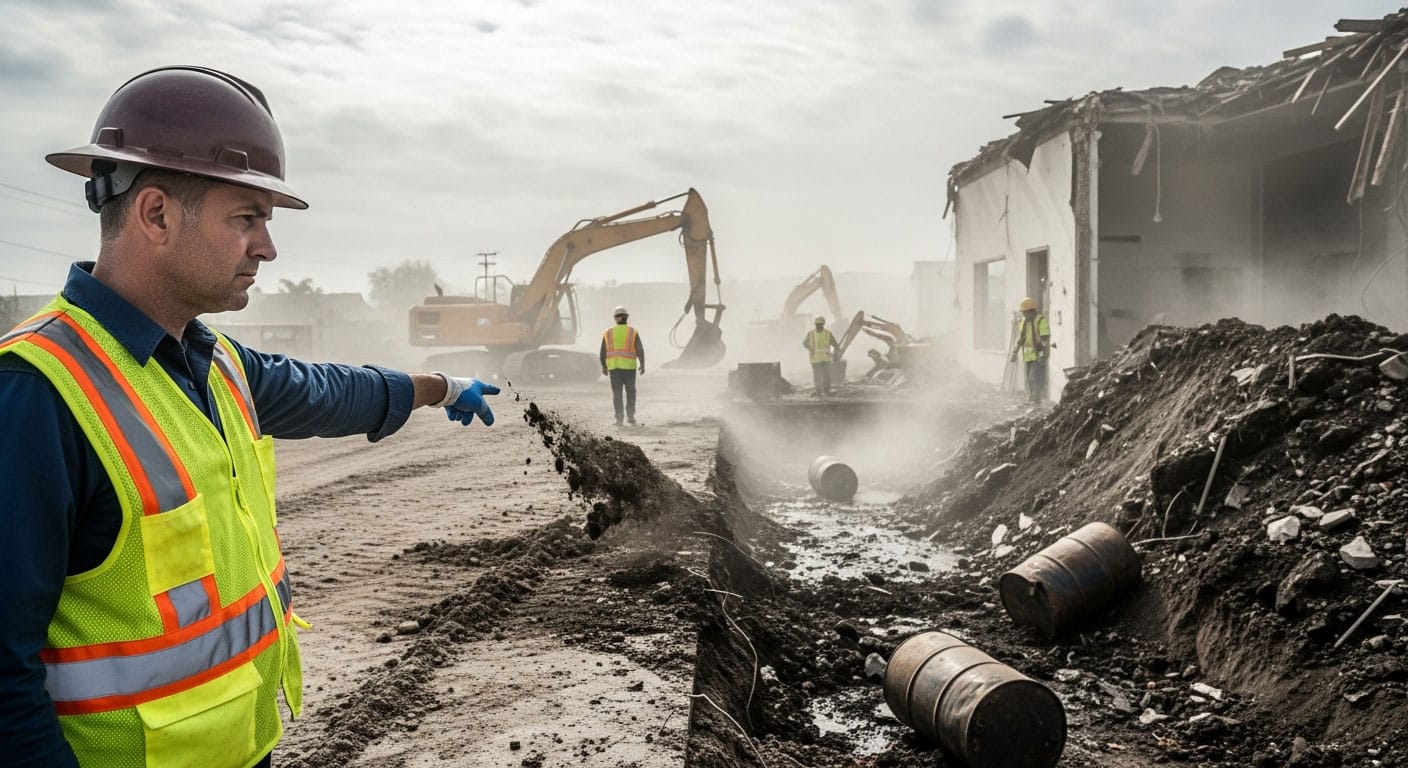
Environmental Compliance for Demolition Cleanup in Temecula, CA
Environmental compliance for demolition cleanup in Temecula, CA, involves local, county, and state regulations designed to protect air quality, water resources, and public health. Property owners and contractors must follow strict guidelines when handling construction and demolition debris, hazardous materials, and waste disposal. Wild West Junk Removal strictly adheres to these regulations and has all the permits and insurance required by state regulators.
Key Takeaways
- Demolition cleanup in Temecula must follow local, county, and state regulations protecting air quality, water, and public health.
- Buildings built before 1981 may require asbestos inspection; hazardous materials like lead paint and PCBs need proper handling.
- California mandates diverting significant demolition waste from landfills, requiring recycling documentation before final project approval.
- Dust control measures, including water suppression and covered debris transport, are required to avoid air quality violations.
- Illegal dumping or using unauthorized haulers can trigger enforcement actions from county environmental health authorities.
Hazardous Materials and Asbestos Regulations
Before demolishing structures—especially buildings constructed before 1981—an asbestos inspection may be required. Federal and California regulations mandate proper identification, notification, and removal procedures for asbestos-containing materials.
Other regulated materials commonly found during demolition include:
- Lead-based paint
- Mercury-containing fixtures
- Polychlorinated biphenyls (PCBs)
- Treated or pressure-treated wood
- Refrigerants from HVAC systems
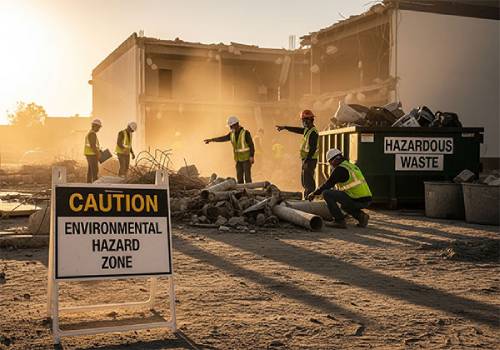
Improper handling or disposal of hazardous materials can result in substantial fines and project shutdowns.
Air Quality and Dust Control Requirements
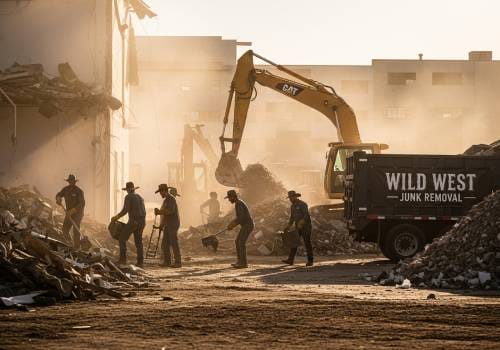
Demolition projects must comply with regional air quality rules to minimize dust and particulate emissions. Required measures often include:
- Water suppression during demolition
- Covering debris loads during transport
- Preventing debris track-out onto public roads
- Using compliant diesel-powered equipment
Failure to control dust can lead to air quality violations and penalties.
Construction and Demolition Recycling Mandates
California building standards require many projects to divert a significant percentage of construction and demolition waste from landfills. This may involve:
- Separating recyclable materials such as concrete, metal, and wood
- Tracking disposal weights
- Providing recycling documentation to the City
Recycling compliance is often required before final project approval or inspection.
 Stormwater and Runoff Protection
If demolition activities disturb soil, stormwater compliance measures may apply. Projects may need erosion control systems or a stormwater pollution prevention plan to prevent sediment and contaminants from entering storm drains.
Waste Transport and Legal Disposal
Demolition debris must be transported by authorized haulers and disposed of at approved facilities. Illegal dumping or improper disposal can trigger enforcement actions from county environmental health authorities.
Material-Specific Disposal Rules
Certain materials require specialized handling:
- Concrete and asphalt are often required to be recycled.
- Drywall may need separation for proper processing.
- Treated lumber may qualify as hazardous waste.
Mixing restricted materials into general waste streams can result in violations.
Best Practices for Compliance
To ensure your demolition cleanup project in Temecula, CA, remains compliant:
- Conduct a hazardous material assessment before demolition.
- Implement proper dust control measures.
- Track recycling and landfill diversion rates.
- Use licensed demolition and debris removal contractors.
- Confirm stormwater and permit requirements with local authorities.
Wild West Junk Removal strictly follows environmental regulations. Noncompliance can lead to state-imposed fines, delays, or stop-work orders. Wild West Junk Removal carefully plans and adheres to environmental laws to help ensure your demolition cleanup project proceeds safely and legally.
FAQs
 Is asbestos inspection required before demolition in Temecula?
Yes, especially for buildings constructed before 1981. Federal and California regulations require proper identification, notification, and removal of asbestos-containing materials before demolition begins.
What dust control measures are required during demolition cleanup?
Required measures include water suppression during demolition, covering debris during transport, preventing trackout on public roads, and using compliant diesel-powered equipment to avoid air quality violations.
Does California require recycling demolition waste?
Yes. California mandates diverting a significant percentage of demolition waste from landfills. Contractors must separate recyclables, track disposal weights, and provide recycling documentation before final project approval.
What happens if demolition debris is illegally dumped?
Illegal dumping can trigger enforcement actions from county environmental health authorities, resulting in substantial fines and potential project shutdowns.
Are there special disposal rules for treated lumber and drywall?
Yes. Treated lumber may qualify as hazardous waste, and drywall may require separation for proper processing. Mixing these materials into general waste streams can result in regulatory violations.