
Dumpster Rental · Temecula Valley
Why Rent a Dumpster? The Honest Case
Time, volume, cost, job-site safety, and legal disposal — the five reasons a rental container beats hauling debris yourself, and the situations where it does not.
Family owned since 2021 · Licensed & insured · Mon to Sat 7AM-7PM
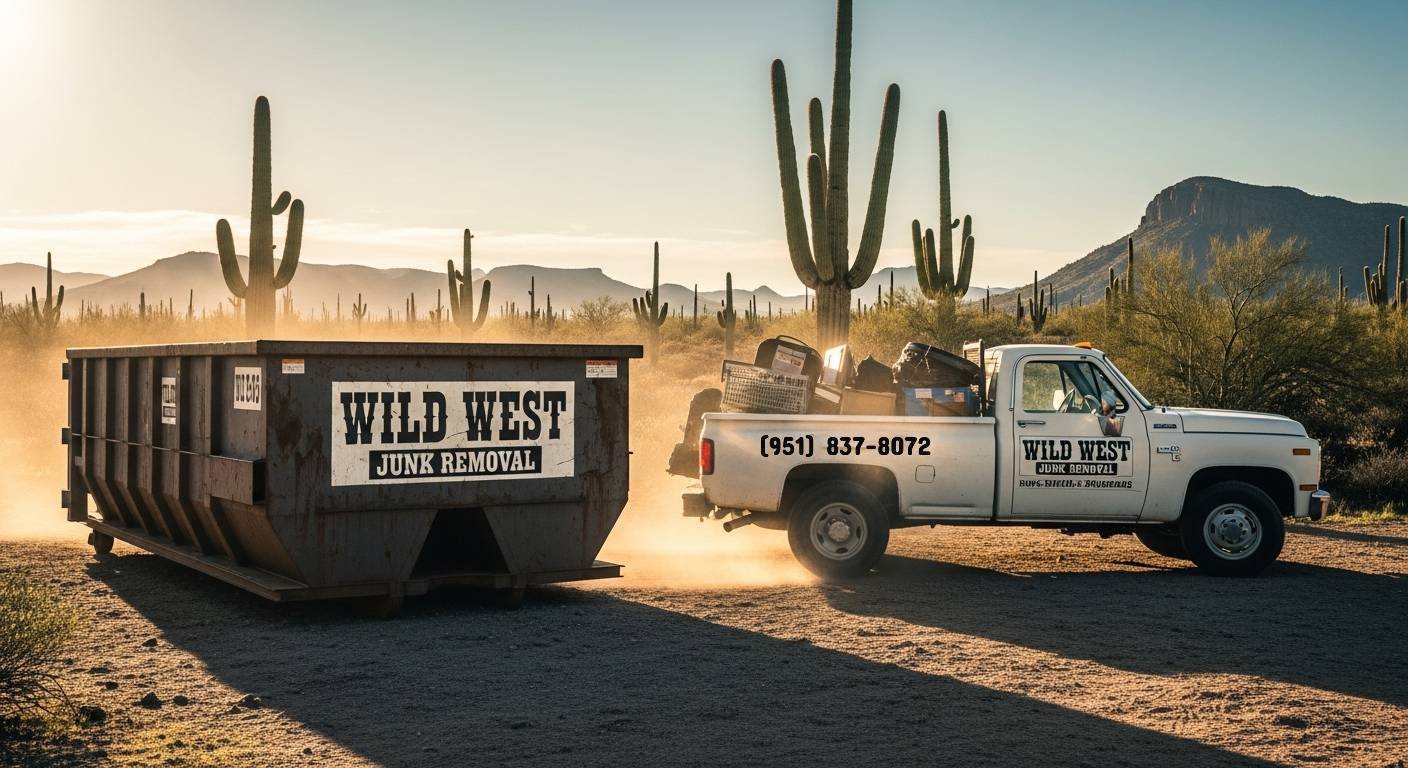
A dumpster rental solves one specific problem: you have more debris than curbside trash service will take, and more than you can move in your own vehicle in a reasonable number of trips.
It is not a complicated product. What people consistently get wrong is the cost of the alternative — the fuel, the truck rental, the per-load tipping fees, and the half-days that disappear driving to the transfer station and back.
The EPA reports that construction and demolition debris generation in the United States is more than twice the amount of municipal solid waste. That is an entire category of material a curbside bin was never designed to handle. A roll-off container is the tool that was.
Wild West rents dumpsters across Temecula, Murrieta, Menifee, and the surrounding valley for renovations, construction cleanups, roofing jobs, cleanouts, and landscaping tearouts. Here is the straight breakdown of when it makes sense — and when it does not.
The Real Case
Why Dumpster Rentals Actually Work
The appeal is almost entirely practical. A container is delivered to your property. You fill it at whatever pace the project demands — over an afternoon, a weekend, or a full week. When you are done, one call gets it picked up and the debris stops being your problem.
Hauling it yourself looks cheaper until you run the numbers. A bathroom gut or a garage cleanout produces three or four truckloads minimum. If you do not own a truck, every one of those trips starts with a rental. Then there is the drive to the transfer station, the wait, the unload, and the tipping fee — repeated.
A rental container sits in your driveway for days, not hours. You work at a steady pace instead of racing a truck return window.

The United States generates more than twice as much construction and demolition debris as it does municipal solid waste. Standard curbside bins were never built for that material. Roll-off containers were.
Reason 1
It Saves More Time Than You Expect
The trip-to-the-landfill math is the single thing most people underestimate when planning a renovation or cleanout.
Here is how a bathroom gut goes when you haul it yourself. You load the truck carefully, because drywall bends and tile is heavy. You drive to the transfer station — a 20-minute round trip from most of Temecula, plus whatever the line is. You unload. You drive back. You do it again. Three or four times. Half a Saturday is gone and the next phase of the project has not started.
Most facilities will not accept everything mixed together, either. Separating concrete from wood from drywall adds sorting time before you even load the truck.
The timeline advantage is the whole point
A rental container stays on-site for the full rental period, not the three hours a truck rental allows. You load it Tuesday afternoon, add more Saturday morning, and call for pickup when it is full.
- No return deadline. The container sits on your property for the agreed rental period. No racing a 5pm truck return with two loads still to go.
- No sorting on site. Wild West accepts mixed loads. The sorting happens after pickup, handled by people who do it daily.
- No repeat landfill trips. One container, one pickup. Trips to the transfer station drop from several to zero.
- No vehicle logistics. No truck booking, no mileage, no damage liability on borrowed equipment. The container comes to you.
Reason 2
One Container Handles Mixed, High-Volume Debris
A weekend kitchen remodel generates a genuinely surprising amount of waste: pulled cabinets, old tile and backer board, drywall cutouts, flooring, dead appliances, broken fixtures, plumbing, and the packaging from everything that replaces them.
Curbside service has weight limits, item restrictions, and a hard list of what it takes. Roofing shingles, concrete, appliances, and large quantities of any single material are usually on the "not accepted" side of that list. The right-sized container removes that constraint entirely.

- Demolition rubble. Drywall, concrete, masonry, subfloor, and framing waste from a gut renovation — material curbside pickup will not touch and that fills a pickup in three loads.
- Appliances and bulky items. Refrigerators, stoves, dishwashers, water heaters, and washers go in alongside the rest of the debris. No separate appliance pickup call required.
- Roofing material. Asphalt shingles, felt, flashing, and damaged decking accumulate fast and run heavy. They go in with everything else.
- Yard waste and landscaping debris. When landscaping runs alongside a renovation, it all goes in one container. California's SB 1383 requires organic material to be diverted — we handle that sorting after pickup.
- Cleanout material. Years of household goods, furniture, files, and storage — the mixed load that would otherwise take multiple donation runs and an entire weekend.
Reason 3
The Cost Comparison That Makes Renting Worth It
DIY hauling math usually runs like this: a pickup rents locally for roughly $80 to $130 per day. You drive to the landfill and pay a tipping fee that varies by facility and material. Add fuel, mileage, and your own time. Then multiply by the number of trips the job actually needs — which is nearly always more than the number you estimated.
Landfill disposal is not getting cheaper. The Environmental Research and Education Foundation reported a roughly 10 percent jump in average U.S. tipping fees, the largest single-year increase since 2022.
A flat rental fee bundles the container, the haul, and the disposal into one number confirmed before the project starts.

| What you pay for | Hauling it yourself | Renting a dumpster |
|---|---|---|
| Vehicle | Truck rental, roughly $80–$130 per day, often multiple days | Included — nothing to rent |
| Disposal | A separate tipping fee on every single load | Covered by the flat rental fee |
| Fuel | Repeat round trips to the transfer station | One delivery, one pickup |
| Sorting | You separate materials before you load | Sorted after pickup at our facility |
| Your time | A half day gone per trip, repeated | Your pace, one call to close it out |
| Budget certainty | Unknown until the last load is dumped | Known before the project starts |
When renting is the wrong call
If the job is one pickup load and you already own a truck, hauling it yourself is genuinely cheaper. If you want a crew to do the physical lifting and the whole job can be finished in a single visit, full-service junk removal is usually the better fit. Rentals earn their keep on multi-day projects where debris accumulates over time.
Reason 4
A Designated Container Improves Job-Site Safety
Scattered debris on an active site is not just untidy. It is a documented cause of injuries and a liability exposure.
OSHA standard 1926.25 requires construction work areas to be kept clear of scrap and debris throughout the job, not just at the end of it. On a live residential renovation, the practical mechanism for meeting that is a container where waste goes immediately instead of piling up along the work path.
Loose material creates specific hazards: trip and fall exposure, punctures from fasteners in broken lumber, and unstable scrap stacks that shift underfoot.
- Fewer trip hazards. The common job-site injuries are not dramatic — they are trips over drywall scrap, nail punctures, and cuts from broken tile. A container reduces surface debris continuously.
- Liability position. If someone is hurt on your property because the site was a mess, you may be exposed regardless of why they were there. An organized site with a designated container is evidence you took basic precautions.
- HOA and neighbor relations. One container on a driveway reads very differently than debris piled against a fence. In HOA-governed neighborhoods around Temecula and Murrieta, visible renovation debris can generate a real complaint.
- Better workflow. Shorter haul distances for the crew, and nobody spends time deciding where to stage material.
Reason 5
Legal Disposal Without Researching It Yourself
California SB 1383
Effective January 1, 2022 with enforcement from January 1, 2024, SB 1383 requires organic waste — including yard debris mixed into renovation loads — to be diverted from landfill. CalRecycle oversees compliance. We route organic material to composting, concrete and masonry to recycling, and send to landfill only what has no viable diversion path.
Disposal rules vary by city, county, and state, and California's are among the most specific in the country. Disposing of debris improperly — even without meaning to — can mean fines and mandatory cleanup orders. A rental company already carries that knowledge, so you are not spending an evening on the county website.
- Restricted materials get flagged early. Lead paint fragments from pre-1978 homes, suspected asbestos-containing material, certain electronics, and some adhesives need separate handling. We flag them before the container is loaded, not after.
- Concrete and masonry get recycled. Clean concrete, brick, and asphalt route to recycling facilities rather than landfill. Most DIY haulers skip this because it means a second facility trip.
- Documentation on request. If your project needs disposal records for permitting or insurance, ask at booking and we will provide them.
- No guessing. You describe the load honestly. We handle Riverside County and state compliance.
Paint, solvents, motor oil, antifreeze, pesticides, propane tanks, and asbestos-containing materials are prohibited from standard roll-off containers under California law. Covered electronics — computers, monitors, televisions — require certified e-waste recycling under SB 20. Tires and medical waste are also excluded.
If you are unsure about a specific item, ask before it goes in the container rather than after.
Best Fit
Projects Where a Rental Is the Right Call
Renovation & Demo
Kitchen or bath gut, floor replacement, wall removal, room addition. Demo debris piles up fast and in material types curbside service refuses.
Roofing
A re-roof generates a heavy volume of shingles, felt, and damaged decking. Too heavy for standard trash, too bulky to move piecemeal.
Garage & Estate Cleanouts
Years of accumulated possessions, furniture, tools, and storage. The classic residential rental scenario — too much volume, too mixed.
Landscaping Overhauls
Regrading, plant removal, hardscape tearout, and irrigation work produce mixed organic and non-organic debris in one push.
Active Construction Sites
Contractors need a designated debris location to stay OSHA-compliant across the full run of a job, not just at final cleanup.
Multi-Unit Turnovers
Tenant turnover, foreclosure cleanouts, and estate properties being prepped for sale, where the material has to move on a deadline.
Booking
How to Book a Wild West Dumpster Rental
Four steps, start to pickup.
-
Describe the project and the debris type
Call or text (951) 837-8072 and tell us what you are clearing out. Material type matters as much as volume — concrete and demo debris load very differently from furniture or yard waste. Most descriptions take under two minutes.
-
Confirm placement and access
We need a flat, accessible spot, usually a driveway or parking area. If the container has to sit on a public street, say so upfront — street placement typically requires a permit from the City of Temecula Public Works Department, and we will walk you through it.
-
Know what can and cannot go in
Most construction debris, household junk, yard waste, and appliances are fine. Hazardous materials are not. If you have a question about a specific item, ask first — a problem discovered at the disposal facility costs more and delays the haul. The full list is on our what we take page.
-
Fill it at your pace, then call for pickup
Work the project on your own schedule. When the container is full or the job is done, call and we handle the haul, the sorting, and routing to licensed Riverside County facilities. One call closes it out.
Rental or full service — not sure which?
Describe the job when you call. If a crew doing the loading in one visit makes more sense than a container sitting in your driveway for a week, we will tell you that.
FAQ
Dumpster Rental Questions
Time and cost predictability. Hauling it yourself means multiple truck trips, each with its own fuel cost, vehicle rental fee, and per-load tipping charge. A rental gives you one flat fee covering the full project volume, with no vehicle to rent and no return deadline. For anything requiring more than two or three truckloads, the math usually favors the rental.
Renovation and demolition projects, roofing, garage and estate cleanouts, landscaping overhauls, active construction sites, and multi-unit property cleanouts. The common thread is volume that accumulates over several days plus material types standard trash service will not accept.
For most medium and large jobs, yes. A pickup rents for roughly $80 to $130 per day, and every trip to the landfill carries its own tipping fee. Multiply both by the number of trips the job really requires and a flat rental fee starts to look reasonable quickly. For a single small load and a truck you already own, hauling it yourself wins.
Hazardous materials are the main category: paint, solvents, motor oil, antifreeze, pesticides, propane tanks, and anything that may contain asbestos. Under California SB 20, covered electronics such as computers, monitors, and televisions require separate certified e-waste recycling. Tires and medical waste are also excluded. If you are unsure about a specific item, ask before it goes in.
By giving debris a destination that is not the work floor. OSHA standard 1926.25 requires construction work areas to be kept clear of scrap throughout the project. A container on site is the practical mechanism for doing that, which cuts the trip hazards, punctures, and unstable scrap piles that cause most job-site injuries.
Describe the project type and the rough scope when you call. Material matters as much as cubic footage: light bulky debris like drywall and framing fills a container by volume, while concrete and tile fill it by weight. Tell us what you are clearing and we will recommend a size.
Yes. SB 1383 organic waste requirements, Riverside County disposal regulations, and city-specific rules are all factored into how we sort and route debris after pickup. Concrete and masonry go to recycling, organic material goes to composting, and e-waste goes to certified recyclers. Disposal documentation is available on request.
We sort after pickup. Concrete, brick, and asphalt go to concrete recycling. Metal and scrap are separated out. Organic material, including yard debris mixed into renovation loads, goes to composting under SB 1383. Only what has no viable diversion path goes to a licensed disposal facility.
Both are possible. Driveway placement on private property generally does not require a permit. Street placement in Temecula requires a permit from the City of Temecula Public Works Department, and the process and fee depend on the street and the duration. If your site lacks driveway access, mention it when you call.
With a rental you do the loading, and the container stays on site for the rental period. With full-service junk removal our crew does the loading and hauls everything away in a single visit. Rentals suit multi-day projects where debris builds up over time. Full service suits jobs where you want someone else doing the physical work.
Need a Dumpster This Week?
One call. Container delivered to your property. Work on your own schedule.
Wild West Junk Removal · 41713 Niblick Rd, Temecula, CA 92591 · Mon to Sat: 7AM-7PM, Sunday closed
- EPAConstruction and Demolition Debris: Material-Specific DataGeneration volumes for C&D debris relative to municipal solid waste.
- EPASustainable Management of Construction and Demolition MaterialsRecycling pathways for concrete, masonry, and asphalt.
- Waste AdvantageEREF Report on U.S. Landfill Tipping FeesYear-over-year movement in average national tipping fees.
- OSHAStandard 1926.25 — HousekeepingDebris clearance requirements on construction work areas.
- CalRecycleSB 1383 Organic Waste ReductionCalifornia organic waste diversion requirements and enforcement dates.
- Recycle by CityItems Commonly Banned From LandfillsMaterials that require separate handling at disposal facilities.
Related: Dumpster Rental Service · Dumpster Size Guide · Pricing · What We Take · Contact
Pricing and container availability are subject to change. Street placement permits are the property owner's responsibility — confirm requirements with the City of Temecula Public Works Department before placement. Hazardous materials and certain regulated items cannot be placed in standard roll-off containers under California law.