
Home › Residential Junk Removal › Decluttering Guide
The Complete Guide to Decluttering Your Home
A room-by-room plan for clearing out a house that has filled up quietly over the years — what to sort, what to donate, and what needs a truck.
Why a plan beats a burst of motivation
Most decluttering projects fail the same way. Someone clears a closet on a Saturday, fills four trash bags, runs out of room in the bin, and the bags sit in the garage for six months. The sorting was never the problem. The problem was that nothing was scheduled to take the discards away.
Working zone by zone with a removal date already on the calendar fixes that. It also changes what you are willing to part with, because you stop asking "where would I even put this" and start asking "do I actually want it." The items that most often need a truck rather than a trash bin:
- Mattresses and box springs
- Broken or worn-out furniture
- Dead appliances — washers, dryers, refrigerators, water heaters
- Old televisions and other electronic waste
- Torn-out carpet and padding
- Accumulated boxes, bins, and general garage overflow
A garage cleanout and a storage unit cleanout are the two jobs homeowners put off longest, and they are also the two that free up the most usable space in a single afternoon. We have been clearing homes in Temecula since 2021, and the pattern almost never varies.
Step 1: Walk the house and map the zones
Before touching anything, walk through with your phone and photograph every area that needs work. Break the house into zones — kitchen, each bedroom, living areas, hall closets, garage, side yard, shed. Note roughly what is in each one and how bad it is.
This takes twenty minutes and it does two things. It gives you an order to work in, so you are not wandering between rooms doing partial jobs. And it gives you something concrete to describe when you call for an estimate, which is the difference between a rough guess and an accurate quote.
Pay attention to the seasonal layers while you walk: holiday decorations nobody has opened in years, outgrown kids' gear, leftovers from a remodel stacked behind the water heater. Those are usually the easiest decisions and the largest volume.
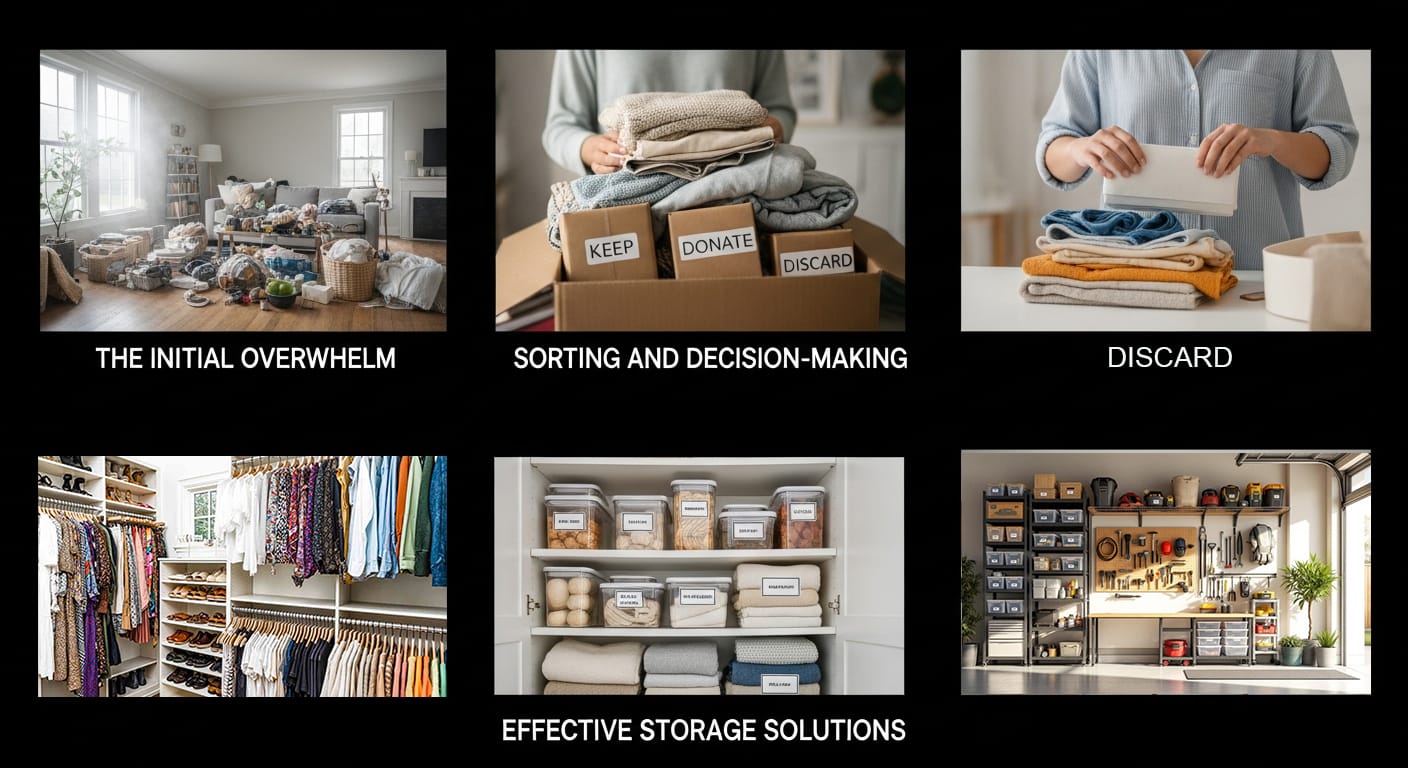
Step 2: Sort into four piles
Four piles, no more: keep, donate, recycle, and haul. Add more categories than that and you will invent a "decide later" pile, which is just clutter with a new name.
Bag loose trash so it does not scatter, label the piles if more than one person is working, and keep a walking path clear between the piles and the door. That last part matters more than people expect on removal day.

| Pile | What goes in it | Where it ends up |
|---|---|---|
| Keep | Anything used in the last year, seasonal gear you genuinely re-use | Back into assigned storage, neatly |
| Donate | Furniture in decent shape, clothing, kitchenware, working small appliances | Local charity or thrift store |
| Recycle | Cardboard, scrap metal, electronics with data wiped | Recycling drop-off |
| Haul | Broken, soiled, obsolete, or too heavy to move twice | We load and take it |
Step 3: Stage donations and recycling
Do this before the truck comes, not during. Anything genuinely usable is worth routing to a local charity instead of a landfill. Electronics, scrap metal, and clean cardboard can go to a recycling drop-off.
There is a practical reason beyond doing the right thing: junk hauling is priced by volume. Every cubic yard you divert to donation or recycling is a cubic yard you are not paying to have trucked away. We recycle and donate what we can from every load, but pulling the obvious items yourself is the fastest way to bring the number down.
Keep hazardous materials out of the pile
Paint, solvents, motor oil, pesticides, pool chemicals, asbestos, and medical waste cannot go in a junk load or your curbside bin. Riverside County runs household hazardous waste collection sites that take these free of charge for residents.
Set them aside in a separate, clearly marked spot so nobody loads them by mistake on removal day.
Step 4: Line up the haul
With the piles built, decide how the discards actually leave. If you are doing it yourself, measure the large items against your doorways and your truck bed before you start wrestling anything down a staircase. Mattresses and sectional sofas are the usual surprises.
If you are hiring it out, get quotes from a couple of local outfits and compare what is actually included. A straight answer on price before work starts is the thing to look for.
- ✓A free, no-obligation estimate before anything is loaded
- ✓Scheduling around your day, with same-day slots most days — call early in the day for the best chance at one
- ✓All lifting and carrying from inside the home, garage, or yard
- ✓Responsible disposal, with recycling and donation wherever the load allows
Current rates are on the junk removal pricing page. We are happy to quote from photos if you text them over.
Step 5: Removal day
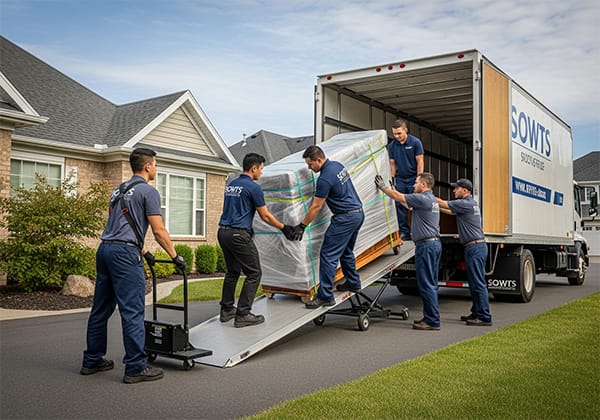
Largest items first. That holds whether you are doing it yourself or standing back while a crew works, because the big pieces set the loading pattern and everything else fills in around them.
If we are handling it, nothing needs to go to the curb. Our crew carries items out from wherever they sit — upstairs bedrooms, the back of the garage, behind the shed. Point at what goes, confirm the price, and the rest is ours.
From there the load goes to the appropriate facility, with recyclables and donatable goods separated out rather than dumped wholesale. A standard residential haul is typically a couple of hours on site, depending on volume and access.
Step 6: Clean the space, then keep it that way
Finish the job while the room is empty, because you will never have a better shot at it. Sweep, vacuum, wipe down shelving and baseboards, and deal with whatever was hiding under the furniture that just left. This is also the moment to decide how the space gets used going forward — an empty garage bay fills back up within a month if nobody has decided what it is for.
Decluttering is not a one-time event, and treating it like one is why people end up doing the same garage twice in three years. Four habits that hold:
One in, one out
New chair arrives, old chair leaves that week. No exceptions, or the rule stops working.
A short monthly sweep
Thirty minutes on one zone beats a lost weekend twice a year.
The twelve-month rule
Unused for a year, and it goes to the donation pile without further debate.
Assigned storage zones
Everything gets a home, or it becomes clutter by default.
Plenty of homeowners in Murrieta and Menifee book a seasonal haul on the same rhythm — once before the holidays, once in spring — and never let it build back up to a full-weekend project.
What we haul on a home declutter
A residential declutter usually touches several of these at once:
Furniture Removal
Sofas, chairs, bed frames, tables, desks — carried out whole, no disassembly needed on your end.
Appliance Removal
Refrigerators, washers, dryers, dishwashers, and water heaters, disconnected and hauled.
Mattress Disposal
Mattresses and box springs in any size, routed to recycling where the material allows.
Electronic Waste
Televisions, monitors, computers, and small electronics taken to certified e-waste handling.
Garage Cleanouts
Tools, boxes, yard equipment, and the accumulated layers along the back wall.
Estate Cleanouts
Full property clearing, handled at whatever pace the family needs.
The full list of what we will and will not take is on the junk we take page.
Choosing a hauler
Junk removal is a low-barrier business, which means quality varies a lot. Before you book, read recent reviews rather than the star average, confirm the company is licensed and insured, and understand how they price — by volume, by truckload, or by item.
Ask what happens to the load after it leaves. "Recycling and donation where possible" and "straight to the landfill" are very different answers.
How we work
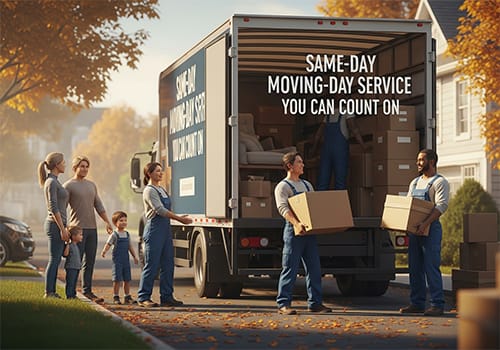
Family-owned, licensed and insured, running out of Temecula since 2021. Same crew every time, no subcontractors, and the price you agree to before we start is the price at the end of the job.
Ready to get it out of the house?
Call or text a photo of the pile and we will give you a price on the spot.
Common questions
Start with one zone you can finish in a single session, not the whole house. A single closet, the garage wall behind the door, or one corner of a spare bedroom all work. Finishing one small zone gives you a visible win and a realistic sense of how long the rest will take, which is what keeps most decluttering projects from stalling halfway through.
Use a simple test: have you used it in the last twelve months, and would you buy it again today? If the answer to both is no, it goes. For sentimental items, set a container limit ahead of time and keep only what fits. Deciding the rule before you start stops you from renegotiating with yourself over every single object.
Set them aside for donation before pickup day. Gently used furniture, clothing, housewares, and working small appliances are usually welcome at local charities and thrift stores. Sorting these out first keeps usable goods out of the landfill and reduces the volume you are paying to have hauled away.
No. Our crew does the lifting and carrying from wherever the items are sitting, including upstairs bedrooms, back bedrooms, garages, sheds, and side yards. All you need to do is point at what goes. Clearing a walking path to the items helps us work faster and keeps the job safe.
Spread over a few weekends is realistic for most homes if you are sorting as you go. The removal itself is much faster: a typical residential load is done in a couple of hours once the crew arrives. The sorting is the slow part, so it helps to have your keep, donate, and haul piles separated before we get there.
We cannot haul hazardous materials such as paint, solvents, motor oil, pesticides, asbestos, or medical waste. Those need a household hazardous waste drop-off. Almost everything else that comes out of a home during a declutter is fair game, and if you are unsure about a specific item, send us a photo before pickup day.
Getting started
Decluttering stops being overwhelming the moment it becomes a sequence instead of a mood. Map the zones, sort into four piles, stage the donations, book the haul, clean the empty room, and put a habit in place so it does not rebuild. That is the whole thing.
Whether it is one couch that has overstayed its welcome or an entire garage you have been avoiding, we handle the loading and the hauling so you can get on with using the space.
Wild West Junk Removal
41713 Niblick Rd, Temecula, CA 92591
(951) 837-8072
Monday through Saturday, 7am to 7pm. Closed Sunday.