
Home › Temecula Junk Removal › Electronics Recycling
Temecula & Southwest Riverside County
Electronics Recycling Temecula: Certified E-Waste Pickup, Loaded and Hauled
If a device has a screen, a circuit board, or a sealed-in battery, California will not let it go in your trash cart. We pick it up from the garage, the office, or the storage unit and route every piece to a CalRecycle-approved processor. Pricing starts at $195, and we have same-day slots most days.
Family-owned since 2021 · Licensed and insured · CalRecycle-approved processors · Chain-of-custody paperwork on request · Written price before we load
Wild West Junk Removal · 41713 Niblick Rd, Temecula, CA 92591 · (951) 837-8072
Mon to Sat: 7AM-7PM · Sunday: Closed · Family-owned, licensed and insured · Serving Temecula, Murrieta, Menifee and southwest Riverside County
The short version
Nobody plans for the e-waste pile — until the cart won't take it
You clear out the garage or wrap up a move and there it is. Two dead TVs, a tower from 2009 that might still boot, a printer that jammed one time too many. Then CR&R leaves it at the curb, the rental dumpster lists electronics as prohibited, and the next free county collection event is three weeks out. So the stack goes back against the wall. I have walked into Temecula garages where that stack had been growing since before the pandemic.
What we do about it is not complicated. We come out, we load it, and every device lands at a CalRecycle-approved processor with the chain of custody documented from your address forward. Pricing runs off truck volume, so a quarter load is $195 and covers most single-room cleanouts. Text a photo to (951) 837-8072 and you will have a number back in a few minutes.
The rest of this page is the detail behind that. What actually counts as e-waste in California, why the chemistry inside these devices makes the rules what they are, where the liability sits when something gets dumped wrong, and the cases where a free drop-off beats calling us. That last part gets a straight answer, because I would rather you believe the next thing I tell you.
What qualifies
What actually counts as e-waste in Temecula
Start with the screen-size rule, because it is the one people can apply on their own. California's Electronic Waste Recycling Act makes any display four inches or larger on the diagonal a covered electronic device. Televisions, desktop monitors, laptops, tablets, portable DVD players going back to the nineties. In practice the net is wider than that, since most consumer electronics land under CalRecycle's broader guidance even when they slip past the four-inch line.
The program grew again on January 1, 2026. SB 1215 added covered battery-embedded products, which is the state's way of describing gear with a battery you cannot pull out with ordinary household tools. Cordless drills, smartwatches, wireless earbuds, electric toothbrushes. All of it now belongs in the same certified stream as a television.
The items that surprise people are the ones that stopped registering as electronics years ago. A VCR shoved under the workbench. A first-generation flat panel up in the rafters. That tower nobody has powered on since Roripaugh Ranch was still going up. Working or dead makes no difference. The rule follows what is inside the housing, not whether the thing switches on. Our TV removal crew handles every screen era there is.
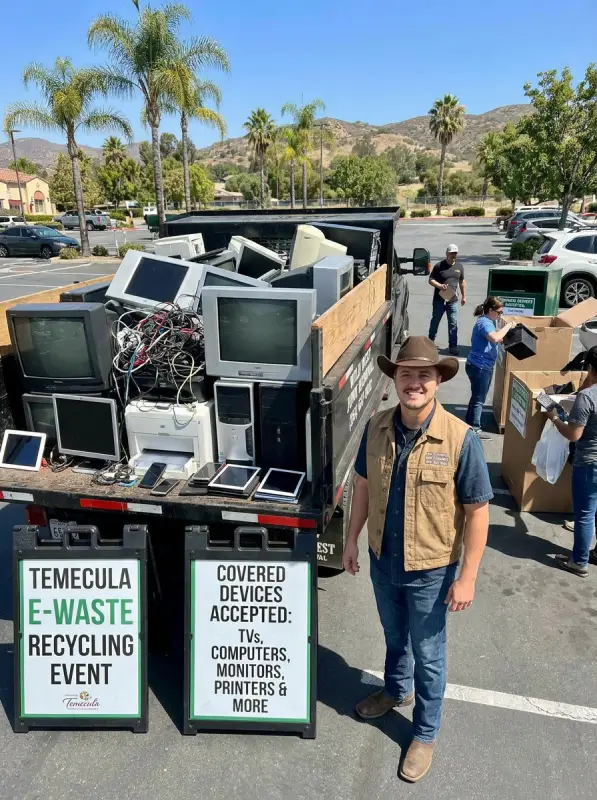
- ✓Televisions, every type and size. CRT, plasma, LCD, LED, OLED, rear-projection. A 13-inch bedroom set and a 100-inch commercial display are both covered. Size moves the state recycling fee, not the requirement.
- ✓Monitors and desktop towers. CRT monitors that predate flat panels included. Towers qualify on their own under the broader state guidance even with no screen attached.
- ✓Laptops, tablets, and phones. Anything portable with a display or a battery. The lithium cells are the reason these need certified handling instead of a trash cart.
- ✓Printers, fax machines, and copiers. Toner residue, heavy-metal circuit boards, and mixed plastics together. Standard recycling streams will not accept them.
- ✓Game consoles, stereos, and AV gear. DVD players, VCRs, receivers, cable boxes, gaming hardware. The lead solder on those boards is recoverable but regulated.
- ✓Battery-embedded products, new for 2026. SB 1215 pulled sealed-battery devices into the covered program on January 1, and most households still have not heard about it.
Why it matters
What's inside your old electronics — and why a landfill won't cut it
The rules follow the contents. An old CRT television carries four to eight pounds of lead in its funnel glass, and it is in there on purpose, to block the X-rays coming off the electron gun. Break that glass in a landfill and the lead starts working toward groundwater along paths that are close to impossible to remediate once they get there.
Flat panels swapped the leaded glass for a different list. The CCFL backlights in older LCDs carry mercury. The boards carry lead solder and cadmium. The housings carry brominated flame retardants that produce dioxins if they burn. Even a current OLED holds rare-earth compounds worth recovering properly.
Because each generation of hardware has its own chemistry, the sorting has to happen at a facility licensed for it rather than at the county dump. California classifies e-waste as universal waste, a hazardous category that comes with its own handling and transport rules.
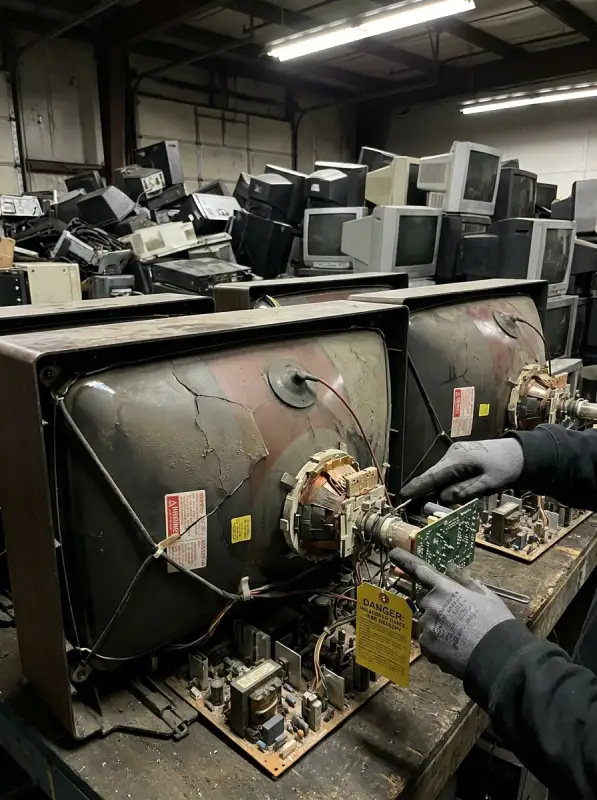
Lead in CRT glass
Four to eight pounds in a single tube TV, placed there to block X-rays. Hazardous the moment the glass cracks. Certified smelting is the only safe recovery path.
Mercury in LCD backlights
The fluorescent backlights in older LCD panels contain mercury and get treated like fluorescent tubes: certified separation and retorting, nothing else.
Cadmium and beryllium
Present on circuit boards and in older battery chemistries. Both are carcinogens under prolonged exposure and require controlled recovery.
Brominated flame retardants
In housings and boards. They generate dioxins when burned or left to break down in a landfill, and they fall under the Stockholm Convention.
Lithium in batteries
Phones, laptops, tablets, and now sealed-battery devices. A swollen or crushed cell is a genuine fire risk inside a loaded trailer, so it gets handled separately.
Gold, silver and copper
Recoverable from board traces and connectors. Certified recyclers return these to commodity markets, which displaces new mining.
Every covered TV, monitor, or laptop sold in California carries a state recycling fee of roughly $4 to $6 at checkout, scaled by screen size. That money funds the CalRecycle processor network and the free collection events around the state. The recycling itself is paid for. What trips people up is getting the device from the garage to a facility allowed to accept it, and that is the part we handle.
The law
California's e-waste rules — and where the liability actually lands
The Electronic Waste Recycling Act has been on the books since 2003. California treats covered devices as hazardous universal waste, with specific requirements for how they are handled, transported, and disposed of, and shipping the problem across a state line to avoid those requirements is itself illegal.
The part most people miss is who carries the exposure. Responsibility stays with the party that generated the waste, which means the homeowner or the business rather than whoever drove it away. Illegal dumping under California Penal Code 374.3 carries fines that escalate with repeat offenses, and the Department of Toxic Substances Control pursues hazardous waste violations without much patience.
For a household the dollar exposure is far smaller than it is for a business, but the principle does not change. Hand the load to a certified chain with documented custody and the compliance question stops being yours.
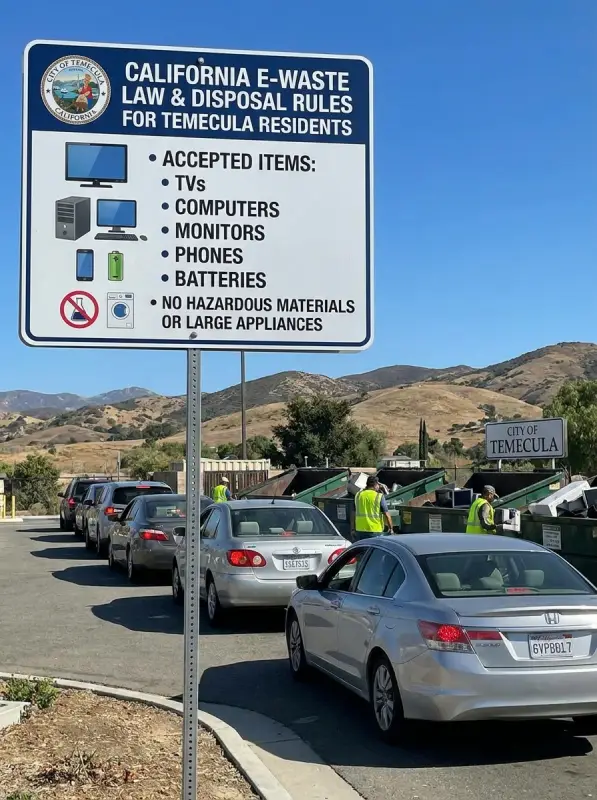
The generator is liable, not just the hauler
California's disposal rules put responsibility on whoever generated the waste, which for e-waste means the homeowner or the business. Route every device to a CalRecycle-approved processor with a documented chain of custody and that exposure leaves your address. That paper trail is what we hand a business for its compliance file.
Wipe your data before pickup — this one is on you
We do not do data destruction, and we tell people that before they book. Before any device holding personal or business data leaves your property, whether that is a computer, a phone, a tablet, or a copier with an internal drive, the storage is your responsibility to wipe or remove. For business gear holding employee records, financial data, or anything regulated, run it through a certified data-destruction vendor first. The FTC's data-security guidance spells out those obligations. A device leaving your control with live data on it is a separate problem from the environmental side, and both need settling before we load.
Who's doing the hauling
Meet Weston Molitor, the owner on the truck
Weston Molitor
Owner and founder · Wild West Junk Removal, TemeculaI started Wild West here in Temecula in 2021 and it has been family-run since day one. Electronics come up more than almost anything else we get called for, mostly because California makes them genuinely hard to get rid of correctly.
People apologize when I get there. They think the pile means they let something slide. It usually means they tried three times, got told no three times, and stopped trying. My job is being the one that says yes and then showing them where it went.
I will also tell you when we are the wrong call. One small monitor that fits in your trunk belongs at a free county event, not on my invoice, and I would rather say that out loud than sell a pickup nobody needed.

How it works
Booking e-waste pickup in Temecula, step by step
Call or text a photo of what you have
Reach us at (951) 837-8072 and describe the device types and rough volume. For most home jobs a photo text is enough for an accurate quote. Flag anything heavy, like a CRT console, a commercial copier, or a server rack, so the right truck and crew are set before we roll out of the Niblick Road yard.
Wipe your devices before haul day
This is the one step we cannot take off your hands. Every computer, phone, tablet, and copier with internal storage should be wiped, reset, or have its drive pulled before we arrive. For sensitive business data, use a certified data-destruction vendor first.
Stage everything in one reachable spot
Group it in a single accessible area instead of scattered across rooms. Wall-mounted TVs are the exception, so flag those when you call and we will bring the tools to pull the mount. Loose batteries, paint, and other non-electronic hazmat go in a separate pile with a plan for a Riverside County HHW drop-off.
We confirm the price in writing, then load
You get the on-site written price before anything moves. We load every staged device, sweep the spot, and most residential jobs wrap in under two hours. Every item heads to a CalRecycle-approved processor, with chain-of-custody paperwork on request. We run Monday through Saturday, 7am to 7pm, with same-day slots most days when you call early in the day.
What we accept
Every device we recycle
If it has a circuit board, a screen, or a battery, odds are we take it. Here is the full acceptance list and what we cannot haul.
Televisions, all types
CRT, plasma, LCD, LED, OLED, rear-projection. Thirteen-inch portables up through commercial displays.
TV removal detailsComputers and monitors
Desktop towers, all-in-ones, CRT monitors, flat panels of every generation. Wipe the data first, since we do not do destruction.
Laptops and tablets
All brands and conditions. Pull or wipe storage before pickup. Lithium batteries ride under certified handling, so leave them in the device.
Printers, fax and copiers
Inkjet, laser, all-in-one, fax, and full commercial copiers. Confirm the internal drive is wiped before we load, because copiers retain document images.
Consoles and AV gear
Every console generation, DVD and VCR players, receivers, cable boxes, home-theater equipment.
Phones and small devices
Cell phones, smartphones, e-readers, portable players. Box them and group them with the bigger items for one pickup.
Servers and network gear
Rack servers, UPS units, switches, routers, telecom hardware. Business volume quoted on site with the crew matched to the load.
Sealed-battery devices
New under 2026's SB 1215. Cordless gear, smartwatches, wireless earbuds, and other non-removable-battery products now belong in the certified stream.
For business
Commercial e-waste pickup — where the math changes
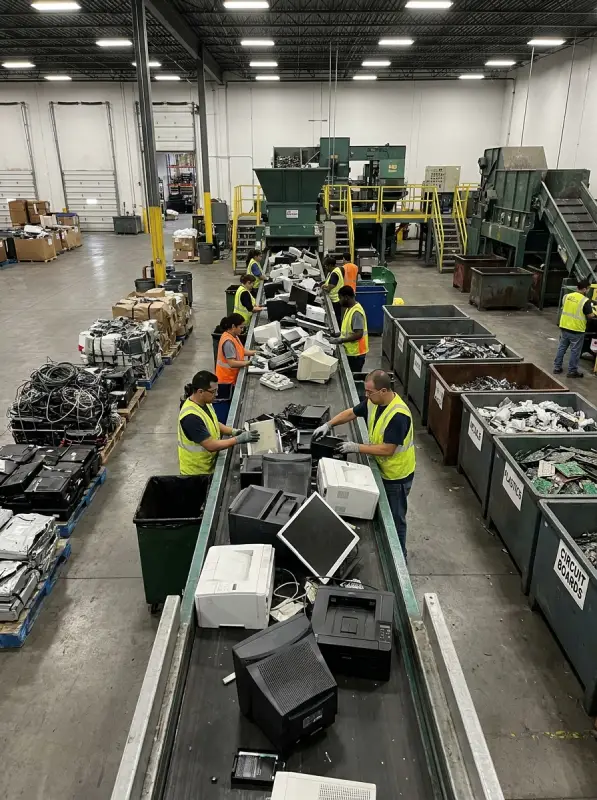
A business swapping out a floor of desktops, closing a location, or tearing down a server room is looking at volume that makes device-by-device disposal a non-starter. Retail take-back programs cap sizes and refuse whole categories. County events are built for household loads. Running six trips to a processor burns more staff hours than the disposal is worth.
We handle e-waste disposal Temecula businesses need at any scale, from a three-monitor office with a printer up to a full data-center teardown. The right truck capacity, a documented load, and every device to a CalRecycle-approved processor with chain-of-custody records that hold up for corporate compliance. In healthcare, financial services, and legal that documentation is what your audit trail and vendor file actually need. Our commercial junk removal page goes deeper on business jobs, and property managers running a unit turn usually pair it with a storage unit cleanout.
- ✓Office computer refreshes. Towers, monitors, keyboards and peripherals from a whole floor, loaded and documented in one visit instead of a relay of trips to a retail counter.
- ✓Servers and networking gear. Rack servers, UPS units, switches, cable runs. Heavy, dense loads quoted on site with the crew and truck matched before the appointment.
- ✓Copier and printer decommission. Multifunction copiers store document images on an internal drive. Confirm the wipe is done before we load, because we cannot verify what is on it.
- ✓School and institution cleanouts. Classrooms, computer labs, and AV rooms during a tech refresh. Bulk pricing and scheduling that works around a campus calendar.
- ✓Chain-of-custody paperwork on request. Processor records tracing handling from pickup through final materials separation, ready to drop in your file.
Where it goes
What happens after we load it
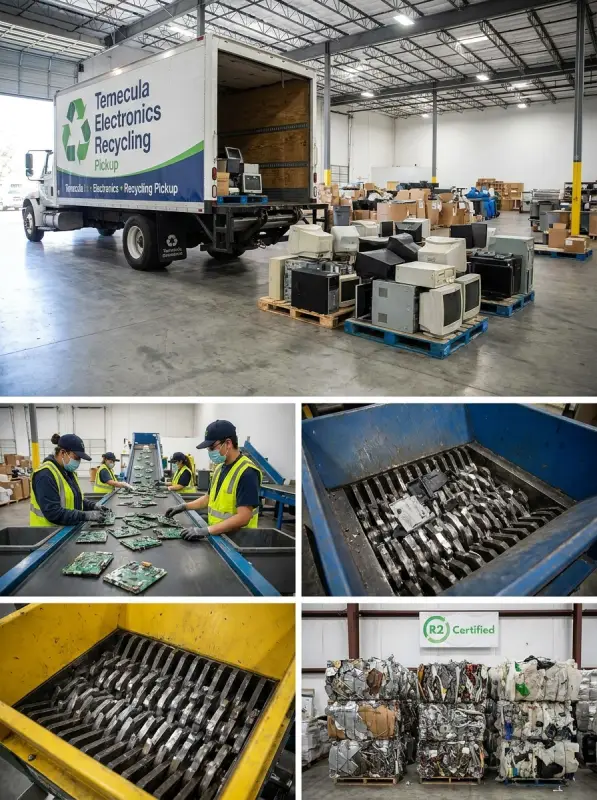
Where your electronics end up is worth as much scrutiny as who picks them up. CalRecycle maintains the list of approved e-waste collectors and processors, and only facilities on that list can legally accept covered devices in this state. Our haul is the first link in a chain that ends at one of them.
At the processor the devices get pulled apart by hand or shredded under controlled conditions. Boards head to a certified smelter that recovers gold, silver, copper, and palladium. CRT glass goes to one of the few plants set up to manage the lead. Housings are granulated for secondary plastic markets, and mercury from the backlights is captured and retorted. By the time a properly processed load is finished, very little of it is landfill. Most of the mass comes back out as commodity material.
| DIY or uncertified disposal | Wild West certified electronics recycling |
|---|---|
| Devices tossed in a trash cart, dumpster, or recycling bin, which is a disposal violation regardless of intent | Every item routed to a CalRecycle-approved processor with chain of custody from your address |
| You haul it to a retailer or event yourself, working around limited hours, size caps, and no help with heavy sets | We pick up from anywhere on the property, whether that is inside the home, the office, the garage, or a storage unit |
| Compliance liability stays with you as the generator of the waste | Certified handling moves that exposure into a licensed processor chain |
| Large commercial volumes mean multiple trips or a second vendor | Any volume, from one device to a full office fleet, quoted on site and cleared in one appointment |
| No paperwork, so no proof of proper disposal for business records | Chain-of-custody records available on request for your compliance file |
Straight pricing
What electronics recycling costs in Temecula
Priced by truck volume, the same as everything else we haul. Labor, fuel, and certified disposal are included, and there is no e-waste surcharge added at the end. The estimate is free and confirmed in writing before we load a single item.
Quarter load
About 3 cubic yards
$195
Minimum pickup
Half load
About 6 cubic yards
$350
Most common e-waste jobThree-quarter load
About 9 cubic yards
$495
Office refresh scale
Full load
12 cubic yards
$595
Full truck
What can change the price
- Stairs
- $150 on loads up to one-half truck load, $300 on loads over one-half truck load, for carrying items up or down stairs. Tell us the floor level when you call and the figure goes in your written estimate.
- Appliances
- $30 each. Covers refrigerant handling and the separate disposal stream refrigerators, freezers and AC units legally require.
- Mattresses
- $15 each, any size.
- Extra loading time
- A full load includes one hour of loading. Beyond that hour, $75 per hour per crew member.
- What a full load means
- 12 cubic yards in a 12ft x 8ft x 4ft dump trailer, loaded by a two-person crew.
One TV or one computer lands in the quarter-load bracket. A garage's worth of old electronics usually comes in around a half load.
The local picture
Free drop-off options around Temecula — and when they beat us
For one small item you can carry, a free option usually beats paying us. Here is how the local choices actually shake out, including one spot people drive to by mistake.
Riverside County HHW events
Free household hazardous waste collection events accept TVs, computers, and other e-waste at no charge. Good for a handful of small items when the schedule lines up with yours.
Hotline: (800) 304-2226
CR&R bulky item pickup
Temecula residents get two free bulky-item pickups a year through CR&R, the city's franchised hauler. Worth using for the occasional single item if you plan ahead.
Schedule: (800) 755-8112
Best Buy take-back
Accepts certain small consumer electronics for free recycling at the register. Fine for a phone, a small tablet, or a device or two you can walk in yourself.
Small devices only, limits apply
Murrieta ABOP is not an e-waste site
The ABOP facility at 25315 Jefferson Ave takes antifreeze, batteries, oil, and paint only. No televisions, no computers. Every year people load a TV in the back of a truck, drive over on a Saturday morning, and get turned around at the gate.
So when do you call us instead?
When it is heavy, like a CRT console or a server rack. When it is volume, like an office refresh or a whole-room cleanout. When you cannot load or transport it yourself. Or when you need documented chain of custody for a business file. In those cases e-waste pickup across Temecula saves the driving, the lifting, and the Saturday, usually for less total effort than three trips across town. Not sure which side you fall on? Call or text (951) 837-8072 and describe it. You will get an honest answer, including when that answer is to drive it to the county event yourself.
Before pickup day
Your electronics recycling checklist
Run through this before we arrive. Each item takes a minute or two and heads off the usual haul-day snags.
- ✓Inventory every device. Walk each room, closet, garage shelf, and storage corner. Electronics that have sat for years stop registering as items, and the walkthrough surfaces them.
- ✓Wipe your storage media. Computers, phones, tablets, and copiers wiped or drives pulled before pickup day. We do not wipe data, so this one is always yours.
- ✓Pull SIM and memory cards. From phones, cameras, and tablets. A factory reset by itself does not guarantee removal on every device.
- ✓Stage it in one spot. Living room, office lobby, garage entrance. Grouping items speeds the load and keeps the volume estimate honest.
- ✓Describe the volume when you call. A rough device count plus any heavy pieces, meaning CRT consoles, server racks, or commercial copiers, so the right truck rolls out.
- ✓Set loose batteries aside. AA, AAA, and rechargeable packs do not ride in the standard e-waste load. Stage them for a county HHW event or a Call2Recycle bin.
- ✓Flag any swollen batteries. A puffed-up phone or laptop battery is a transport fire risk. Mention it when you call so it gets handled separately.
- ✓Confirm access. Gate codes, truck parking, elevator access, and floor level for upstairs offices or storage units, sorted before the appointment.
- ✓Ask for the paperwork. If you need chain-of-custody records for a compliance file, request them when booking. We provide them on request rather than by default.
- ✓Keep other hazmat separate. Paint, motor oil, pool chemicals, and fluorescent bulbs stay out of the e-waste load. Those belong at a Riverside County HHW event.
Customer reviews
What Temecula customers say about Wild West
Verbatim five-star reviews from our Google Business Profile. Same crew and the same standard whether it is a single TV or a full office cleanout.
Weston and his team are on it. I run a commercial operation and sometimes we need to bring in some professionals to get rid of some insane types of junk. They respond as fast as any company I have seen, and get the job done 100% of the way with no shortcuts. Good people over at Wild West, recommend highly without any reservation.
Wild West Junk Removal is the real deal! They showed up on time, worked fast, and were super professional. The crew was friendly, respectful, and went above and beyond to make sure everything was cleaned up perfectly. I couldn't believe how quickly they got the job done. Fair prices, great service — I highly recommend them to anyone needing junk gone fast.
Nick and the crew were on time and very professional. They removed reclining couches, entertainment center, coffee table, end tables from our upstairs loft. They were very careful and cleaned the area afterwards. Great price!! I would definitely recommend Wild West junk removal.
Wild West Junk Removal Service was great. Nick and Jake were friendly, fast, and really efficient. They gave me a fair price and were quick in and out, making the whole process hassle-free. I definitely recommend them.
This company is amazing! I was in need of junk removal… I called, they came, it was done! They are so professional in every way! Courteous and friendly. I will use this company forever!
Frequently asked questions
Electronics recycling Temecula FAQ
The questions Temecula homeowners and businesses ask us most before booking an e-waste pickup.
Under California's Electronic Waste Recycling Act, any device with a screen four inches or larger on the diagonal is a covered electronic device. That takes in every television, computer monitor, laptop, and tablet. SB 1215 widened the program on January 1, 2026 to include covered battery-embedded products, meaning anything with a battery you cannot pull out using ordinary household tools: cell phones, smartwatches, wireless earbuds, electric toothbrushes, and most cordless gear. The test Wild West Junk Removal gives Temecula customers is simple. If it has a screen, a circuit board, or a sealed-in battery, it stays out of the trash cart. Text a photo to (951) 837-8072 if you are unsure about a specific item.
No. CR&R, the franchised hauler for the City of Temecula, prohibits electronics in the black trash cart and in the blue curbside recycling cart, and California classifies covered devices as universal hazardous waste. A dead 1999 tube TV and a two-year-old OLED are treated identically. Setting either one at the curb on Niblick Road or anywhere else in Temecula means it gets left behind, and it counts as a disposal violation. Wild West Junk Removal picks up electronics that the carts will not take, seven days ahead or the same morning, at (951) 837-8072.
Wild West Junk Removal runs Monday through Saturday, 7am to 7pm, and is closed Sunday. We are not a 24/7 operation and never claim to be. Same-day slots most days are open for electronics pickup across Temecula, Murrieta, Menifee, Wildomar, Lake Elsinore, and the rest of southwest Riverside County when you call early in the day at (951) 837-8072. Larger commercial loads that need a particular crew size or truck are easier to lock in with a day or two of notice.
Wild West Junk Removal operates out of 41713 Niblick Rd, Temecula, CA 92591. Weston Molitor founded the company in Temecula in 2021 and still runs it as a family business. Phone and text are the same number, (951) 837-8072, and email is service@wildwestjunkremoval.com. The yard sits close enough to Rancho California Road that most Temecula pickups are a short run for the trailer.
Wild West Junk Removal prices e-waste by truck volume, the same way it prices every other haul. A quarter load, roughly 3 cubic yards, is $195. A half load is $350, a three-quarter load is $495, and a full 12-yard trailer is $595. Labor, fuel, and certified disposal are all inside that number, and there is no separate e-waste surcharge. The estimate is free and confirmed in writing on site before anything gets loaded.
Yes. A good share of the electronics work Wild West Junk Removal does is commercial: office refreshes along Jefferson Avenue, a location closing in Old Town, a server room being decommissioned, school and church tech cleanouts. Business volume is quoted on site before anything moves, and chain-of-custody paperwork from the certified processor is available on request for a compliance file. Give us a rough count when you call (951) 837-8072 so the right truck and crew show up the first time.
Every device Wild West Junk Removal collects goes to a CalRecycle-approved processor. At the facility the units are taken apart and sorted by material. Circuit boards go to a precious-metals smelter for gold, silver, copper, and palladium recovery. CRT glass goes to one of the few plants set up to handle leaded glass. Mercury from older LCD backlights is captured and retorted, and housings are granulated for secondary plastics markets. Most of the weight of a properly processed load comes back as commodity material rather than landfill. Chain of custody from your Temecula address to the processor is documented on request.
No. Data removal is the one step Wild West Junk Removal cannot take off your hands, and we say so before booking. Wipe the drives or pull them, remove SIM and memory cards, and factory-reset phones and tablets before pickup day. On a multifunction copier, the internal hard drive stores images of everything it printed or scanned. If the data is regulated, such as patient records or financial files, run it through a certified data-destruction vendor first. A software reset by itself is not enough for high-sensitivity drives.
Yes, and Wild West Junk Removal will point you at them when they are the better call. Riverside County runs free household hazardous waste collection events that accept TVs and computers, and the hotline is (800) 304-2226. Best Buy takes certain small devices at the register at no charge. One warning worth repeating: the Murrieta ABOP facility on Jefferson Avenue handles antifreeze, batteries, oil, and paint only, so it is not the place to drive a television. Free drop-offs make sense for one small item you can carry. For heavy pieces, for volume, or when you would rather not load it, a pickup at (951) 837-8072 is the easier route.
Yes. Wild West Junk Removal takes inkjets, laser printers, all-in-ones, fax machines, and full commercial copiers from Temecula homes and offices. Those machines carry toner residue, heavy-metal circuit boards, and mixed plastics, which is exactly why curbside recycling and most drop-offs turn them away. Confirm the copier's internal drive is wiped or removed before the crew arrives, because we do not open the housing.
One TV or one computer is fine. A single item normally falls in the quarter-load bracket at $195, which is the minimum pickup for Wild West Junk Removal in Temecula. If it is one small thing you can lift yourself, such as a phone, a tablet, or a 19-inch monitor, a free Riverside County event or a Best Buy counter will probably cost you less than a paid pickup. Describe the situation at (951) 837-8072 and you will get a straight answer, including when the answer points away from hiring us.
Yes, and CRTs are one of the hardest things to get rid of any other way. A single tube holds four to eight pounds of leaded glass, which is why retailers and most drop-off programs refuse them and why they are unsafe for one person to carry down a staircase. The Wild West Junk Removal crew handles the lift and routes the glass to a CalRecycle-approved facility equipped for lead. Console TVs, rear-projection sets, and CRT computer monitors from Temecula garages all go the same route.
Wild West Junk Removal is based in Temecula at 41713 Niblick Rd and covers the southwest Riverside County corridor: Murrieta, Menifee, Wildomar, Lake Elsinore, Canyon Lake, Winchester, and French Valley, plus De Luz, Rainbow, and Fallbrook nearby. Inside Temecula that includes Harveston, Redhawk, Wolf Creek, Vail Ranch, Crowne Hill, Paseo del Sol, Morgan Hill, and Old Town. Call or text your address to (951) 837-8072 and we will confirm the window.
Not always. If the e-waste is staged in an open garage, a side yard, or a driveway and the price is already agreed in writing, Wild West Junk Removal can load it while you are at work and send photos of the cleared spot when the crew pulls out. Someone does need to be reachable by phone in case a question comes up. For gated Temecula communities such as Morgan Hill or Roripaugh Ranch, pass along the gate code or call the guardhouse ahead so the trailer is not sitting at the callbox.
Wild West Junk Removal will not take loose or damaged lithium batteries pulled out of a device, and a swollen phone or laptop battery needs to be flagged when you call so it can be handled separately. We also leave paint, motor oil, antifreeze, pool chemicals, fluorescent tubes, and smoke detectors out of the e-waste load, since those belong at a Riverside County household hazardous waste event. And we do not perform data destruction. Everything else with a screen, a board, or a sealed battery is fair game. If you are not sure, text a photo to (951) 837-8072 before pickup day.
Ready to clear out the old electronics, legally and for good?
One call, a free estimate, and any volume of e-waste gone from homes and businesses across Temecula and Riverside County, with every device routed to a CalRecycle-approved processor.
Wild West Junk Removal · 41713 Niblick Rd, Temecula, CA 92591 · Mon to Sat: 7AM-7PM · Sunday: Closed
Sources and further reading
Where our information comes from
- calrecycle.ca.govCovered Electronic Waste Recycling ProgramThe four-inch screen rule, covered device definitions, and the state recycling fee.
- calrecycle.ca.govApproved E-Waste Recyclers and ProcessorsThe list of facilities legally permitted to accept covered devices in California.
- calrecycle.ca.govIllegal Dumping and Penal Code 374.3Penalties for improper disposal and how they escalate with repeat offenses.
- dtsc.ca.govDept. of Toxic Substances Control, E-WasteUniversal waste classification and generator responsibilities under state law.
- ftc.govFTC Business Data Security GuidanceObligations for disposing of devices holding customer or employee data.
- rcwaste.orgRiverside County Department of Waste ResourcesFree household hazardous waste collection and the (800) 304-2226 hotline.
Related Guides
- GuideWhat Is E-Waste?What counts as e-waste, what's toxic inside it, and what California law says about throwing it out.
- GuideEnvironmental Projects for Teens and ClassroomsEight hands-on projects, plus the four things students should never handle, from lithium batteries to old CRTs.
E-waste regulations and CalRecycle program details change over time. Covered electronic device classification and disposal requirements are governed by the California Electronic Waste Recycling Act, including the SB 1215 battery-embedded expansion effective January 1, 2026, and the California Hazardous Waste Control Law. Confirm current requirements at calrecycle.ca.gov and dtsc.ca.gov. Wild West Junk Removal does not provide data destruction, secure drive wiping, or physical media destruction, and device owners are solely responsible for data removal before pickup. Pricing is subject to change, and on-site estimates are confirmed in writing before work begins. Confirm current Riverside County HHW event dates and locations at rcwaste.org.
Reviewed and updated September 26, 2026 by Weston Molitor, owner, Wild West Junk Removal.