
Water-Damaged Carpet Guide · Slab Leaks · Temecula Valley
Can Wet Carpet Be Saved, or Does It Have to Come Out?
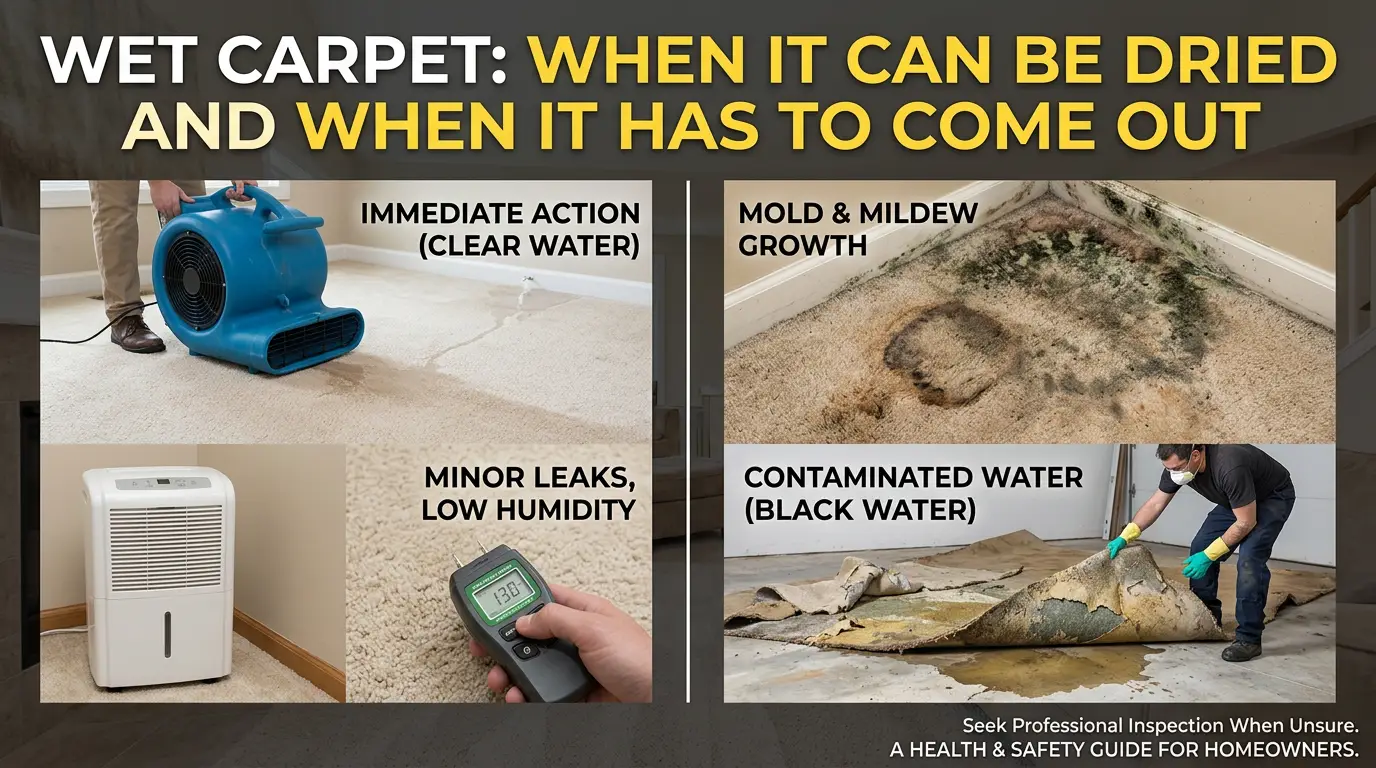
Wet carpet can often be saved if the water was clean and you get it dry within 24 to 48 hours, which is EPA's window before mold becomes the bigger problem. The pad underneath usually can't. Sewage, outdoor floodwater, or carpet that's been wet longer than two days comes out. Here's how to make that call on a Temecula slab, from the guy who hauls the soaked rolls away.
Family-owned in Temecula since 2021 · Licensed & insured · 5,000+ loads since 2021
Wild West Junk Removal · 41713 Niblick Rd, Temecula, CA 92591 · (951) 837-8072 · Mon to Sat: 7AM-7PM · Sun: Closed · Family-owned and operated by Weston Molitor since 2021
48 Hours
How Long Do You Have Before Wet Carpet Is Ruined?
You have about 24 to 48 hours. EPA's water-damage guidance says to dry carpet and its backing within that window, and to treat anything wet longer than 48 hours as a possible mold problem.
That's from EPA's water damage cleanup and mold prevention table, and it comes with three catches people miss. Mold doesn't always grow after 48 hours, and it can start even if you get things dry sooner, so the window is a guideline, not a guarantee. The subfloor under the carpet has to get dry too, not just the fiber you can see. And the whole table is written for clean water. EPA says not to run fans until you know the water was clean, because blowing air over sewage just spreads it.
The clock also starts before you notice. A supply line that dripped behind the washer all weekend, or a slab leak that's been feeding the pad for a week, has already used up the window by the time the carpet feels wet on top.
Water Source
Does It Matter Where the Water Came From?
Where the water came from matters more than anything else. Clean water from a supply line can often be dried, water from a washer or dishwasher is a judgment call, and sewage or outdoor floodwater means the carpet and pad come out.
| Water source | Common causes | The carpet | The pad |
|---|---|---|---|
| Clean water | Broken supply line, water heater, fridge line, rain through a window | Often dried if it's fast | Usually replaced |
| Gray water | Washer overflow, dishwasher, aquarium, a clean-water leak left sitting | Case by case, often comes out | Comes out |
| Black water | Sewer backup, toilet overflow with waste, outdoor floodwater | Comes out | Comes out |
Restoration companies call these Category 1, 2 and 3 water, and the categories slide. Clean water that sits for a few days in a warm house picks up what's in the carpet and the pad and stops being clean. That's why a slow leak nobody caught usually ends the same way a dirty one does.
The Pad
Can You Save the Carpet but Not the Pad?
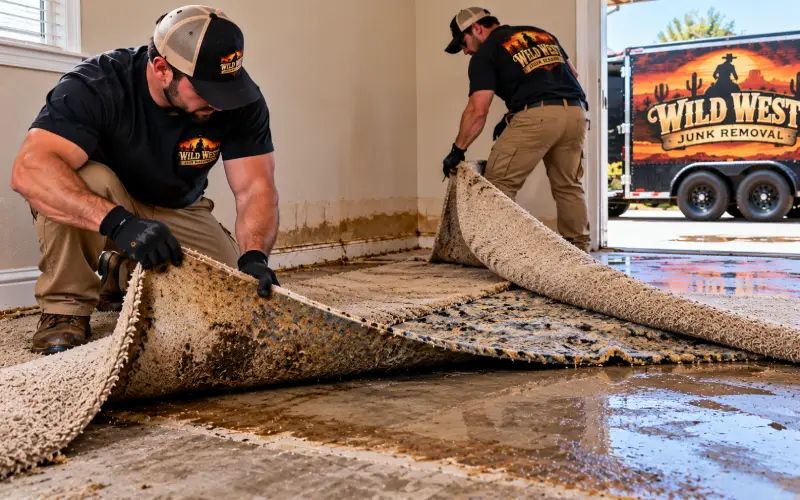
Often, yes, because the pad holds water like a sponge and costs a lot less than the carpet, so on a clean-water leak the usual move is to pull the pad, dry the carpet, and put new pad down.
EPA's mold course on drying spells out the method: get the water out with a wet vacuum, pull the carpet and pad off the floor, and dry them with fans blowing over them. It also says a wet vacuum alone won't dry carpet, and the pad has to be dried too. In practice, most people replace the pad because a soaked pad takes so long to dry that it blows the window.
When Is Dried Carpet Worth Putting Back?
- ✓The water was clean and it was caught within a day or two.
- ✓The carpet isn't delaminating, meaning the backing hasn't started separating from the face fiber.
- ✓There's no musty smell once it's dry, and no stain wicking up from underneath.
- ✓The subfloor tests dry with a moisture meter before anything goes back down.
When Should You Stop Trying to Save It?
When the water was gray or black, when it's been wet past two days, when it smells after drying, or when the backing peels apart in your hand. At that point you're spending money on fans to save a carpet that's coming out anyway.
Slab Leaks
Why Does Slab-Leak Carpet Usually Come Out?
Because the water comes up through the slab and soaks the pad from underneath, slab-leak carpet in Temecula has usually been wet for days by the time you see it. A lot of the valley's homes sit on slab foundations with water lines running under the floor.
Is There a Warm Spot on the Floor?
A hot-water line leaking under the slab can warm the floor above it. A warm patch in a room with no heater nearby is worth a call to a plumber.
Did the Water Bill Jump for No Reason?
A leak under the slab runs all day and all night. A bill that jumps when your habits didn't change is one of the first signs people notice.
Can You Hear Water With Everything Off?
Turn off every fixture and listen near the floor. Running water with nothing running in the house points to a leak somewhere in the lines.
Is the Carpet Damp With No Spill?
A damp edge along a wall or in the middle of a room, with nothing spilled and no leak above it, usually means the water is coming from below.
Does a Dry Room Smell Musty?
A wet pad under dry-looking carpet gives itself away by smell first. If one room smells like a basement in a house that doesn't have one, lift a corner.
Is the Tack Strip Dark or Buckled?
Pull back a corner near the wall. Dark, swollen or rusty tack strip means water has been sitting at the edge of the room for a while.
A slab leak almost never announces itself with a puddle. The water spreads under the pad first, so the carpet surface can feel nearly dry while the pad, the tack strip and the bottom of the baseboard are soaked. Lift a corner along the wall nearest the suspected leak before you decide anything.
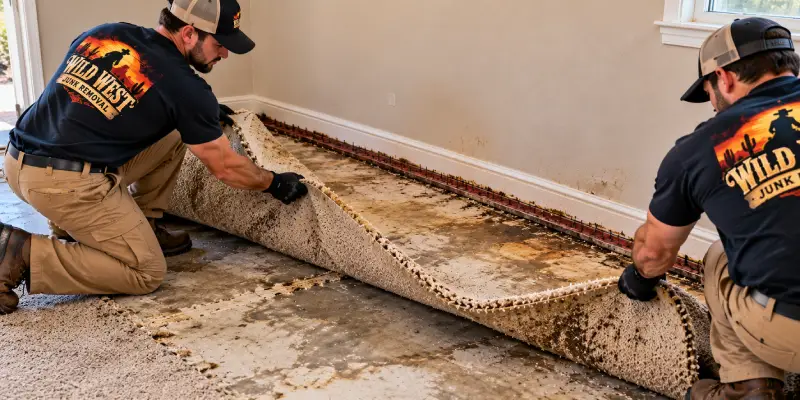
Order matters on a slab leak: plumber first, water off, then the carpet. Pulling carpet before the leak is fixed just means you'll be drying the slab twice, and an insurance adjuster may want to see the damage before it's gone.
First Steps
What Should You Do in the First 48 Hours?
In the first 48 hours, stop the water, document everything, get the standing water out, check the pad, and decide whether this carpet is getting dried or pulled.
-
Is the Water Off and the Room Safe?
Shut off the supply valve or the main, and if water is near outlets or cords, turn off that circuit at the panel before you walk in.
-
Did You Photograph Everything?
Take wide shots of every wet room, close-ups of the waterline, and a shot of the source. Do it before you move anything. If you're filing a claim, the adjuster will want them.
-
Is the Standing Water Out?
Use a wet vacuum or a rented extractor. Fans on a puddle don't do much, and EPA is clear that a wet vacuum alone won't dry carpet.
-
What Does the Pad Look Like?
Lift a corner. If the pad is soaked, plan on pulling it. If only the carpet surface got wet and the pad is dry, you may be able to dry it in place.
-
Can You Float the Carpet and Pull the Pad?
On a clean-water leak, peel the carpet back off the tack strip, cut out and bag the wet pad, and get air under the carpet. Don't run fans if the water wasn't clean.
-
Is It Actually Dry Before It Goes Back?
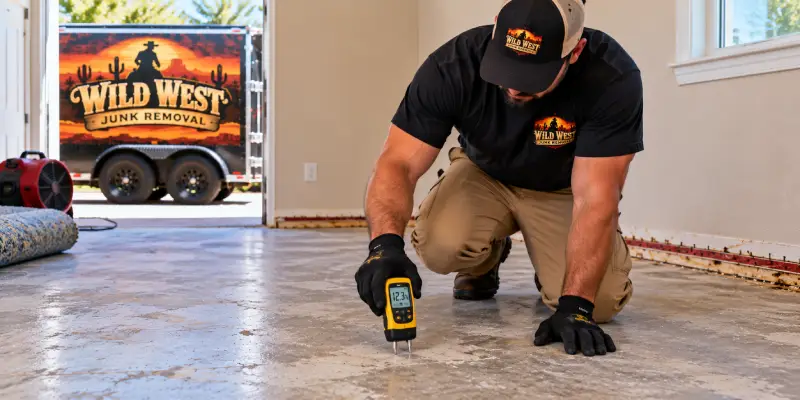
Check the subfloor with a moisture meter, not your hand. Carpet laid back over a damp slab is how a small leak turns into a mold job.
A moisture meter costs less than a day of fan rental and it's the only honest answer to whether the floor is dry. Check the slab or plywood in several spots, including the corners farthest from the fans, before any carpet or pad goes back down.
Insurance
Will Insurance Pay for Wet Carpet?
It depends on your policy and on what caused the water, so call your insurance company before you throw anything away. I'm a hauler, not an adjuster, and I can't tell you what your policy covers.
What I can tell you is what makes a claim easier on our end. Keep your photos. If the adjuster wants to see the carpet, wait for that visit or ask whether photos and a cut sample will do. Ask for a receipt from whoever hauls it, with the date, the address and what was taken, so you have a record of where the damaged material went.
If the leak ruined more than the carpet, like a couch, boxes in the garage or a bedroom set, our fire, flood and water damage cleanout page covers clearing all of it in one visit.
Where It Goes
Where Does Water-Damaged Carpet Go Once It's Out?
Water-damaged carpet goes to disposal, not recycling. California's carpet recycling program won't take carpet that's been damaged by water, smoke or fire.
That rule is on the CARE California drop-off page, and it applies even after the carpet dries out. So the only question is how it gets out of the house without dripping through the hallway. We wrap or bag wet rolls at the room, lay down sheeting on the path out, and keep them away from anything that's still recyclable.
Wet carpet goes on the same volume ladder as dry carpet, from $195 for a quarter load to $595 for a full 12-yard trailer. Text photos of the room and the pad to (951) 837-8072 and you get a firm price before we roll out. The details are on our carpet removal Temecula page, and if you're weighing the cheaper routes for the dry rooms, see how to get rid of old carpet.
What Do Customers Say After a Flood?
★★★★★
We have used Wild West Junk Removal twice now and both experiences have been FIVE stars! The second time was after a flood and we had to make room in our garage immediately. I was worried about it being so last second, but these guys were here and loading in no time. They really bailed us out! I have recommended them to friends and family and will do so again in the future. They are super professional in their appearance, in their communication, and most importantly, in the work they do.
FAQ
What Else Do People Ask About Wet Carpet?
Only if you know the water was clean. EPA says not to use fans until you've determined the water is clean or sanitary, because air moving over sewage spreads it. Get the standing water out first, then the fans.
For a clean-water leak in one room, usually, with gloves and a utility knife. Wet carpet is much heavier than dry, so cut it into smaller strips than you think. For sewage or floodwater, wear gloves, eye protection and a mask, and bag the pad as you go. In a house built before 1980 with glued-down carpet, stop at the adhesive and get it tested.
Maybe both. A restoration company dries the structure, runs the meters and handles mold. A hauler like us gets the ruined carpet, pad and contents out. If the walls or subfloor are wet, call restoration first.
If there was waste in it, treat it as black water: the carpet and pad come out and nothing gets dried in place. A toilet tank that overflowed with clean water is a different story, but most people can't tell which it was by looking.
Often, yes. A small clean-water spot along one edge can usually be dried in place if you get to it the same day and the pad under it is dry. Lift the corner and check the pad before you decide.
It's a strong sign that something under there stayed wet too long. Lift the carpet and look at the pad and the tack strip. If the smell is still there after everything's dry, the pad and probably the carpet need to go.
With the pad pulled, the water extracted and air moving, a clean-water room is often dry in a couple of days. With a soaked pad still under it, it may never dry inside the 48-hour window, which is why the pad usually goes.
Next Step
Standing on Wet Carpet Right Now?
Text a photo of the room and the pad. If it needs to come out, you'll get a firm price back, and most days we can come the same day.
Mon to Sat: 7AM-7PM · Sun: Closed
Sources & References
- epa.govEPA: Water Damage Cleanup and Mold Prevention (Table 1)Dry carpet and backing within 24 to 48 hours; the subfloor has to be dried too.
- epa.govEPA Mold Course, Chapter 4: Dry QuicklyHow to dry carpet and pad, and why a wet vacuum alone isn't enough.
- carpetrecovery.orgCARE: California Carpet Drop-off SitesCarpet damaged by water, smoke or fire can't be recycled.
- wildwestjunkremoval.comCarpet Removal in TemeculaWet or dry, pulled and hauled from $195.
- wildwestjunkremoval.comFire, Flood and Water Damage CleanoutRuined contents and flooring cleared after a leak.
- wildwestjunkremoval.comHow Long Does Carpet Last?If the leak has you wondering whether it was time anyway.
Written by Weston Molitor, owner of Wild West Junk Removal. Last reviewed and updated October 16, 2026.
This guide is general information from a junk hauler, not mold, restoration or insurance advice. For mold, a wet structure or a claim, talk to a restoration professional and your insurer. Wild West prices as of October 2026: $195 quarter load, $350 half, $495 three-quarter, $595 full 12-yard trailer. See every rate and surcharge on our junk removal prices in Temecula page.