
Same-Day Slots Most Days · Temecula & Southwest Riverside County
Outdoor Structure Removal in Temecula — Sheds, Pergolas, and Gazebos, Torn Down and Hauled Out
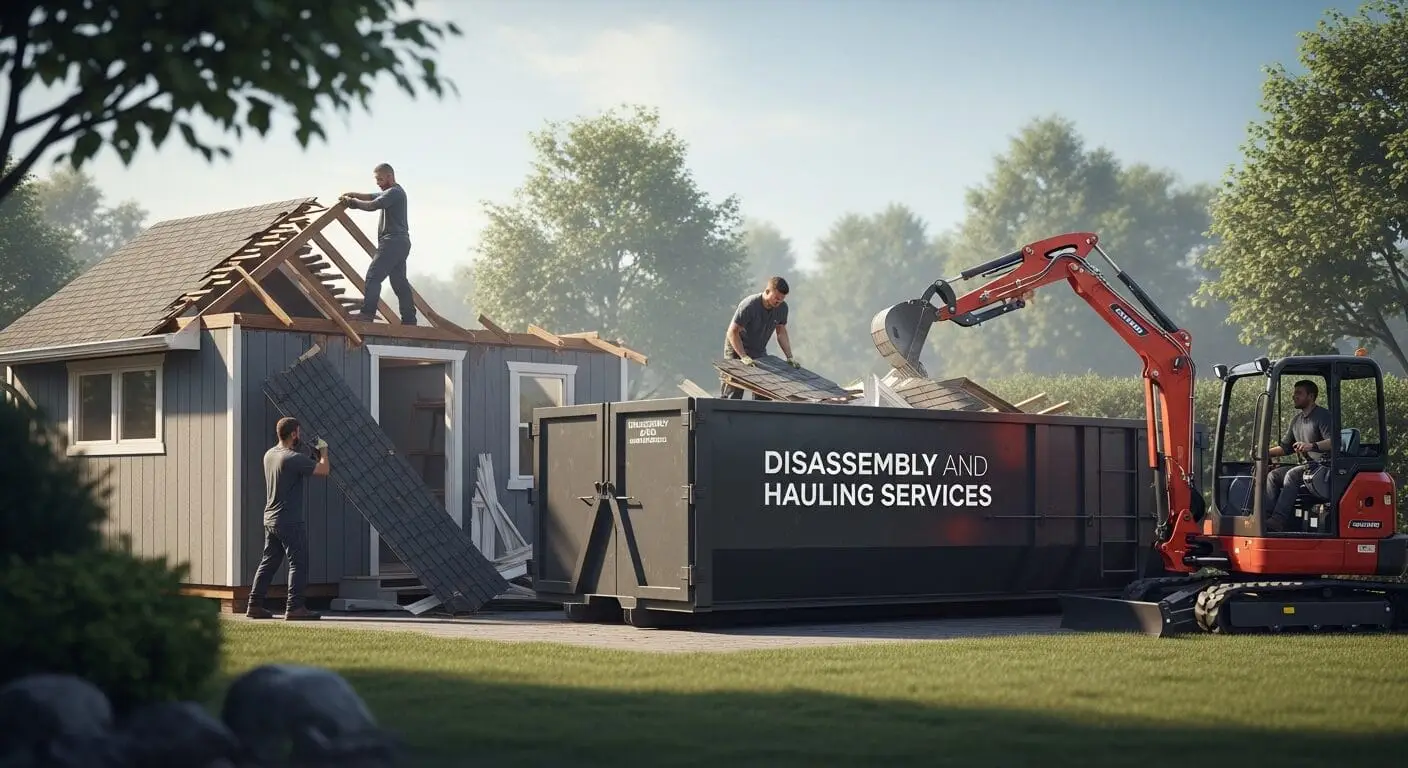
Flat load pricing from $195. Sheds, pergolas, gazebos, hot tubs, patio covers, coops, and greenhouses. We take it apart where it stands, carry every piece to the trailer, sort the metal for recycling, and sweep the pad before we pull out. Free estimate from photos, firm price in writing before a single screw comes out.
Family-owned in Temecula since 2021 · Licensed & insured · No deposit to book
Wild West Junk Removal · 41713 Niblick Rd, Temecula, CA 92591 · (951) 837-8072 · Mon to Sat: 7AM-7PM · Sun: Closed · Family-owned and operated by Weston Molitor since 2021
Outdoor Structure Removal Cost
What It Costs to Tear Down and Haul a Structure in Temecula
Same flat load pricing we use on every job. The teardown labor, the loading, the haul, the landfill fee, and the sweep are all inside one number. What changes the number is how much of the trailer the structure fills once it is apart — and a shed that looks big standing up is usually a lot smaller stacked flat.
Quarter Load
3 cubic yards
$195
Minimum pickup
Small Shed, Coop, or Pergola
Half Load
6 cubic yards
$350
Wood shed, gazebo, or patio cover
Three-Quarter Load
9 cubic yards
$495
Large wood shed or spa with a surround
Full Load
12 cubic yards
$595
Barn, run-in shed, or multi-structure yard
Every price includes two-person labor, the disassembly, fuel, loading, sorting metal out for scrap recycling, licensed disposal, and a raked and swept footprint. No deposit to book. The short list of things that can add to the number is below, and every one of them goes on the written estimate before we start.
These are the brackets most jobs fall into, not a quote. A spa with a built-in surround adds a bracket, a shed full of stuff adds volume, and a yard full of extras adds more. Decks, fences, playsets, trampolines, and above-ground pools are covered on our deck and fence removal page. Text photos and we will tell you which bracket before we drive out.
What can change the price
- Extra teardown and loading time
- A full load includes one hour of two-person loading. On a structure job the disassembly counts as loading time, so a long, slow teardown — a shed with hundreds of rusted screws, a spa that has to be sectioned in a tight corner — can run past the included hour at $75 per hour per crew member. We tell you at the estimate whether your job is likely to.
- Concrete, footings, and slab
- Small pier footings and anchor pads come out as part of the job. A full slab is scoped separately, because concrete is billed by the ton at the landfill, and it is usually handled under our demolition cleanup pricing.
- Stairs
- $150 on loads under 7 cubic yards, $300 on loads of 7 cubic yards or more, when debris has to come up or down a staircase to reach the trailer. Rare on backyard structures, but it applies to a hillside lot with a stair-only path.
- Appliances and mattresses in the pile
- $30 per appliance, $15 per mattress, if they are stacked inside the shed you are having us take down. Same flat surcharges as every other job.
- What a full load means
- 12 cubic yards in a 12ft x 8ft x 4ft dump trailer, loaded by a two-person crew. About five to six full-size pickup beds.
Not sure which bracket your shed or pergola lands in? Text a photo of the structure and the gate it has to clear and we will tell you before we drive out. Full volume detail sits on the Wild West pricing page.
What We Take Down
Every Backyard Structure We Remove
If it is bolted, screwed, staked, or set in a footing on residential or commercial property in the Temecula Valley, we can almost certainly take it apart and haul it. Here is what that covers in practice.
Sheds and outbuildings
Wood, metal, and resin, any size. We take them apart wall by wall rather than pushing them over, which keeps the slab underneath and the yard around it intact. Small concrete pier footings come out as part of the job.
Pergolas and arbors
Freestanding and house-attached, cross-beam and lattice, plus whatever vine grew into it. The base anchor hardware comes with it, and we cap or pull the post footings depending on what you want the ground to look like.
Gazebos
Freestanding and anchored, metal frame and wood. These are usually bolted through a slab or pavers. We pull the bolts and leave the hardscape in place unless you want that out too.
Hot tubs and spas
Power off and water out, then we section the shell and carry it to the trailer. Most spas have to be cut to clear a side gate — that is standard and it is in the price. Full detail on our hot tub removal page.
Patio covers and carports
Aluminum lattice and solid patio covers, freestanding carports, and the awning frame bolted to the fascia. Most come apart at the bolts; the posts are usually set in a slab and get cut flush or pulled, your call. Aluminum goes to scrap.
Coops, runs, and greenhouses
Chicken coops, dog runs, aviaries, hobby greenhouses, and the lean-to off the back of the garage. Empty of animals and bedding when we arrive and it is usually a quarter-load job.
Decks, fences, playsets, and pools
Deck demolition, fence and post removal, swing sets, trampolines, and above-ground pools are the same crew and the same pricing, but they got their own page because the questions are different — footings, ledger boards, pool barriers, drained water. See deck, fence, and playset removal.

Combo and multi-structure jobs
A lot of what we get called for is not one structure. It is everything the previous owner left behind, or everything that piled up over ten years. A shed plus a broken pergola plus a dead spa is a half-day job for us, not three separate calls, and because we price by trailer volume, bundling it all into one visit brings the cost down.
We also work alongside contractors who need a yard cleared before their project starts. If a new ADU, a pool dig, a patio pour, or a landscape install is on the calendar, tell us the start date and we will time the removal to it. When the job is mostly debris from a demo somebody else already did, that is our demolition cleanup service, and when it is new-construction scrap, that is construction debris removal.
Who Shows Up
Weston Molitor Runs These Jobs
Weston Molitor
Founder · Wild West Junk Removal · Temecula, CAWeston Molitor started Wild West Junk Removal in Temecula in 2021 and still runs it as a family-owned, licensed and insured operation out of 41713 Niblick Rd. Structure teardowns are the jobs where the owner is usually on site, because they are the ones where the sequence matters: which wall comes down first, where the weight goes, what is under the shed floor that nobody mentioned. Between Weston and the crew they have pulled sheds, pergolas, and gazebos out of yards in Redhawk, Wolf Creek, Harveston, Paloma del Sol, Vail Ranch, Temeku Hills, and Crowne Hill, plus the bigger lots in Meadowview, De Luz, and out toward wine country.
Every structure job gets a written price at the door before a tool comes out. No deposit to book, and anything that changes the number goes on that estimate instead of showing up on the invoice. If your pergola is attached to the house or your spa is hardwired, Weston will tell you straight what has to happen first, because the fastest way to blow a Saturday is to start cutting before the permit question and the power question are answered.
"People push a shed over with a truck and then call me. Now the slab is cracked, there is a wall lying on the sprinklers, and the thing still has to be cut up to fit in a trailer. Take it apart in the order it was built and it goes clean. That is the whole trick."

How It Works
From Photos to a Swept Pad in Five Steps
Same sequence every time. We do the work; you tell us what stays.
Text photos for a ballpark
Send a few shots to (951) 837-8072: the whole structure from two angles, the base where any footings or attachments show, and the path we would use to get debris out. That is usually enough to name a bracket and it prevents surprises on the day. No commitment to get a number.
Flag anything that needs prep
Hot tubs need the electrical disconnected ahead of time, not the morning of. Irrigation running under the footprint should be shut off. Any gas line to a fire pit or barbecue island near the structure needs to be confirmed capped. We ask about all of this on the estimate call.
On-site walk and firm price
We walk the job before tools come out and put the price in writing before we start. If there is something the photos could not show — a footing situation, a hidden anchor bolt, lumber in worse shape than it looked — we deal with it there, not after you are committed.
Teardown and loading
Structures come down in the reverse of the order they went up: roof, walls, floor, posts, footings. Bigger sheds get sequenced roof first, then one wall at a time. Debris gets staged on tarps and carried out, and metal is set aside for scrap as we go.
Sweep before we leave
Once the trailer is loaded we rake and sweep. Screws, splinters, and anchor bolts get picked up instead of pushed to the side. You get a clean slab, a cleared patch of dirt, or a space ready for whatever is going in next.
When It Should Come Down
Five Reasons Temecula Homeowners Call Us
Outdoor structures rarely fail all at once. A shed roof leaks its second winter, a gazebo floor grows a soft spot everybody steps around, a pergola takes wind damage and never gets fixed, a hot tub has been sitting empty since 2019. Almost every call traces back to one of these five, and knowing which one you are in usually sets the timeline.
It is structurally unsafe
Rotted shed framing, failed post bases, a pergola with a visible lean. Under California premises-liability law a property owner can be on the hook for injuries from a deteriorated structure on their land, whether or not the injured person was supposed to be back there.
It is blocking a build
A contractor cannot start a patio pour, pool excavation, ADU foundation, or landscape install until the old structure is gone. If you have a start date, tell us when you call and we schedule around it.
It is hurting a home sale
Inspectors flag leaking sheds, unstable pergolas, and dead spas, and buyers discount hard for anything they will have to deal with. Pulling it before listing often nets out better than negotiating a credit.
It drew a code complaint
Unpermitted structures, structures over a setback line, and badly deteriorated ones all generate code enforcement letters in Temecula and Riverside County, and the letters come with deadlines. Bring the deadline to the call.
You just want the yard back
A shed you have not opened in four years, a spa that costs more to run than it is worth, a gazebo that made sense for the last owner. You do not need a dramatic reason to reclaim your own backyard.
This climate ages wood fast
Long summers over 100°, dry Santa Ana wind, and a handful of frost nights every winter age untreated lumber faster than people expect. A shed that looked fine three years ago can be genuinely gone today with no single event to point at. Not sure yours is worth saving? Text photos and we will give you an honest read.
Where It Goes
Where the Material Actually Ends Up
We sort after loading. The disposal route depends on the material, and it does not all go in one pile.
- Scrap metal. Metal shed panels, spa frames and pumps, aluminum patio-cover sections, and gazebo frames get pulled out for scrap recycling. On a metal-heavy load that scrap value is part of why the job prices where it does, so mention it if the structure is mostly steel.
- Treated lumber. Most residential shed, pergola, and gazebo lumber is pressure-treated, and California's Department of Toxic Substances Control regulates treated wood waste as its own hazardous stream. It cannot go in the green cart, a wood-recycling pile, or a burn pit. It goes to an approved facility, and we follow the rules. Ask if you need the disposal documentation for a permit file or a claim.
- Concrete and masonry. Footings, pier blocks, and small garden-wall block go to concrete recycling, kept separate from the wood and metal rather than mixed into one load.
- Composite and plastic. Resin shed panels, polycarbonate greenhouse glazing, and vinyl lattice go to licensed disposal. There is very little viable recycling for these materials in Riverside County right now, and we would rather say that plainly than claim eco-disposal that does not exist.
- Anything reusable. A playset or a resin shed in decent shape sometimes gets a second life through the same donation partners we use on cleanouts. Our where your junk actually goes page lists them.
- Hardware. Brackets, screws, and anchor bolts get picked up during the sweep instead of left in the dirt for a mower to find.
Before you schedule demo on an older structure
Structures built before the early 1980s sometimes used asbestos-containing material in roofing panels, siding, or insulation board, and the South Coast Air Quality Management District requires a survey before that material is disturbed. If there is any reason to think it applies — an older property, a structure that predates your ownership by decades, unusual corrugated panels on a shed roof — tell us before demolition begins. We stop and refer you to a licensed abatement contractor rather than proceeding. That is not caution for its own sake; it is the only correct answer.
Permits and Rules
Do You Need a Permit to Remove a Structure in Temecula?
For most residential outdoor structures here, no. But it depends on what is coming down and how it was originally built, and the HOA question is often the bigger one.
- Freestanding structures — generally no permit. Removing a freestanding shed, pergola, gazebo, hot tub, coop, or greenhouse typically does not require a demolition permit in the City of Temecula or in unincorporated Riverside County. These are accessory structures, and pulling one is not treated like demolishing a house.
- Attached pergolas and patio covers — check first. A pergola or patio cover bolted to the house can require a permit depending on size and whether the original structure was permitted. If it went up without one, removal can trigger an inspection of the attachment point. Attached decks work the same way and are covered on our deck and fence removal page. The City of Temecula Building and Safety Division can tell you in a five-minute call; outside city limits it is Riverside County Building and Safety.
- HOA rules are often stricter than city code. Plenty of neighborhoods here — Redhawk, Wolf Creek, Harveston, Paloma Del Sol, Morgan Hill among them — have covenants requiring approval before an exterior structure is removed or changed. Read your CC&Rs before scheduling. HOA approval can take weeks; the city is usually faster.
- Code enforcement situations. If the removal is in response to a citation, photograph the work and keep your disposal receipt. Enforcement often wants proof that the structure came down and that the debris was disposed of properly, not just that the yard looks empty. We can email the receipt the same day.
Worth five minutes. When anything attached to the house is involved, call the City of Temecula Building and Safety Division before we start. A short call up front beats the scenario where demolition begins and then has to stop over a permit question.
Service Area & Special Situations
Where We Tear Down and Haul
We are based in Temecula and run this route every week. If your town is on this list, we can get to your shed.
Not listed? Call or text (951) 837-8072 with your address and we will confirm — we cover most of southwest Riverside County. Our Temecula junk removal, Murrieta junk removal, and Menifee junk removal pages list what else we haul in each city.
Narrow side gates
A 36-inch gate is the normal starting point here. Shed walls, pergola beams, and spa shells get cut to whatever size clears the opening. Tell us the gate width when you text photos.
No side access at all
Some Crowne Hill and Morgan Hill lots back straight onto a block wall. When there is no way around the house, we hand pieces over the wall to the trailer. Say so on the call so we bring the right crew.
Horse property and large lots
Meadowview, De Luz, and the wine-country parcels come with barns, run-in sheds, hay covers, and corral panels. Bigger structures, easier access. We can pair the teardown with manure removal or yard waste on the same trip.
Home sale prep
A leaning pergola or a dead spa reads as deferred maintenance in listing photos. We clear it and sweep the pad so the yard reads as usable space instead.
Tenant turnovers and estates
Landlords clearing a unit between renters, and families clearing a property, usually have a structure in the mix. It folds into a tenant turnover cleanout or an estate cleanout on one scheduled visit, with a written receipt emailed for the file.
What we don't do
We are a teardown and hauling crew, not a hardscape or electrical contractor. No poured concrete, no stucco patching, no re-laid pavers, no electrical disconnects, no asbestos or lead abatement. We will be clear about exactly what the area looks like when we pull out. Decks, fences, playsets, and pools are on our deck and fence removal page.
Checklist
Prep That Keeps Your Job to One Trip
Two things we do need from you on a spa: the water out and the power off. The rest is optional, but doing it ahead keeps the job fast and the price at the low end of the bracket. None of it is required to get a quote.
- ✓Clear the path. We need a workable route from the structure to the trailer — through a gate, around the side of the house, down a driveway. If the only access is a narrow side yard, say so in advance and we plan the job around it.
- ✓Move anything you are keeping. Plants, patio furniture, tools stored in the shed, anything decorative on the pergola, the pots on the greenhouse bench. Once demo starts it moves fast, and stopping to sort adjacent belongings slows the whole job.
- ✓Get the hot tub electrical disconnected. A licensed electrician has to disconnect a hardwired spa before we can touch it. Typically a short visit for them — schedule that before you schedule us.
- ✓Know where your irrigation runs. Lines run under most yards here and sometimes straight through the footprint of a backyard structure. Shut off the zone if you can, and point out the heads you know about.
- ✓Empty the shed. Paint, pool chemicals, fuel cans, and propane cannot go on our trailer under California law. Those go through Riverside County's free household hazardous waste program. Everything else in the shed can ride in the same load — just tell us it is there so it is on the estimate.
- ✓Tell us about the neighbors. Shared fence line, an unclear property line, a neighboring structure close to what is coming down? Mention it when you call. We sequence the demo to protect adjacent property and photograph the boundary condition before we start.
Loading it yourself instead? If you would rather tear it down on your own schedule, we drop a 40-yard roll-off. See dumpster rental. Treated lumber and concrete still have weight and disposal rules attached, so ask before you fill it.
Reviews
What Temecula Neighbors Say
Excerpts from verified Google reviews of Wild West Junk Removal.
Weston and his team are on it. I run a commercial operation and sometimes we need to bring in some professionals to get rid of some insane types of junk. They respond as fast as any company I have seen, and get the job done 100% of the way with no shortcuts. Good people over at Wild West, recommend highly without any reservation.
⭐️⭐️⭐️⭐️⭐️ Wild West Junk Removal is the real deal! They showed up on time, worked fast, and were super professional. The crew was friendly, respectful, and went above and beyond to make sure everything was cleaned up perfectly. I couldn’t believe how quickly they got the job done. Fair prices, great service I highly recommend them to anyone needing junk gone fast. Will definitely be using them again!
Nick and the crew were on time and very professional. They removed reclining couches, entertainment center, coffee table, end tables from our upstairs loft. They were very careful and cleaned the area afterwards. Great price!! I would definitely recommend Wild West junk removal.
Wild West Junk Removal Service was great. Nick and Jake were friendly, fast, and really efficient. They gave me a fair price and were quick in and out, making the whole process hassle-free. I definitely recommend them.
Read all Google reviews for Wild West Junk Removal · Post your own Google review · More on our Yelp page. Reviews shown are excerpts.
Frequently Asked Questions
Outdoor Structure Removal Temecula FAQ
What Temecula and Murrieta homeowners ask us before booking a shed, pergola, or gazebo teardown.
Outdoor structure removal in Temecula starts at $195 with Wild West Junk Removal. We price by how much of the trailer the torn-down structure fills, not by the hour: $195 for a quarter load, $350 for a half, $495 for three-quarters, and $595 for a full 12-cubic-yard load. Demolition labor, hauling, disposal, and the sweep are inside those numbers. A small metal or resin shed usually lands at a quarter to half load, a wood shed or gazebo around a half, and a large wood shed or a spa with a built-in surround at three-quarters. You get a firm written price on site before we start, and if it comes in smaller than the estimate, you pay the smaller number.
We break up and remove small concrete footings as part of the job — the piers under a pergola, the post bases under a gazebo, the anchor pads under a shed. A full slab is a different job. Concrete is billed by the ton at the landfill, so slab removal gets scoped and priced separately, usually alongside our demolition cleanup service. Tell us exactly what you want out of the ground when you send photos and we will scope it right the first time. If you are not sure whether the footings need to come out, tell us what is going in the space next and we will advise.
The electrical has to be disconnected by a licensed electrician before we arrive. Nobody on this crew cuts a live 240-volt feed in a side yard, and that is not a rule we bend. Most plumbing we can cap on site. If the spa is hard-plumbed with copper supply lines that need to be properly terminated, mention it on the call so we plan for it. Once the power is off and the water is out, the spa itself is a normal cut-down and haul — see our hot tub removal page for the full walk-through and what a spa on its own usually costs.
For freestanding structures — sheds, pergolas, gazebos, hot tubs, coops, greenhouses — a demolition permit is generally not required in Temecula or in unincorporated Riverside County. Pergolas and patio covers bolted to the house are the exception, and the answer depends on size and whether the original structure was permitted. Confirm with the City of Temecula Building and Safety Division before we begin on anything bolted to the house. If you are in an HOA, read your CC&Rs too; HOA rules in neighborhoods like Redhawk, Wolf Creek, and Harveston are often stricter than city code.
Yes, and it happens more than you would think. Somebody rents a saw on a Saturday, gets halfway, hits a footing or a hidden bolt, and leaves a half-cut pergola sitting there for a month. We finish the teardown and haul everything, including the pile that is already on the ground. If the partial demo created a structural problem — a pergola beam hanging on one post, a post that was cut through, a shed roof hanging on one wall — we walk you through it on site before the price is finalized and before anybody starts.
Yes. Coops, runs, aviaries, hobby greenhouses, and the lean-to nobody remembers building all fall under outdoor structure removal. Coops are usually a quarter-load job once they are apart. Two things to know: the coop needs to be empty of birds and cleared of bedding before we arrive, and a coop with a hardware-cloth floor buried in the dirt takes a little longer to pull. If the coop sits on a horse property with a manure pile next to it, we can fold that into the same trip — see our horse manure removal page.
We sort after loading. Metal — shed panels, spa frames, patio-cover sections, gazebo frames — goes to scrap recycling. Most residential shed, pergola, and gazebo lumber is pressure-treated or painted, and California classifies treated wood as a hazardous waste stream, so it goes to an approved disposal facility rather than the green bin or a burn pile. Concrete footings go to concrete recycling. Resin shed panels and polycarbonate glazing have no real recycling stream in this county right now, so they go to licensed disposal, and we would rather say that plainly than claim eco-disposal that does not exist. Disposal documentation is available on request for a permit file or an insurance claim.
We plan the teardown sequence around what you want to keep. Debris gets staged on tarps, sections come down in an order that keeps weight and stress away from planting beds, sprinkler heads, patio surfaces, and the neighbor's fence, and nothing gets pushed over. Point out anything you are worried about at the start of the job — a specimen tree, a drip line, a shared block wall — and we build the plan around it. Then we rake and sweep the footprint before we leave.
Most single-structure jobs — a shed, pergola, hot tub, coop, or small gazebo — run two to four hours from crew arrival to finished sweep. A large wood shed or a multi-structure job usually runs most of a day. If a job is going to need two trips or run past one day, we tell you that at the estimate stage, before you commit, and it is written on the estimate.
Yes on both. A shed plus a broken pergola plus a dead spa is a half-day job for us, not three separate calls, and because we price by trailer volume, bundling everything into one visit almost always costs less than booking the structures one at a time. Describe everything you want gone when you send photos — including the pile of scrap wood behind the shed and the old patio furniture — so the estimate covers the whole yard.
Yes. The lattice and solid aluminum covers on most Temecula tract homes unbolt at the fascia and at the post tops, and a two-person crew has one on the ground in an hour or two. The posts are usually set in the patio slab: we cut them flush or pull them and patch nothing, your call. A cover attached to the house can need a permit check the same way an attached pergola does. Aluminum goes to scrap, so a patio cover or a freestanding carport usually prices at a half load.
Yes. Everything inside the shed can ride in the same load — the mower, the boxes, the broken patio chairs — and it goes on the estimate as volume, so tell us it is there when you send photos. The only things we cannot take are the hazardous items that live in every shed: paint, pool chemicals, gas cans, propane, pesticides, and batteries. Those go free to the Riverside County household hazardous waste program. Pull them out before we arrive and the rest is our problem.
At a Glance
| Provider | Wild West Junk Removal, family-owned since 2021 |
|---|---|
| Owner | Weston Molitor |
| Address | 41713 Niblick Rd, Temecula, CA 92591 |
| Phone | (951) 837-8072 — call or text |
| Hours | Mon to Sat: 7AM-7PM · Sun: Closed |
| Starting price | $195 quarter-load minimum; $595 full 12-yard load |
| Structures | Sheds, pergolas, gazebos, hot tubs, patio covers, carports, coops, dog runs, greenhouses |
| Typical single-structure job | 2–4 hours, arrival to swept pad |
| Same-day | Same-day slots most days — call early in the day |
| Customer prep required | Spa: water out, power disconnected. Shed: emptied of hazardous items. |
| Not included | Full slab removal (scoped separately), electrical disconnects, hardscape repair, asbestos abatement |
Ready to Clear the Yard?
Text us a photo or call for a free, no-pressure quote. Flat price, no deposit, and a time that works. We take it apart, carry it out, and sweep the pad — same-day slots most days across Temecula and southwest Riverside County.
Mon to Sat: 7AM-7PM · Sun: Closed
Sources
- temeculaca.govCity of Temecula — Building and SafetyDemolition permit requirements for accessory structures and attached pergolas or patio covers inside city limits.
- rctlma.orgRiverside County Building and SafetyPermit rules for unincorporated areas around Temecula, including De Luz and wine country.
- dtsc.ca.govCalifornia DTSC — Treated Wood WasteWhy pressure-treated shed and pergola lumber cannot go in the green cart or a burn pile.
- aqmd.govSouth Coast AQMD — Asbestos Demolition and RenovationSurvey and notification rules before disturbing older roofing, siding, or insulation panels.
- rcwaste.orgRiverside County Department of Waste ResourcesFree household hazardous waste drop-off for paint, pool chemicals, fuel, and propane.
- calrecycle.ca.govCalRecycle — Construction and Demolition MaterialsState diversion requirements for wood, metal, and concrete from demolition.
Related Wild West Services
- Service AreaTemecula Junk Removal
- Service AreaMurrieta Junk Removal
- Service AreaMenifee Junk Removal
- ServiceDeck, Fence & Playset Removal
- ServiceHot Tub Removal
- ServiceDemolition Cleanup
- ServiceConstruction Debris Removal
- ServiceYard Waste Removal
- ServiceGarage Cleanout
- ServiceDumpster Rental
- GuidePricing & Volume Guide
- GuideWhat We Take and Don't Take
Reviewed by Weston Molitor, owner. Last updated October 14, 2026.
Pricing and availability are subject to change without notice. Load-size brackets are estimates; the binding price is the written on-site estimate provided before work begins. Surcharges apply for stair carries, appliances, mattresses, and loading time beyond the hour included with a full load, and are quoted before work begins. Full concrete slab removal is scoped and priced separately. Hazardous materials — including paint, solvents, pool chemicals, fuel, propane, and batteries — cannot be placed in standard junk removal loads or rental dumpsters under California law; see the Riverside County household hazardous waste program. Hardwired spas must be disconnected by a licensed electrician prior to removal; Wild West Junk Removal does not perform electrical disconnections. Wild West is a teardown and hauling contractor and does not perform hardscape repair, concrete work, or asbestos and lead abatement; those require dedicated licensed contractors. Permit requirements vary by jurisdiction; confirm with the City of Temecula or Riverside County Building and Safety before removing anything attached to a dwelling. Reviewed by Weston Molitor, owner of Wild West Junk Removal, 41713 Niblick Rd, Temecula, CA 92591. Pricing current as of October 2026.