
Landlord Guide · California Evictions · Temecula Valley
What Should a Landlord Know Before Starting an Eviction Cleanout in California?
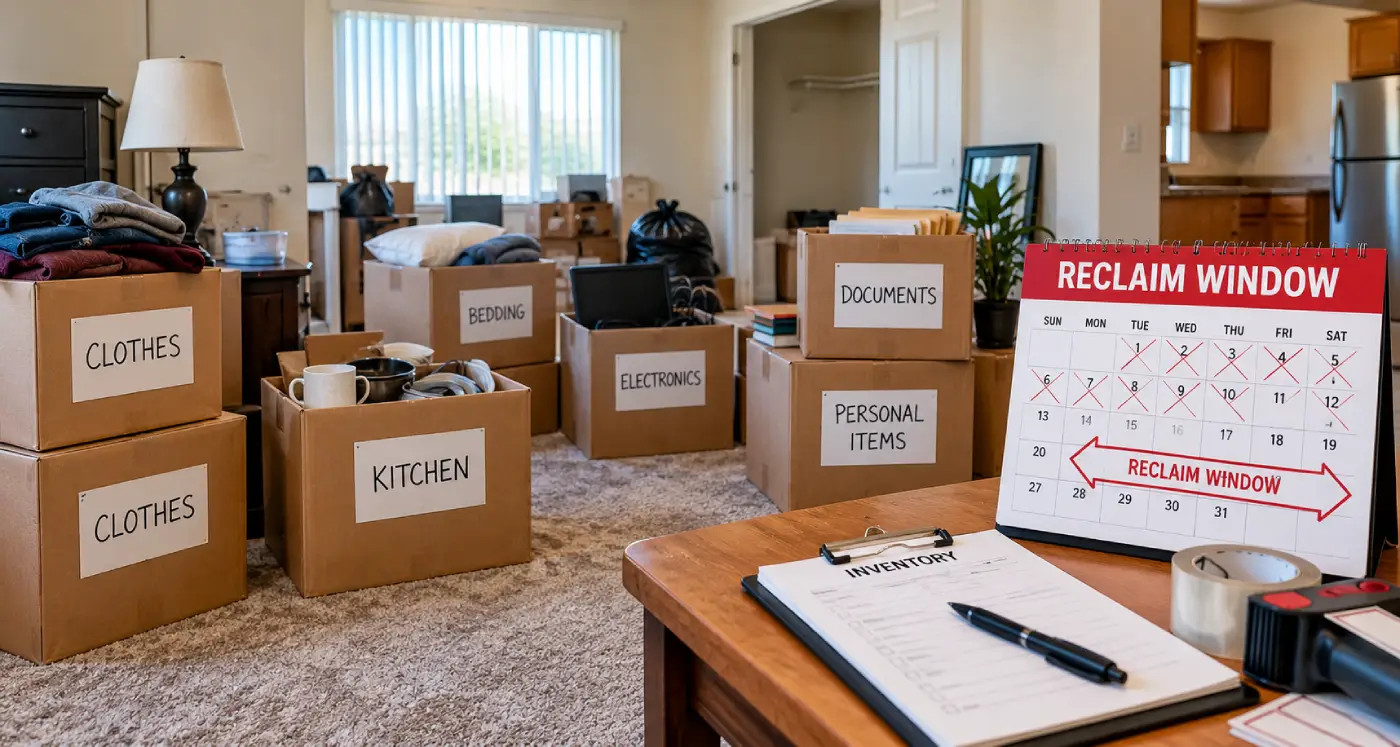
Three things, in this order. The sheriff has to finish the lockout before anyone clears the unit. The former tenant's belongings need a written notice to reclaim, with at least 15 days if you hand it over or 18 if you mail it. And nothing that might be theirs gets hauled until that window closes. This is the order I'd walk a Temecula landlord through before we ever back the trailer up to the door.
Family-owned in Temecula since 2021 · Licensed & insured · 5,000+ loads since 2021
Step One
When Can a Landlord Legally Start Clearing the Unit?
In California, you can start once the sheriff has finished the lockout and the unit is legally back in your hands, and not a day before. The California Courts eviction guide lays out the order: you win the case, the judge issues a writ of possession, and the sheriff gives the tenant a few days to move before coming back to lock them out.
Clearing the unit early is the expensive mistake. The same guide is blunt that a landlord can't lock a tenant out, shut off the utilities, or throw out their belongings to make them leave, even after months of unpaid rent. If the tenant's things go to the dump before possession is yours, you've handed them a claim.
If the tenant just stopped paying and disappeared, with no court case at all, that's a different process with its own notice. Our guide for when a tenant abandoned a rental in California walks through it.
The Notice
What Notice Does California Require Before You Toss a Former Tenant's Things?
California requires a written notice of right to reclaim abandoned property, sent to the former tenant and to anyone else you reasonably believe owns any of it, before you get rid of personal property left in the unit.
The wording is in California Civil Code section 1984. The notice describes what was left, says where it can be picked up, and sets a deadline no earlier than 15 days after the notice is handed over in person, or 18 days after it's mailed. If you mail it, one copy goes to the unit the tenant just left.
Describe the items well enough that the tenant can recognize them. "Living room furniture and 14 boxes from the garage" is fine. "Misc. items" invites an argument.
This guide is general information from a junk removal company, not legal advice. When the value of what's left, or who owns it, is in doubt, call your attorney before you call us.
Storage
Where Do the Belongings Sit While the 15- or 18-Day Clock Runs?
They stay in safe storage that you control, usually the unit's garage or a locked room at the Temecula rental, for the full 15 or 18 days.
The law expects reasonable care while you hold them, so a damp side yard or an open carport is a bad spot. The notice can tell the tenant they'll need to pay your reasonable cost of storage before taking the property back, which is one reason most landlords keep it on site instead of renting a storage unit.
Should the Belongings Be Boxed and Labeled?
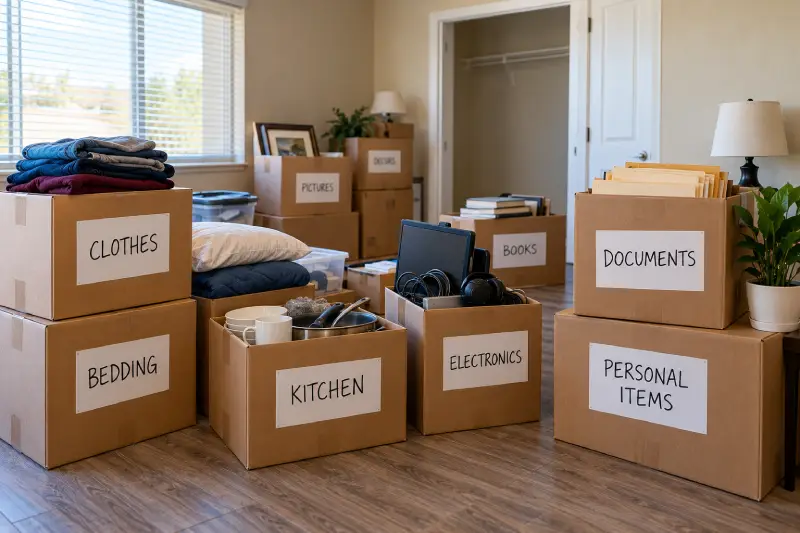
Yes, and a Temecula landlord who boxes and labels by room saves an argument later. Photograph the boxes, keep the photos with your copy of the notice, and put anything that looks like paperwork, ID, or medication in its own box.
Leave furniture where it can stay dry and nobody trips over it. The point is to hand back exactly what was there if the tenant shows up on day 14.
The $700 Line
What Happens After the Deadline Passes?
Once the 15- or 18-day deadline passes without a claim, California sets one rule for property you believe is worth less than $700 and another for anything worth more.
- ✓Under $700: the notice can say the property may be kept, sold, or destroyed without further notice if nobody claims it in time. This is where the haul usually happens.
- ✓$700 or more: it goes to a public sale after notice of the sale is published. After the costs of storage, advertising, and the sale come out, the rest is paid to the county, and the former tenant has a year to claim it there.
The value is your reasonable belief, not the hauler's estimate. If a unit holds a big TV, a gun safe, and a garage full of tools, talk to your attorney before you decide which side of $700 you're on.
Documentation
What Should You Photograph Before Anything Moves?
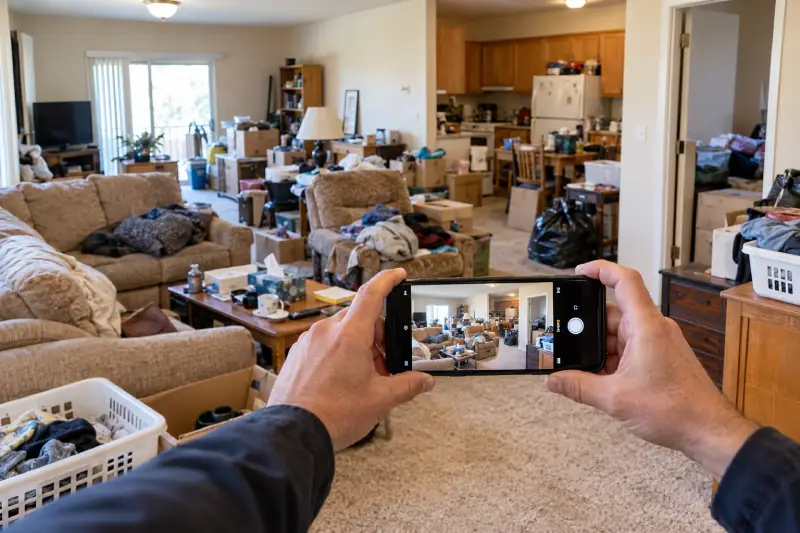
Photograph every room from the doorway, every pile of belongings, and every bit of damage before a single item moves, with the date on the files.
Those photos do two jobs. They're your record of what the tenant left if the notice is ever questioned. And since April 1, 2025, under AB 2801, they're also the photos California wants before you deduct repair or cleaning costs from the deposit. Our guide to move-out photos for California landlords covers the deposit side, including the second set after the work is done.
What Belongs in the File With the Photos?
A copy of the reclaim notice, proof of when and how it was delivered, and a dated list of what's stored and where in the Temecula unit. If the tenant or anyone else claims something, write down what they took and when.
Keep the file until the deposit statement is long settled. It's the first thing your attorney will ask for.
Safety
What Hazards Turn Up in a Temecula Eviction Cleanout?
Spoiled food, pests, broken glass, and sometimes needles or animal waste turn up in Temecula eviction cleanouts often enough that you should assume they're there until you've walked the unit.
Gloves and closed shoes are the minimum for anyone going in. If you find needles, human or animal waste, or signs of drug use, stop and call a biohazard cleaner first. That's licensed work, and it isn't ours. Our hoarder junk removal page explains where our line sits.
Paint, pool chemicals, propane, motor oil, and batteries are household hazardous waste, and they can't ride in our trailer at any price. Riverside County takes them free at its household hazardous waste sites and events, and our guide to household hazardous waste in Temecula says where to go.
Sorting
How Do You Tell the Tenant's Belongings From Plain Trash?
Sort everything in the unit into 3 piles before the haul: belongings that fall under the notice rules, obvious trash, and hazardous materials that go to the county.
What Counts as Belongings?
Anything with apparent value or personal meaning: furniture, electronics, clothes, photos, papers, tools. When you're not sure, it goes in this pile.
What Counts as Trash?
Spoiled food, bagged garbage, broken furniture nobody would come back for, and packaging. In most units it's the bulk of the volume.
What Counts as Hazardous?
Paint, chemicals, batteries, propane tanks, and anything with a needle in it. Set it aside for the county drop-off or a biohazard cleaner.
The Haul
When Does the Haul Fit Into Turning the Unit Over?
The haul happens as soon as the reclaim window closes, and in a Temecula make-ready it comes second, right after the walk-through photos and before any repair, paint, or cleaning.
An eviction cleanout in Temecula with us is priced by how much of our 12-yard trailer the unit fills: $195 for a quarter load, $350 for a half, $495 for three-quarters, and $595 for a full trailer. Stairs add $150 on loads under 7 cubic yards or $300 on loads of 7 or more, fridges and AC units are $30 each, and mattresses are $15. Text photos to (951) 837-8072 and you get a load size and a firm price before we roll out. The full ladder is on our junk removal prices page.
After the haul, our rental turnover checklist covers the order the trades go in. If you're a landlord running your own rentals, our page on landlord junk removal in Temecula covers how to book it all by text without driving over.
Who Wrote This
Who Is Behind This Guide?
I am. I'm Weston Molitor, and I've run Wild West Junk Removal out of Temecula since 2021.
Who Is Weston Molitor?
Founder · Wild West Junk Removal · Temecula, CAWe're family-owned, licensed and insured, and we've hauled more than 5,000 loads since 2021 out of 41713 Niblick Rd.
Eviction work is the job where I'd rather wait two weeks than haul one box early. The notice window protects the landlord as much as the tenant, and skipping it is how a cleanout turns into a claim.
"If you're not sure the window has closed, it hasn't. Call your attorney, then call me."

FAQ
What Else Do Landlords Ask Before an Eviction Cleanout?
No. California's courts are clear that a landlord can't lock a tenant out, shut off utilities, or throw out their things to make them leave. Wait for the sheriff. Once the lockout is done and possession is yours, changing the locks is the first thing to do.
Yes. It also goes to anyone you reasonably believe owns some of what was left, like a roommate who wasn't on the lease or a company whose rented furniture is still in the living room. Each person gets the same deadline.
Yes, a reasonable cost of storage. The notice can say the tenant has to pay it before taking the property back. Keep it reasonable and keep the math in your file.
Close, but not the same section. Commercial space has its own reclaim rules starting at Civil Code section 1993, with the same 15-day and 18-day windows. Our commercial junk removal page covers the haul once the window closes.
No. An eviction cleanout follows a court case between a landlord and a tenant. A foreclosure cleanout follows a lender taking the house back, and the asset manager's work order says what goes. The haul looks the same; the paperwork behind it doesn't.
California doesn't require one, and the statute includes the wording. If what's left might be worth $700 or more, or the former tenant is disputing anything, I'd pay for an hour of an attorney's time before the notice goes out.
Ready to Clear the Unit Once the Window Closes?
Text photos of every room and the garage to (951) 837-8072 with the date the reclaim window ends, and you'll get a load size and a firm price before we roll out. Most weeks we're at the unit within 24 to 48 hours of the day you tell us it's clear to haul.
Wild West Junk Removal · 41713 Niblick Rd, Temecula, CA 92591 · (951) 837-8072 · Mon to Sat: 7AM-7PM · Sun: Closed
Sources & References
- codes.findlaw.comCalifornia Civil Code § 1984 — notice of right to reclaim abandoned property
- selfhelp.courts.ca.govCalifornia Courts Self-Help — eviction cases in California
- calmatters.digitaldemocracy.orgAB 2801 (2024) — security deposit photo requirements
- rcwaste.orgRiverside County Department of Waste Resources — household hazardous waste
- ballardspahr.comBallard Spahr — California commercial abandonment and reclaim notices (Civil Code §§ 1951.35, 1993)
- Wild WestEviction cleanout in Temecula — prices and scheduling
- Wild WestLandlord junk removal in Temecula — managers, Realtors & landlords
- Wild WestWhat to do when a tenant abandons a rental in California
Written by Weston Molitor, owner of Wild West Junk Removal. Last reviewed and updated October 15, 2026 · Prices current as of October 2026.
General information from a junk removal company, not legal advice. Notice periods and value thresholds are from California Civil Code sections 1980 to 1991 as of October 2026; confirm current requirements with an attorney before disposing of a former tenant's property.