
Family & Executor Guide · California Probate · Riverside County
Can You Clean Out a Parent's House Before Probate Is Done in California?
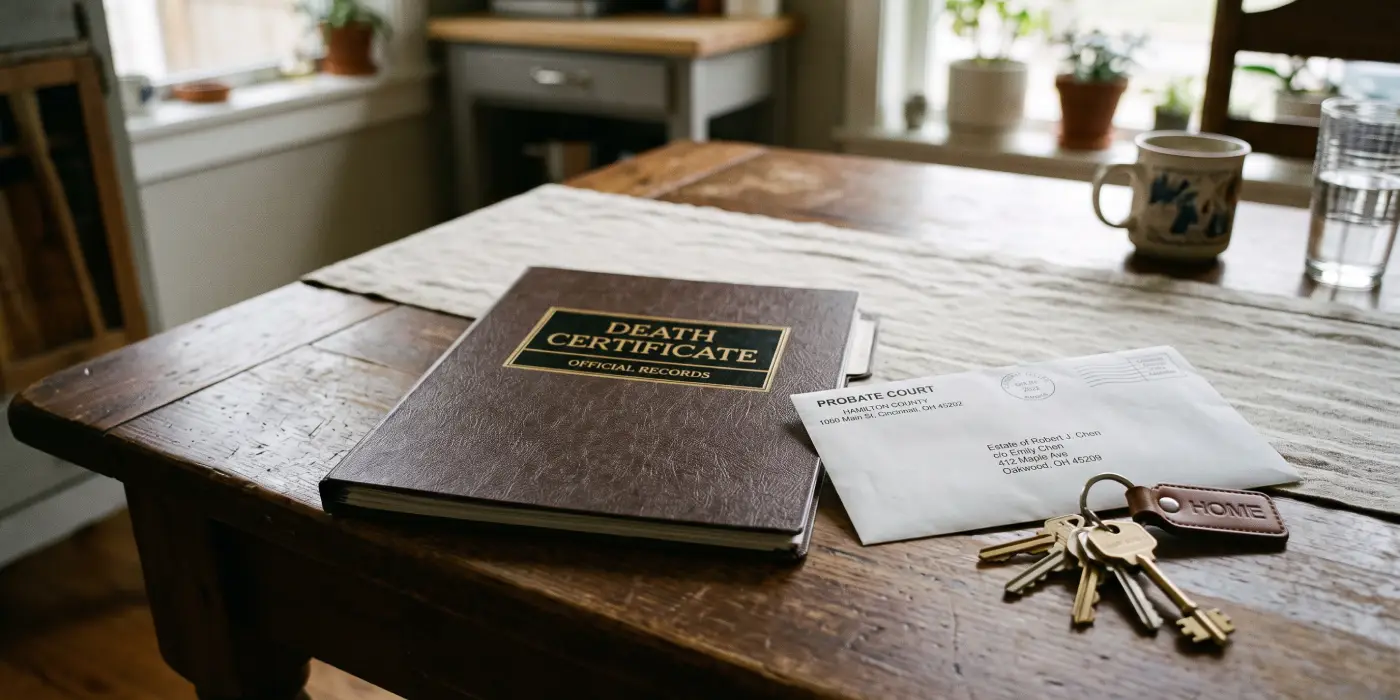
Yes, once someone has legal authority over the estate, even while probate is still open. What you can't do is clear it before then. Until an executor or administrator has Letters from the court, a successor trustee takes over a trust, or the heirs qualify for a small-estate procedure, the family should secure the house and deal with spoiled food and safety hazards, and nothing else.
Family-owned in Temecula since 2021 · Licensed & insured · 5,000+ loads since 2021
Who Has Authority
Who Has the Right to Clear the House?
It depends on how the house and what's in it pass. With a will and a probate case, it's the executor once the court issues Letters Testamentary. With no will, it's the administrator the court appoints. With a living trust, it's the successor trustee, with no court appointment needed. For small estates, the heirs themselves can act after a 40-day wait.
| How the estate passes | Who has authority | When they can act |
|---|---|---|
| Will, through probate | The executor, once the court issues Letters Testamentary | After the court appoints them |
| No will, through probate | An administrator, once the court issues Letters of Administration | After the court appoints them |
| Living trust holds the house | The successor trustee | Once they accept the job; no court appointment |
| Small estate: $208,850 or less under the court's rules | The heirs or beneficiaries, by a sworn declaration for personal property | 40 days after the death |
| Primary residence worth $750,000 or less | The heirs, by a court petition to determine succession | Petition after 40 days; ownership by court order |
| Everything goes to a surviving spouse | The spouse, by a spousal property petition | No waiting period to file |
Those dollar limits come from the Riverside County Superior Court's estates, wills, and trusts page, which lists every procedure with its forms. They apply to deaths on or after April 1, 2025; earlier deaths use lower figures. The state's probate self-help guide explains each one in plain language.
One more deadline comes first: whoever has the original will has to file it with the court within 30 days after the death, under Probate Code section 8200. That applies even if nobody plans to open a probate case.
Before Anyone Has Authority
What Can the Family Do Before Anyone Is in Charge?
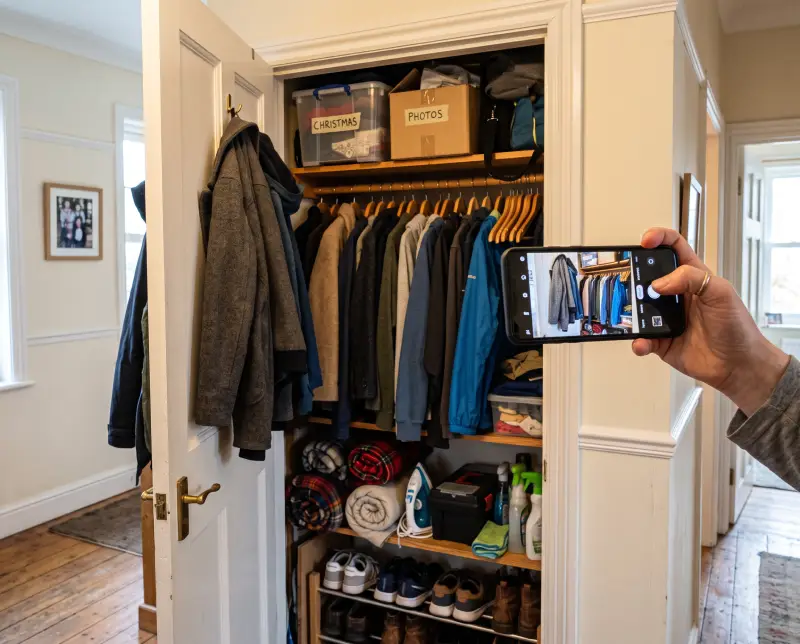
Protect the house and what's in it, and nothing more. Lock it, keep it insured, throw out spoiled food and obvious trash, fix anything unsafe, and photograph every room. Don't sell, give away, donate, or haul anything that might have value, even if every sibling agrees.
- ✓Change the locks and keep track of who has a key.
- ✓Keep the homeowners insurance active, and ask the carrier what it requires for a vacant house.
- ✓Empty the fridge and take out the trash. Spoiled food and pests are the one cleanup that can't wait.
- ✓Photograph every room, closet, cabinet, and the garage before anything is moved.
- ✓Gather the will, trust, deed, titles, statements, and tax returns into one box that stays with one person.
- ✓Leave the furniture, jewelry, tools, art, and collectibles where they are.
What I'd hold off on is the big stuff: the dumpster the weekend after the funeral, the donation run, and the garage sale. Those feel productive, and they're the ones that are hard to undo.
Is It Okay for a Sibling to Take One Thing Now?
Better not, even something small, until the person in charge says so. Most estate fights start with one person's memory that Mom promised them something. California treats it seriously, too: under Probate Code section 859, someone a court finds took estate property wrongfully and in bad faith can owe twice its value. Write the request down, and let the executor or trustee decide it with everything else.
The Probate Clock
When Can an Executor Start Clearing the House?
As soon as the court issues Letters, the executor or administrator is in charge of the house and its contents and can direct a cleanout, even though the case will stay open for months. Getting Letters takes a petition, published notice, and a hearing, so that first step alone usually takes weeks, not days.
Why Does the Inventory Matter Before the House Is Emptied?
Because the executor has to account for what the estate owned. Under Probate Code section 8800, the inventory and appraisal is due within four months after Letters are first issued, and a court-appointed probate referee values most of what isn't cash. Worn furniture and old mattresses rarely matter to that number. Jewelry, a coin collection, a good set of tools, or a piano can. Get those listed and looked at before the trailer comes.
How Long Do Creditors Have to Come Forward?
Under Probate Code section 9100, a creditor has until the later of four months after Letters are first issued or 60 days after the executor mails them notice. That's why many executors wait to hand out valuables until the claims are known. Hauling out trash isn't the problem. Giving away things of value before the debts are paid can be.
Can the Executor Sell the Furniture or Hold an Estate Sale?
Often, yes, but selling estate property can come with notice rules depending on the authority the court granted. Ask the attorney before an estate sale is booked, not after. The leftovers once the sale is over are ordinary cleanout, and that part is ours.
4 months
after Letters issue: the inventory deadline and the main creditor deadline
Those two clocks start the same day. Anything of real value is easier to handle if it's still in the house, photographed and listed, when they run.
Living Trusts
What If the House Is in a Living Trust?
Then it usually moves faster, because the successor trustee can act without waiting on a court. Once the trustee accepts the job, they're in charge of the house and what's in it, and they can schedule a cleanout as soon as the family has taken what it's keeping.
The trustee still has duties. Under Probate Code section 16061.7, the trustee has to send a written notice to the trust's beneficiaries and the parent's heirs within 60 days after the death. That notice starts a 120-day window to contest the trust.
That's why careful trustees clear the trash and the worn-out furniture early but hold off on handing out anything of value until the window passes or the family agrees in writing. A house in a trust can be emptied and listed quickly. The heirlooms can wait a few more months in a box.
Does a House in a Trust Still Need an Inventory?
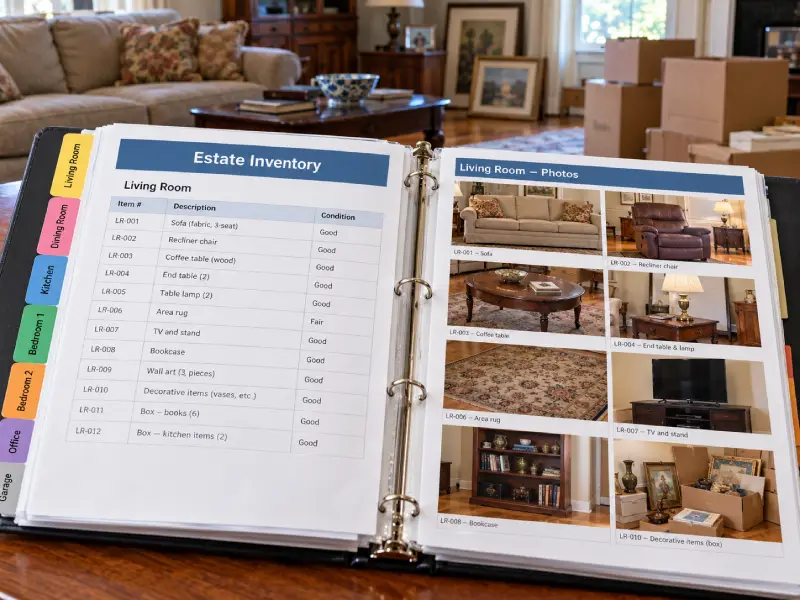
Not one filed with the court, but the trustee should still keep a list and photos of what was there and where it went. If a beneficiary asks later, that list is the trustee's answer.
Small Estates
What If the Estate Is Small?
California has shortcuts that skip full probate. If the estate is worth $208,850 or less under the court's rules, which leave out things like trust assets and accounts with a named beneficiary, the heirs can collect the personal property with a sworn declaration 40 days after the death. A primary residence worth up to $750,000 can pass through a simpler court petition instead of a full probate case.
Both limits apply to deaths on or after April 1, 2025, and real property of small value, up to $69,625, has its own affidavit after a six-month wait. Once the heirs have the right to the household contents under one of these procedures, they're the ones who decide on the cleanout. Until the 40 days pass, treat the house the same as any estate waiting on authority: secure it and leave it.
Which procedure fits depends on what the parent owned and how it was titled, and the Riverside court's self-help information centers can walk families through the forms without a lawyer. If anything about the estate is contested or unclear, hire one.
What Goes Wrong
What Goes Wrong When a House Is Cleared Too Early?
Things of value disappear before anyone lists them, family members take items before the will is read, papers the executor needs get shredded, and the person in charge ends up explaining the gaps. None of it is about the junk. It's about the handful of things that mattered, mixed in with it.
- The donation run that took the silver. A box of "old kitchen stuff" goes to the thrift store before anyone looked inside.
- The shredded statements. Bank and brokerage statements go in the shred bin before the final tax returns are filed, and the executor has to request copies account by account.
- The dumpster the weekend after the funeral. It feels like progress. It's also the fastest way to lose a key, a title, or a will.
- The sibling who took the TV. It wasn't worth much, but now everyone is keeping score.
Our guide on what to do with a parent's house after they die has the full list of what to find and what never to throw away before the cleanout starts.
From the Owner
Why Is a Junk Hauler Writing About Probate?
Because we're the vendor who changes the house for good. Once the trailer pulls away, whatever was in it is gone, so I'd rather families know who has to say yes before we're ever called.
Who Is Weston Molitor?
Founder · Wild West Junk Removal · Temecula, CAI started Wild West Junk Removal in Temecula in 2021. We're family-owned, licensed and insured, and we've hauled more than 5,000 loads out of 41713 Niblick Rd, plenty of them from inherited houses across the valley.
I'm not a lawyer, and nothing here is legal advice. What I can tell you is what a cleanout crew needs before it starts: a name, a signature from the person with authority, and a family that's already taken what it wants.
"Get the person in charge to sign off first. Everything we haul after that is the easy part."

FAQ
What Else Do Executors and Families Ask About Probate?
Not to haul anything, but often to know who has the authority to say yes. Small estates and simple trusts are handled without one all the time. If there's a full probate case, a dispute, or real property involved, a probate attorney is worth the call.
Yes. Spoiled food, obvious trash, and anything unsafe can be dealt with right away, because leaving it damages the house. Anything that might have value stays put until someone has authority.
Many months at minimum, and plenty of cases run a year or longer. Creditors get at least four months after Letters issue, and the court's calendar and any objections add time. The house usually needs to be cleared long before the case closes, which is fine once the executor has Letters.
Search the house before anything is hauled: the desk, the file cabinet, the safe, books, and the freezer. Call the parent's attorney or financial advisor, too. Once it turns up, the original goes to the court clerk. If there truly is no will, the court appoints an administrator instead.
Look at the small-estate procedures first. An estate worth $208,850 or less under the court's rules can often be collected by declaration after 40 days, and a modest primary residence may pass by a simpler petition. The Riverside court's self-help centers help families without lawyers.
No. An estate can sell a house as-is, and some investors prefer it. An empty, clean house usually shows better and draws more buyers, so most executors clear it before listing. That decision belongs to the executor or trustee and the listing agent.
Have the Go-Ahead and Ready to Clear the House?
Text photos of every room, the garage, and the yard to (951) 837-8072, or ask for a free walkthrough. You'll get a firm price before anything moves, and an itemized invoice made out to the estate when we're done.
Wild West Junk Removal · 41713 Niblick Rd, Temecula, CA 92591 · (951) 837-8072 · Mon to Sat: 7AM-7PM · Sun: Closed
Sources & References
- riverside.courts.ca.govRiverside County Superior Court — Decedent's Estates, Wills & Trusts (procedures and dollar limits)
- selfhelp.courts.ca.govCalifornia Courts Self-Help Guide — Probate
- leginfo.legislature.ca.govCalifornia Probate Code § 8200 — filing the will within 30 days
- leginfo.legislature.ca.govCalifornia Probate Code § 8800 — inventory and appraisal
- leginfo.legislature.ca.govCalifornia Probate Code § 9100 — time for creditors' claims
- leginfo.legislature.ca.govCalifornia Probate Code § 859 — wrongful taking of estate property
- leginfo.legislature.ca.govCalifornia Probate Code § 16061.7 — trustee's notice to beneficiaries and heirs
- Wild WestEstate cleanouts in Temecula — prices and how it works
- Wild WestWhat to do with a parent's house after they die
Written by Weston Molitor, owner of Wild West Junk Removal. Last reviewed and updated October 13, 2026.
This page explains California law in general terms and is not legal advice. Wild West Junk Removal is a hauler, not a law firm. Talk to a probate attorney about any specific estate, trust, or dispute.