
Temecula · Murrieta · Menifee · Southwest Riverside County
What's Living in That Old Shed? Rats, Black Widows, and Snakes Before a Teardown
Before the first panel comes off, find out who moved in. What I check for on every Temecula shed job, what the CDC and UC IPM actually say about cleaning one out, and when you should call somebody other than me.
Family Owned Since 2021 · Licensed & Insured · Shed Teardowns from $195 · Mon–Sat 7AM–7PM
Wild West Junk Removal · 41713 Niblick Rd, Temecula, CA 92591 · (951) 837-8072 · Mon to Sat: 7AM-7PM · Sun: Closed · Family-owned and operated by Weston Molitor since 2021
Before You Tear It Down
Every Old Shed Has Tenants
I've pulled a lot of sheds out of Temecula backyards, and I can count on one hand the ones that were empty underneath. A shed that's sat on skids or a slab for ten years is the best rental in the neighborhood. It's dry, it's shaded, and nobody bothers it. So before tearing down an old shed, find out who's living in it.
The call usually goes the same way. Somebody's finally clearing the side yard in Redhawk or out past Butterfield Stage, they grab the corner of the floor to see if it'll lift, and something moves. Sometimes it's a lizard. Sometimes it's a roof rat nest, a black widow sitting on the underside of the floor joist, or a rattlesnake that's been eating those rats all summer.
This article isn't about how we take a shed apart. Our outdoor structure removal page covers the teardown itself, what it costs, and the permit question. This is about the part before that: figuring out what's in there, what you can safely handle yourself, what you shouldn't touch, and how to set the job up so nobody gets bit and nobody breathes in something they'll regret. The rest of our backyard-structure writing lives under Outdoor-Structure Removal.
| What's in there | Where it hides | What you'll notice | First move |
|---|---|---|---|
| Roof rats and Norway rats | Rafters and shelves (roof rats); burrows under the slab edge or skids (Norway rats) | Droppings, gnawed boxes, a burrow at the corner | Snap-trap for a week or two before the teardown |
| Deer mice | Nests in insulation, old cushions, stored boxes | Small droppings, shredded paper | Air it out and wet-clean. Never dry-sweep |
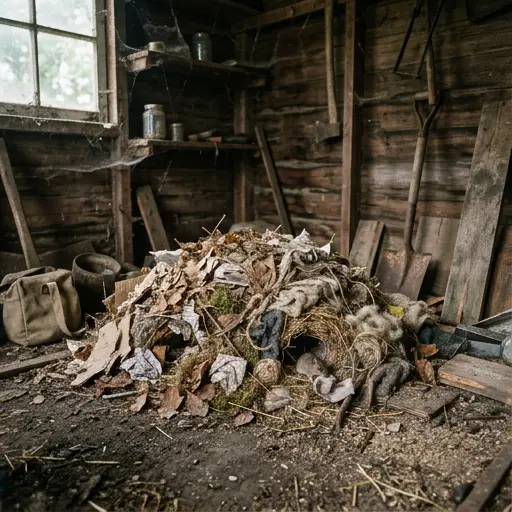
| Pack rats (woodrats) | Big stick-and-junk piles against or under the shed | A pile that looks like somebody built it on purpose | Same wet-clean rules; trap before we lift |
| Black and brown widows | Floor edges, door tracks, stacked pots, plastic furniture | Messy, strong cobwebs low to the ground | Gloves, long sleeves, flashlight |
| Rattlesnakes | Under the floor, in rodent burrows, in lumber piles next to the shed | A rattle, or a heavy-bodied snake with a triangular head | Back off and call a snake removal pro |
| Honey bees and yellowjackets | Inside wall cavities, under the floor, in the ground nearby | Steady traffic in and out of one gap, a hum | Beekeeper or pest control first |
| Old rat bait and pesticides | The back shelf | Faded boxes, half-used bottles | County household hazardous waste drop-off |
Rodents
Rats, Mice, and the Dust Under the Floor
Rodents are the one I take most seriously, and it isn't the bite. It's the dust.
You'll run into three kinds of rats in sheds around here. Roof rats climb, so they nest up in the rafters and on the top shelf. Norway rats dig, so you find their burrows at the slab edge or under the skids. The third kind is the pack rat, the native woodrat, which builds those big stick piles full of whatever it dragged in. According to UC IPM's pest note on rats, the quick way to tell a pack rat from the other two is the tail: pack rats have fur on theirs, while roof and Norway rats have scaly, mostly bare tails.
Mice matter for a different reason. The CDC's hantavirus guide lists the deer mouse among the rodents that spread the hantaviruses behind hantavirus pulmonary syndrome. It's rare, but it can be fatal, and people mostly catch it by breathing air stirred up from fresh urine, droppings, and nest material. Walking into an infested shed is one of the specific activities the CDC flags.
The CDC's shed cleanout routine, in plain English
- ✓Open every door and window for 30 minutes and leave while it airs out.
- ✓Put on rubber or plastic gloves before you touch anything.
- ✓Spray droppings, urine, and nests until they're soaked, using a product that says "disinfectant" on the label or a bleach mix of 1.5 cups of bleach per gallon of water, made fresh. Let it sit 5 minutes.
- ✓Wipe it up with paper towels, throw them out, then mop or spray the floor. Dirt floors get sprayed too.
- ✓Wash your gloved hands, take the gloves off, then wash your bare hands.
No broom, no shop vac, no leaf blower on dry droppings. The CDC says sweeping or vacuuming rodent waste raises your chance of breathing the virus in. I've watched a homeowner in Wolf Creek clear a shed floor with a leaf blower before we got there. Please don't be that guy.
If you get sick in the weeks after cleaning out a mouse-heavy shed, the CDC says symptoms usually show up one to eight weeks after contact, and to get medical attention right away if they come on, especially trouble breathing. Tell the doctor you were cleaning up after rodents. That detail matters to them.
Trap first, tear down second
Here's the mistake I see most. A shed full of live rats gets torn down, and the rats don't leave the neighborhood. They move into the garage, the attic, or your neighbor's woodpile. UC IPM notes that roof rats are strongly attached to their nest sites and come back if the nests aren't removed. So set snap traps for a week or two before we come out. UC IPM calls snap traps the safest, most effective, and cheapest option, and the CDC says to skip glue traps and live traps because a scared rodent is more likely to urinate. If the floor comes up and the nest is old and empty, that's the job you want.
Spiders
Black Widows Love a Shed Floor Edge
If your shed is more than a couple of years old, assume there are widows on it. That's not a scare line. It's just where they live.
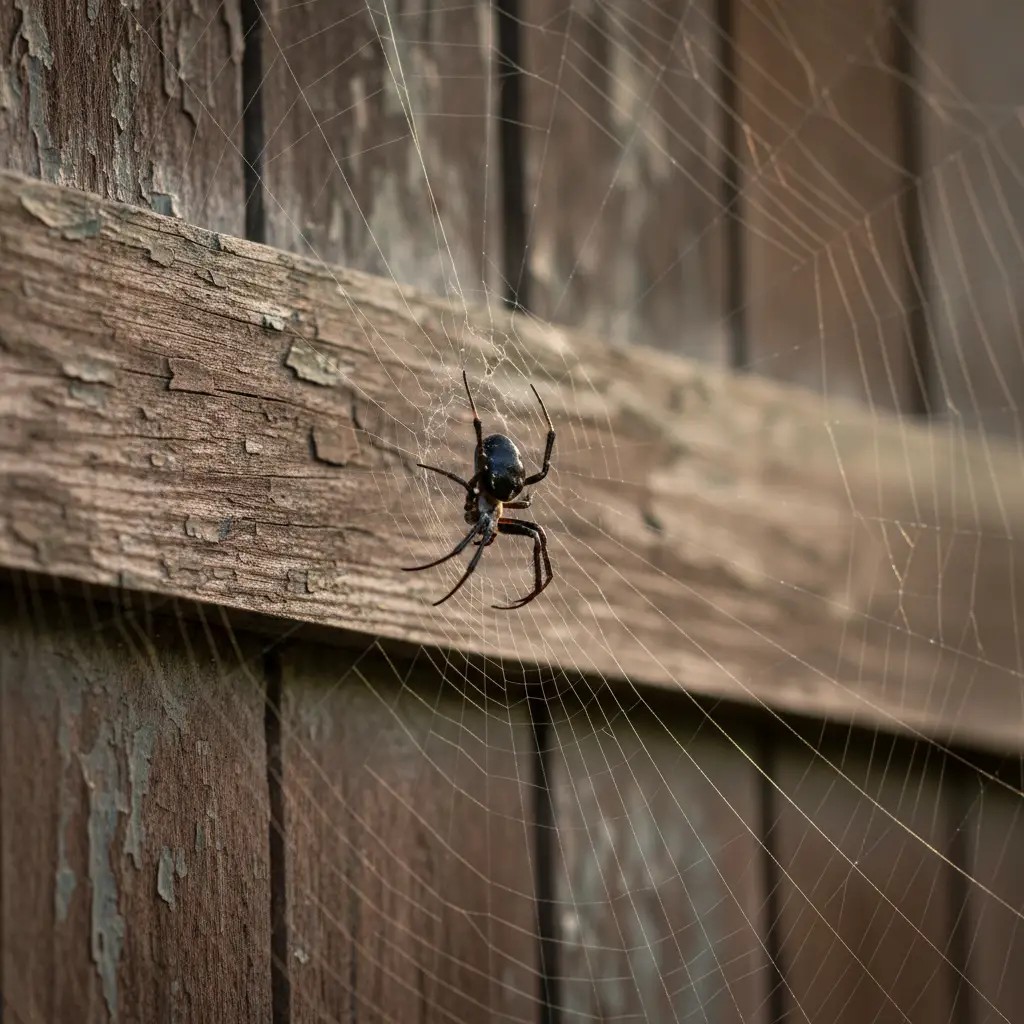
UC IPM's widow spider pest note says the cracks, clutter, and trash around outbuildings are ideal habitat for the western black widow, and in a good spot the mature females can be a few feet apart. They build a messy, strong web close to the ground, usually within about three feet of it, hide in a crevice during the day, and come out at dusk. That describes the bottom foot of almost every shed I've ever lifted.
We have two widows in Southern California. The western black widow is shiny black with the red hourglass underneath. The brown widow is mottled tan and gray, and its egg sac is the giveaway: it's covered in little spiky bumps. UC IPM says the brown widow's bite is much milder, and that brown widows love the undersides of cheap plastic patio furniture and playground equipment, which is exactly what gets stacked behind a shed.
The good news, straight from the same pest note: black widow bites are rare even where the spiders are common. Nearly every bite I've heard about on a job came from a bare hand going somewhere the eyes didn't check first. Our crew wears leather gloves and long sleeves on every structure job, August included.
Where to look before you grab anything
- ✓The underside of the floor edge and the skids, where your fingers go when you try to lift a corner.
- ✓The door track, the hinge side of the door, and the gap between the shed wall and the fence.
- ✓Stacked nursery pots, plastic chairs, kids' toys, and anything with a lip facing down.
- ✓Old work gloves and boots left on the shelf. Shake them out or just toss them.
If you do get bitten by a black widow, UC IPM says get medical attention right away. A cold pack helps with the pain on the way.
Snakes
Rattlesnakes Come for the Rats
A shed full of rodents on the edge of open ground is a snake buffet. That's the whole story.
According to UC IPM's rattlesnake pest note, the red diamond rattlesnake lives in southwestern California south of Los Angeles, and a close relative of the western rattlesnake covers coastal Southern California. That's us. Rattlesnakes can't dig their own burrows, so they borrow the ones rodents dug, and they hide under buildings and in lumber piles. On the bigger lots in De Luz, Meadowview, and La Cresta up in Murrieta, and on any yard in Redhawk that backs onto the hills, an old shed checks every box.
Don't count on the rattle to tell you what you're looking at. UC IPM points out that a harmless gopher snake can flatten its head to look like a rattlesnake, and that a rattlesnake can lose its rattle. If you're not sure, treat it like a rattlesnake.
Our rule on the job: if a rattlesnake shows up, the work stops and we back off. We don't move snakes and we don't kill them. UC IPM notes that most rattlesnake bites happen when somebody tries to pick one up, move it, or kill it, and that a dead rattlesnake can still bite by reflex. Call a professional snake removal service, then call us back.
One more reason not to take matters into your own hands: California lets property owners take most rattlesnake species on private land, but the red diamond rattlesnake is protected by state wildlife regulation. Most people can't tell one from the other in the moment, and the one you'd most likely meet here is the one you can't touch.
If someone does get bitten, UC IPM's first aid is simple. Keep the person calm, wash the bite gently, put a cool wet cloth on it, and get to the nearest emergency room, calling ahead if you can. No tourniquet, no ice pack on the bite, no cutting, no sucking out venom. California Poison Control is 1-800-222-1222 any time. And if the brush and tall grass around your shed are the other half of the problem, our weed abatement crew clears that too.
Bees and Wasps
A Humming Wall Means Stop
A clump of bees hanging on the eave is usually just passing through. Bees flying in and out of the same crack all day have moved in.
UC IPM's guide to bee swarms and established hives lists outbuildings, fences, and the space under decks as places honey bees set up house, and says an established colony can be holding up to 100 pounds of honey. It also notes that Africanized honey bees have colonized every Southern California county, where your realistic option is often a structural pest control company rather than a hobby beekeeper. Africanized bees are a lot less predictable than the gentle spring swarms people post videos of.
Here's why you don't just spray the wall and call us the next morning. UC IPM explains that a colony killed and left in place leaves honey to ferment and leak, and bees killed with pesticide turn the comb into hazardous waste. We won't cut into a shed wall with an active hive in it. Get the colony removed first, and we'll take the shed the next day.
Yellowjackets are the other one. They'll nest in a wall cavity or in the ground right next to the slab, and they sting in numbers when the shed shakes. If you see a steady line of them going into the dirt by the corner, point it out when you text us photos.
The Back Shelf
Old Rat Bait and Bug Spray Go to the County, Not the Trailer
Almost every old shed has the same shelf: rat bait blocks from years ago, a box of snail pellets, a jug of something that used to be weed killer, and a bucket of pool acid.
That shelf matters more than it used to. UC IPM says California now prohibits most uses of the older anticoagulant rat poisons, and that if you have old products with those ingredients you should take them to your local household hazardous waste facility. Please don't set out that old bait "one last time" before the teardown. It's hard on the owls, the hawks, and the neighbor's dog.
Riverside County takes household hazardous waste from residents for free. The county's HHW program accepts up to 15 gallons or 125 pounds per trip, and the closest permanent facility to Temecula is in Lake Elsinore at 512 N. Langstaff St. We can't put paint, pesticides, pool chemicals, or gas cans in our load at any price, so pull those off the shelf before we come.
Everything else on and around the shelf is ours: the shelving, the broken mower, the rusted tools, the stack of scrap wood. Anything still usable gets pulled for donation where it makes sense, and you can see where your junk actually goes.
Who's Writing This
Weston Molitor Lifts the Floor
Weston Molitor
Founder · Wild West Junk Removal · Temecula, CAI started Wild West Junk Removal in Temecula in 2021, and it's still a family-owned, licensed and insured operation running out of 41713 Niblick Rd. Structure teardowns are the jobs where I'm usually on site, because they're the ones where something unexpected turns up under the floor. Our crew has pulled sheds, coops, and playhouses out of yards in Redhawk, Wolf Creek, Harveston, Vail Ranch, Paloma del Sol, French Valley, and Winchester, plus the big lots out in De Luz and Meadowview.
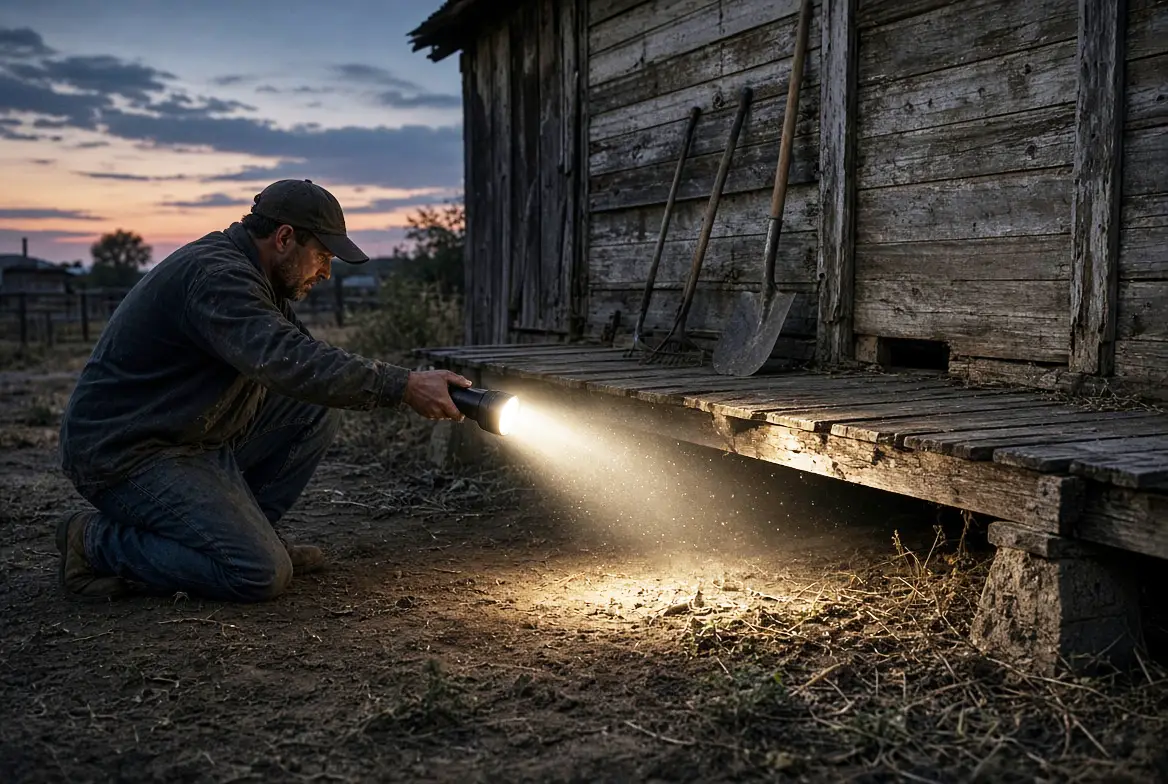
"Nobody gets hurt taking down a shed. They get hurt reaching under one. Flashlight first, gloves on, and the pry bar does the lifting."
You'll get a written price at the door before a tool comes out, and there's no deposit to book. If I look at your photos and think you'd be better off trapping for two weeks or getting a beekeeper out first, I'll tell you that on the phone, even if it pushes the job back.

Setting Up the Job
How to Hand Us an Occupied Shed
You don't have to clean the shed out before we come. You do have to deal with the things that can hurt people.
Tell us what you've seen
Text photos to (951) 837-8072 and mention droppings, webs, a snake sighting, or bees. It changes how we stage the job and what we bring. It doesn't add a critter fee.
Trap for a week or two
Snap traps along the walls and on the shelves. Skip glue boards and live traps. Check them every day and bag what you catch.
Get bees and snakes handled first
A beekeeper or pest company for an active hive, a snake removal service for a snake that won't leave. We book right behind them.
Pull the hazardous stuff
Rat bait, pesticides, pool chemicals, paint, and fuel go to the county HHW facility in Lake Elsinore. We take the rest.
Leave the rest to us
We air the shed out, wet down droppings before anything gets moved, lift the floor with bars, bag nest material, and rake the footprint.
After the shed is gone
The footprint is the last place the critters called home, so finish the job. UC IPM recommends filling rodent burrows with soil and packing it down firmly once the rodents are under control, which also takes away the snakes' hiding spots. Don't restack firewood or leftover lumber in the same spot. The CDC suggests keeping woodpiles 100 feet or more from the house and raised at least a foot off the ground.
On price, critters don't change the math. Shed removal is priced by how much of our 12-yard trailer it fills: $195 for a quarter load up to $595 for a full trailer, with the teardown, hauling, and disposal inside the number. The full ladder is on our pricing page, and the shed, pergola, and gazebo removal page shows where typical structures land. Taking out a deck, fence, or playset at the same time? That's on our deck and fence removal page. We run these jobs all over Temecula, Murrieta, and Menifee.

What Neighbors Say
Real Reviews from Temecula-Area Jobs
Straight from our Google listing. We don't write these, and we don't edit them.
"Wild West Junk Removal did a wonderful job getting 2.14 tons of yard & construction waste off my property, including the demolition of a construction grade dog house. They communicated clearly, were super professional & got everything done fast. They left the space where the trash was clean of all debris and made our lives much easier. If you are looking for an honest and reputable company, they are the place to go to."
"Weston and his team are on it. I run a commercial operation and sometimes we need to bring in some professionals to get rid of some insane types of junk. They respond as fast as any company I have seen, and get the job done 100% of the way with no shortcuts. Good people over at Wild West, recommend highly without any reservation."
"Gave Wild West junk removal a call last min and Weston showed up extremely quick and was able to knock out my hunny to do list and get ride of the extra trash from Christmas. Was very clean and professional and went the extra mile to make sure our side yard looked great when the wife got home. Extremely fair prices, great attitude and was an awesome experience."
"Wild West Junk Removal is the real deal! They showed up on time, worked fast, and were super professional. The crew was friendly, respectful, and went above and beyond to make sure everything was cleaned up perfectly. I couldn't believe how quickly they got the job done. Fair prices, great service — I highly recommend them to anyone needing junk gone fast."
"Great local company. The ease of setting a next day appointment was nice since i was pressed for time. Crew came out on time and were extremely friendly they gave a fair quote for the work I needed done, Wild West quote had came in HUNDREDs $$ of dollars lower than other local Temecula Valley Junk shop wanted to charge for the same job. The work and clean up was fast and they left the area broom clean as if no trash or junk had been there."
Frequently Asked Questions
Critters in the Shed: Your Questions
What Temecula and Murrieta homeowners ask us when they find something living in the shed they want gone.
No. The CDC says not to sweep or vacuum rodent urine, droppings, or nests, because it can put virus particles in the air you breathe. Air the shed out for 30 minutes, put on rubber or plastic gloves, soak the droppings with a disinfectant or a fresh bleach mix, let it sit 5 minutes, and wipe it up with paper towels.
The CDC's recipe is 1.5 cups of household bleach in 1 gallon of water, which is 1 part bleach to 9 parts water, mixed fresh right before you use it. A household cleaner that says "disinfectant" on the label also works. Spray until the material is very wet and let it soak 5 minutes before wiping.
The CDC says to open all the doors and windows for 30 minutes before cleaning and to leave the area while it airs out. On a shed with one door and no windows, prop the door wide open and give it the full half hour.
Before. If you tear down a shed full of live rats, they relocate to your garage, attic, or a neighbor's woodpile. Snap-trap for a week or two ahead of the teardown so the nest we lift is old and empty. UC IPM calls snap traps the safest, most effective, and most economical option, and the CDC advises against glue traps and live traps.
Look at the tail. UC IPM says pack rats, also called woodrats, have furry tails, while roof rats and Norway rats have scaly, mostly hairless tails. Pack rats also build large stick-and-debris nests, which you'll often find piled against or under an old shed.
The CDC says hantavirus symptoms usually start one to eight weeks after contact and include fever, fatigue, muscle aches, headache, and stomach trouble, with coughing and shortness of breath later. Get medical attention right away if symptoms show up, especially trouble breathing, and tell the doctor you were cleaning up after rodents.
The western black widow. UC IPM says the brown widow's bite is much milder, partly because it's a smaller spider that injects less venom. Both are common around sheds in Southern California, and black widow bites are still rare. Wear gloves and long sleeves and look before you reach, and get medical attention right away if a black widow bites you.
Back away, keep kids and pets inside, and call a professional snake removal service. UC IPM says most rattlesnake bites happen when someone tries to pick up, move, or kill the snake, and even a dead one can bite by reflex. Once the snake is gone, getting rid of the rodents and the lumber piles around the shed is what keeps it from coming back.
For most rattlesnake species, yes, on private land. UC IPM notes, though, that the red diamond rattlesnake is protected by state wildlife regulation and can't be taken or killed, and it lives in our part of Southern California. Most people can't tell the species apart in the moment, which is one more reason to call a removal pro instead.
Not until the colony is removed. UC IPM says Africanized honey bees are established in every Southern California county, and that killing a colony in place can leave fermenting honey and pesticide-contaminated comb behind. Have a beekeeper or a structural pest control company remove the bees, then we'll book the teardown right after.
Take it to a Riverside County household hazardous waste site. It's free for county residents, up to 15 gallons or 125 pounds per trip, and the closest permanent facility to Temecula is at 512 N. Langstaff St. in Lake Elsinore. UC IPM says old anticoagulant rodenticides, which California now restricts, belong at an HHW facility. We can't haul pesticides or other household hazardous waste in our trailer.
No. We price by how much of the trailer the job fills, from $195 for a quarter load to $595 for a full 12-yard load, and a nest under the floor doesn't change that. What we need from you is a heads-up when you text photos, so we can air it out and wet down droppings before the crew starts lifting.
Something Living in Your Shed?
Text us a few photos, including one of the floor edge, and tell us what you've seen. You'll get an honest read on whether to trap first, and a flat price when we're ready. Same-day slots most days across Temecula and southwest Riverside County.
Wild West Junk Removal · 41713 Niblick Rd, Temecula, CA 92591 · (951) 837-8072 · service@wildwestjunkremoval.com · Mon to Sat: 7AM-7PM · Sun: Closed
Sources & References
- cdc.govCDC: You Can Prevent HantavirusSeal up, trap up, clean up: the 30-minute air-out, the bleach recipe, and the section on cleaning out sheds and barns.
- ipm.ucanr.eduUC IPM Pest Notes: RatsRoof, Norway, and pack rats; nest-site affinity; snap traps; California's limits on anticoagulant baits.
- ipm.ucanr.eduUC IPM Pest Notes: Widow Spiders and Their RelativesBlack and brown widow habitat, identification, and bite information.
- ipm.ucanr.eduUC IPM Pest Notes: RattlesnakesSpecies ranges, first aid, legal status of the red diamond rattlesnake, and habitat cleanup.
- ipm.ucanr.eduUC IPM: Removing Honey Bee Swarms and Established HivesSwarms vs. colonies, Africanized bees in Southern California, and why colonies shouldn't be killed in place.
- rcwaste.orgRiverside County Department of Waste Resources: Household Hazardous WasteFree HHW drop-off for county residents, including the permanent Lake Elsinore facility.
- wildwestjunkremoval.comOutdoor Structure Removal in TemeculaShed, pergola, gazebo, and patio cover teardowns, pricing, and permits.
- wildwestjunkremoval.comOutdoor-Structure Removal articlesEverything we've written about backyard structures.
- wildwestjunkremoval.comDeck, Fence, and Playset RemovalDecks, fence runs, swing sets, trampolines, and above-ground pools.
- wildwestjunkremoval.comJunk Removal PricingThe four load brackets and surcharges, in writing.
Last updated September 25, 2026 · Written and reviewed by Weston Molitor
This article is general safety information from a junk removal company, not medical or pest-control advice. For a bite, a sting, or symptoms after rodent exposure, contact a medical provider or California Poison Control at 1-800-222-1222. Prices reflect Wild West Junk Removal's load ladder as of September 2026: $195 quarter load, $350 half, $495 three-quarter, $595 full 12-yard trailer.